
Chemistry can feel big and complicated, but riddles shrink it down to playful, bite-sized ideas. When you wrap atoms, elements, and reactions in a short puzzle, students lean forward and start guessing. That’s why chemistry riddles are so handy for parents, teachers, and science-club leaders.
In this guide, you’ll find chemistry riddles sorted by level, topic, and use case, plus tips on writing your own. Whether you teach third grade, ninth-grade chemistry, or just love clever wordplay, you’ll walk away with ready-to-use brain teasers and a simple plan for using them well.
### Quick Answer
Chemistry riddles are short, clue-based puzzles that use elements, reactions, and everyday science to teach concepts in a playful way. You can use chemistry riddles as warm-ups, exit tickets, or family games, adjusting difficulty from simple wordplay to multi-step problem solving.
### Table of Contents
• Easy Chemistry Riddles for Kids
• Funny Chemistry Riddles for Classrooms
• Tricky Chemistry Riddles for Teens
• Periodic Table Riddles and Puzzles
• Element Riddles With Answers
• Atoms, Molecules, and Bonds Riddles
• States of Matter and Energy Riddles
• Chemical Reaction and Equation Riddles
• Lab Safety and Equipment Riddles
• Real-Life Chemistry in the Kitchen Riddles
• Environmental and Everyday Chemistry Riddles
• Organic Chemistry and Biochemistry Riddles
• Short Chemistry Riddles You Can Text
• Long-Form “Who Am I?” Chemistry Riddles
• How to Write Your Own Chemistry Riddles
• Using Chemistry Riddles in Class and At Home
• FAQs
• Conclusion
### TL;DR
• Chemistry riddles turn abstract science into simple, playful clues.
• Sort riddles by age, topic, and difficulty for smoother lessons.
• Mix quick one-liners with deeper “Who am I?” puzzles.
• Always explain answers and link them to real concepts.
• Let students write and share their own chemistry riddles.
Easy Chemistry Riddles for Kids
Younger students love riddles that feel like regular objects with a science twist. The goal here isn’t to test every fact but to spark curiosity. Keep words short, answers clear, and explanations kind.
• I’m in your glass and fall from clouds; sip me and stay alive.
• I appear as ice, liquid, and steam; what common substance am I?
• I bubble and fizz when soda opens; I hide in every can.
• I help cakes rise tall and fluffy; I’m trapped inside tiny holes.
• I shine in the sky at noon; plants drink my energy.
• I hide in the air you breathe; without me candles can’t burn.
• I crunch in breakfast cereal; teeth feel me as tiny rocks.
• I’m the grainy stuff on wet hands; I scrub away stubborn dirt.
• I make tears sting near onions; I drift up as sharp gas.
• I’m the reason ice cubes float; I’m lighter as a solid.
• I turn white clothes brighter; I fight stains during wash day.
• I cover roads in winter storms; I melt ice when tires roll.
Funny Chemistry Riddles for Classrooms
Once students know a few basics, funny chemistry riddles are perfect for brain breaks. These still teach real ideas but lean harder into puns and quick wordplay. After each laugh, take a moment to explain the concept.
• I’m on a table but never serve dinner; I organize every element.
• I may sound like a tiny building, yet I’m the smallest unit of matter.
• I’m full of plus and minus charges; together we form salty snacks.
• I bond by sharing nicely; two atoms hold hands instead of fighting.
• I sound like a horse’s laugh, but I measure acidity and basicity.
• I’m a noble guest at parties; I glow but rarely react.
• I’m in jokes about bananas; my formula looks like a math problem.
• I love to rust your bike; leave me with iron and water.
• I can be explosive fun at once; I mix fuel with oxygen.
• I’m the life of the lab party; I lower activation energy quietly.
• I’m always positive in the nucleus; I keep electrons close.
• I’m famous for turning litmus red; people say I have an attitude.
Tricky Chemistry Riddles for Teens
Teens can handle riddles that require a step or two of reasoning. These puzzles still stay short, but they assume basic knowledge about particles, reactions, and measurement. Encourage them to explain not just the answer, but why it fits.
• I’m counted in huge groups called moles; I measure particles, not animals.
• I mark how packed particles are; mass and volume decide my value.
• I slide between solid and gas; skip the liquid stop entirely.
• I hide in logarithms from zero to fourteen; I track how sour or soapy.
• I form when metals share a sea of electrons; strength and shine follow.
• I’m the line in an equation that must balance; atoms never vanish.
• I appear when electrons jump levels; you see me as colorful light.
• I’m a reaction that releases heat; hands feel my warmth.
• I’m a process that needs added energy; surroundings feel colder.
• I’m a double-replacement dance; partners swap and solids sometimes fall.
• I’m the slow eater of statues; I turn copper and iron green or brown.
• I’m the reason reactions speed up when surface area increases.
Periodic Table Riddles and Puzzles
The periodic table can seem like a wall of symbols, but riddles give personality to each square. Use these puzzles to help students remember positions, groups, and fun patterns.
• I sit first in the table’s corner; lightest of all, I lift balloons.
• I line the right side with calm cousins; we rarely react with anyone.
• I run down the middle, strong and shiny; we build bridges and tools.
• I’m a soft metal that bursts in water; my group sits far left.
• I help wires carry current; my orange shine covers old coins.
• I fill your bones and chalk boards; my group likes to be stable.
• I’m named after a planet and a liquid metal; I fill thermometers carefully.
• I live below fluorine; I season food but can sting in gas form.
• I’m the number that never changes for an element; protons guard my identity.
• I’m the tall column of reactive nonmetals; I love to grab electrons.
• I’m a row that signals new shells; each step adds one proton.
• I hide in a separate block at the bottom; I light screens and magnets.
Element Riddles With Answers
Here, each riddle points to a single element. With younger groups, read the clue aloud, guess together, then reveal the element symbol and location on the table.
• In rings and necklaces I shine; I resist rust and whisper luxury.
• I protect steel from corrosion; my thin coat stops air and water.
• I keep teeth strong and tap water safe; in too much, I can harm.
• I fill signs with bright red glow; I prefer staying alone as gas.
• I flavor table salt and sea breeze; as a solid mineral I crunch.
• I make lightbulb filaments survive heat; my name hints at heavy.
• I guards against sunburn in lotion; in pennies my shine hides.
• I sit in hemoglobin’s heart; I carry oxygen through your blood.
• I form strong lightweight frames; airplanes love my strength and mass.
• I power batteries with a spark; devices shrink when I join.
• I’m used to date ancient bones; my unstable core slowly changes.
• I build computer chips and glass; sand and circuits share my presence.
Atoms, Molecules, and Bonds Riddles
These riddles zoom in to the tiny scale of matter. They’re perfect when you first introduce atomic structure or want to review ionic and covalent bonds in a playful way.
Mostly empty space with a tiny nucleus and whirling particles—that’s me.
Carrying negative charge, I race in clouds around the nucleus.
Positive and central, I sit in the nucleus and set atomic number.
Neutral but massive, I share space in the nucleus to keep balance.
Linked atoms together create me, in pairs, rings, or long chains.
Shared electrons between atoms give rise to this type of bond.
One atom giving, one taking—this bond forms tight opposite charges.
Atom-to-atom pull on shared electrons is measured by this value.
Same element, different neutron count—that change makes me.
Gained or lost electrons turn an atom or group into me.
Counting tiny amounts of substance in reactions depends on me.
Polar molecules dissolve in water because my charges attract company.
States of Matter and Energy Riddles
States of matter show chemistry in motion. These riddles help students picture particles as they move, freeze, and flow through daily life.
• I keep shape and volume; my particles only vibrate in place.
• I pour and splash but keep volume; my shape matches containers.
• I spread and fill any room; my particles race and collide.
• I leave a solid and become gas; snowbanks shrink on cold days.
• I glow as charged particles roam free; television screens display my state.
• I form when heat escapes slowly; water droplets appear on windows.
• I store energy when melted; later I release it while freezing.
• I boil faster at mountaintops; less pressure lowers my needed energy.
• I feel like a cooling breeze; tiny droplets steal heat while evaporating.
• I expand air inside popcorn kernels; kernels jump when pressure finally bursts.
• I keep soda fizzy until opened; pressure traps gas in solution.
• I turn metal pans hot on stoves; particles vibrate and pass energy along.
Chemical Reaction and Equation Riddles
Reactions can look like magic, but riddles reveal the pattern behind every color change, bubble, and flash. Use these puzzles to reinforce that matter is conserved and energy flows.
• I combine two clear liquids; suddenly a solid cloud appears and sinks.
• I burn bright and release light; oxygen feeds my hungry flames.
• I rust quietly for years; water and oxygen slowly eat metal.
• I bubble when acid meets carbonate; invisible gas escapes as fizz.
• I release heat to surroundings; thermometer rises while products form.
• I absorb energy from outside; test tube feels strangely cold.
• I speed up reactions without changing; I lower the mountain to climb.
• I show equal atoms on both sides; no element disappears or appears.
• I swap partners in solution; new pairs form and old ones separate.
• I break big molecules into smaller pieces; heat or enzymes push me.
• I build complex structures from simple units; energy investment is required.
• I shift direction based on conditions; I balance between reactants and products.
Lab Safety and Equipment Riddles
Safety rules stick better when they come with a clever clue. These riddles remind students what tools do and how to stay safe without repeating the same speech every period.
• I guard your eyes from splashes; clear lenses, sturdy frames, elastic strap.
• I protect skin and sleeves; I button up before experiments begin.
• I hold liquids above flames; my narrow neck calms boiling splashes.
• I measure volumes precisely; lines along my side tell stories.
• I swirl solutions gently; my wide bottom keeps me from tipping.
• I hold tiny drops like glass raindrops; I help count reactions.
• I clamp flasks above burners; my metal stand keeps heat controlled.
• I warn with a yellow symbol; three curved arms surround a small circle.
• I wash chemicals from eyes; twin fountains spray upward for rescue.
• I suck fumes away from faces; sliding glass shields open air.
• I never hold juice or snacks; I stay loyal to lab work only.
• I demand tied hair and closed shoes; I speak before any experiment.
Real-Life Chemistry in the Kitchen Riddles
The kitchen is often the first chemistry lab students understand. These riddles connect food, heat, and change so learners see that they already use chemistry every day.
• I puff bread and cakes higher; gas forms inside sticky dough.
• I turn clear eggs white and firm; heat reshapes tangled proteins.
• I mix oil and vinegar smoothly; tiny droplets stay suspended together.
• I make onions brown and sweet; sugars and proteins rearrange.
• I keep fruit from browning quickly; acidic juice slows surface reactions.
• I preserve cucumbers in salty baths; acids and brine fight bacteria.
• I turn milk into yogurt; helpful microbes feast on lactose.
• I make popcorn explode open; trapped steam breaks tough hulls.
• I caramelize sugar into amber syrup; molecules break and rebuild.
• I chill ice cream with salt and ice; freezing point drops lower.
• I fizz in homemade volcano projects; baking soda and vinegar react.
• I soak beans to soften skins; water sneaks between long molecules.
Environmental and Everyday Chemistry Riddles
From rusty swings to smoggy cities, chemistry explains a lot about the environment around us. These riddles encourage students to see patterns and ask better questions.
On old pennies, air and moisture slowly turn the surface green.
With help from acids or bases, stubborn soap scum and stains disappear.
Around Earth, this gas traps heat—useful in balance, risky in excess.
From smokestacks and engines, pollutants drift up and make lakes acidic.
In laundry, long-tail molecules grab oily dirt and rinse it away.
At water plants, added chemicals make particles clump and settle out.
Inside exhaust systems, filters and catalysts cut down harmful gases.
On iron bridges, oxygen and water team up to corrode the metal.
In sunscreen, special molecules absorb UV rays and help protect skin.
In pool test kits, color changes reveal chlorine levels and pH.
Inside aerosol cans and fridges, certain gases once damaged the ozone.
Within rechargeable batteries, electrons shuttle between materials to deliver power.
Organic Chemistry and Biochemistry Riddles
Organic chemistry sounds intimidating, but at its heart it’s about carbon, life, and long chains. These riddles help students see connections between plastics, fuels, and their own bodies.
• I build the backbone of life; I form chains, rings, and branches.
• I store energy in long tails; animals and plants use me as fuel.
• I carry genetic instructions; my twisted ladder fits inside cells.
• I fold into complex shapes; I speed up reactions in living things.
• I make up everyday plastics; my repeating units form strong materials.
• I provide quick energy; my simple sugars taste sweet on tongues.
• I keep cell membranes flexible; my double bonds create kinks.
• I help oxygen ride through blood; metal centers anchor my structure.
• I turn sunlight into sugar; green leaves host my machinery.
• I break down in landfills slowly; some forms haunt oceans and soil.
• I power muscles during sprints; built from glucose without enough oxygen.
• I step between reactants and products; my coenzymes shuttle tiny pieces.
Short Chemistry Riddles You Can Text
These one-liners are perfect for bell-ringers, warm-ups, or group chats. They’re easy to copy, paste, and reuse in slides or handouts.
•Treasured in jewelry, this light, corrosion-resistant transition metal softly gleams. Who am I?
• Colorless at room temperature, I glow in signs yet rarely react. Who am I?
• Used in cakes and volcano projects, I fizz with acid and release gas. Who am I?
• Found in bones, chalk, and school supplies, I give structure and strength. Who am I?
• Locked in green pigment, I capture light so plants can make sugar. Who am I?
• Mass divided by volume, I reveal if objects sink or float. What am I?
• Two clear solutions turn cloudy when I form and settle as a solid. What am I?
• Able to run both ways, I shift between reactants and products. What am I?
• A minimum energy hill, I must be passed before reactions speed up. What am I?
• When acid meets base, I create water and salt together. What am I?
• I state atoms never vanish; both sides of an equation must match. What am I?
• I break long chains into shorter ones using heat or catalysts. What am I?
Long-Form “Who Am I?” Chemistry Riddles
Longer riddles give room for layered clues. They’re perfect for stations, competitions, or homework challenges where students show every step of their reasoning.
• Found in jewelry and prized for a soft gleam, this light, corrosion-resistant transition metal is treasured. Who am I?
• As a colorless gas at room temperature, I glow in signs while staying almost completely unreactive. Who am I?
• In cakes and school volcanoes, this powder fizzes with acid to release gas. Who am I?
• Inside bones, chalk, and classroom supplies, this element adds strength and structure. Who am I?
• At the center of photosynthesis, a green pigment ring holds this atom to trap light for sugar-making. Who am I?
• Defined as mass divided by volume, this property tells whether something will sink or float. What am I?
• When two clear solutions turn cloudy and a solid falls out, this type of change has occurred. What am I?
• Known for running forward and backward, this reaction shifts balance as conditions change. What am I?
• Representing the minimum energy barrier, this quantity must be passed before reactions speed toward products. What am I?
• When an acid meets a base and water plus salt appear, this process is at work. What am I?
• In every balanced equation, this principle says atoms cannot vanish or appear from nowhere. What am I?
• During the breaking of long chains into shorter ones, this process uses heat or catalysts to snap bonds. What am I?
How to Write Your Own Chemistry Riddles
Riddle writing helps students process ideas deeply. When they choose the right details and hide them behind clues, they show real understanding. Use this section as a mini-lesson plan.
• Start by choosing a clear topic; pick one element, tool, or process.
• List five to ten true facts; favor simple, concrete details first.
• Circle the facts students already know; these become early riddle clues.
• Save rare or advanced facts for later lines; build difficulty slowly.
• Turn each fact into a short sentence; hide names and symbols on purpose.
• Add gentle wordplay where possible; think of homophones or double meanings.
• Keep the whole riddle under six lines; attention stays focused and sharp.
• Test your riddle aloud; remove clues that confuse instead of challenge.
• Ask a partner to solve it; if nobody can, add another helpful hint.
• Rewrite the answer line; include symbol, name, and quick explanation.
• Collect student riddles into a class booklet; share them on review days.
• Revisit them before tests; let students solve their own earlier creations.
Using Chemistry Riddles in Class and At Home
Riddles are flexible tools, not just filler time. A little planning helps you match each puzzle to the right moment, whether you’re teaching a unit or just having fun after dinner.
• Open class with one quick riddle; use it to preview upcoming content.
• Close class with another; let students explain the answer in pairs.
• Use riddles at stations; each table solves one tied to that theme.
• Turn riddles into exit tickets; collect answers on sticky notes.
• Offer extra-credit challenges; tricky riddles reward deeper reading.
• Let early finishers write new riddles; keep them on a class board.
• Assign family riddles as homework; encourage students to teach relatives.
• Use text-length riddles in learning platforms; keep directions short.
• Differentiate by difficulty; color-code riddles for varied levels.
• Pair riddles with diagrams or models; visual cues support more learners.
• Print mini-packs before assessments; use them as relaxed review games.
• Rotate themes through the year; return to chemistry riddles every unit.
FAQs
What makes a good chemistry riddle for beginners?
A good beginner chemistry riddle uses familiar objects, only one main idea, and a clear answer. It hints at the concept without heavy vocabulary, then offers a simple explanation that connects back to real life after the reveal.
How hard should chemistry riddles be for middle school students?
Middle school riddles can include basic terms like atom, molecule, and reaction, but they should still be solvable with careful reading. Aim for one or two reasoning steps, and avoid math or symbols that haven’t been taught yet.
Can chemistry riddles replace regular practice problems?
Riddles are best as a complement, not a replacement, for standard practice. They work well as hooks, reviews, or checks for understanding, while traditional problems still build calculation skills and formal lab techniques.
How often should teachers use chemistry riddles in class?
Once or twice per week is enough to keep riddles feeling special. Rotate through warm-ups, exit tickets, and station activities so students see puzzles as a normal part of learning, not just end-of-term treats.
Are chemistry riddles useful outside the classroom?
Yes, chemistry riddles work well at home, in clubs, or during camps because they need little equipment. Families and group leaders can use them to spark conversation, keep minds busy, and build confidence around science topics.
How do I support students who struggle with reading riddles?
Read riddles aloud, highlight key words, and allow think-pair-share time before answering. Visual supports, word banks, and multiple-choice options can also help learners enjoy the puzzle without getting stuck on the text itself.
Conclusion
Chemistry riddles turn symbols, equations, and lab rules into stories learners can actually remember. By mixing quick one-liners, deeper “Who am I?” puzzles, and student-written brain teasers, you can keep curiosity high while teaching real concepts. With a little planning, chemistry riddles become a small habit that makes every unit feel more playful, memorable, and approachable.
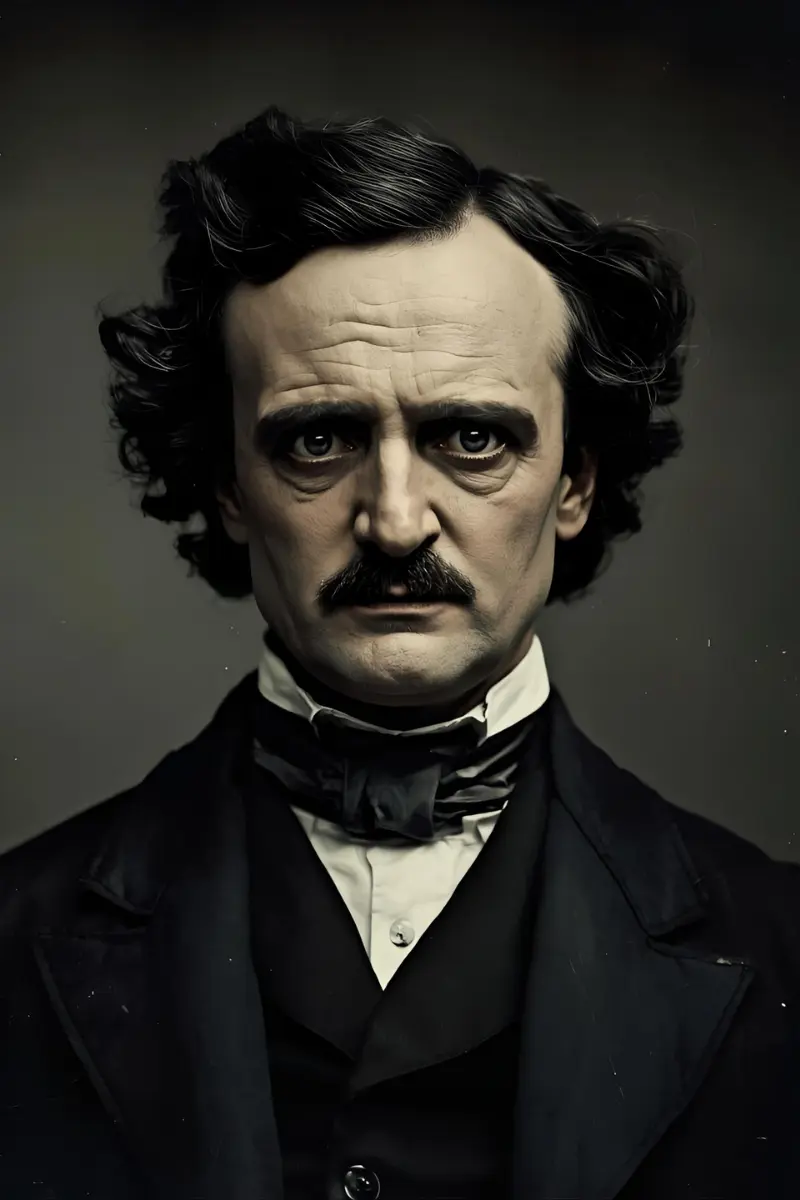
Edgar Allan Poe is one of America’s most iconic literary figures, celebrated for his mysterious short stories and haunting poems. Known as the master of gothic fiction, Poe’s works often contain riddles, codes, and puzzles that continue to inspire mystery lovers around the world.