
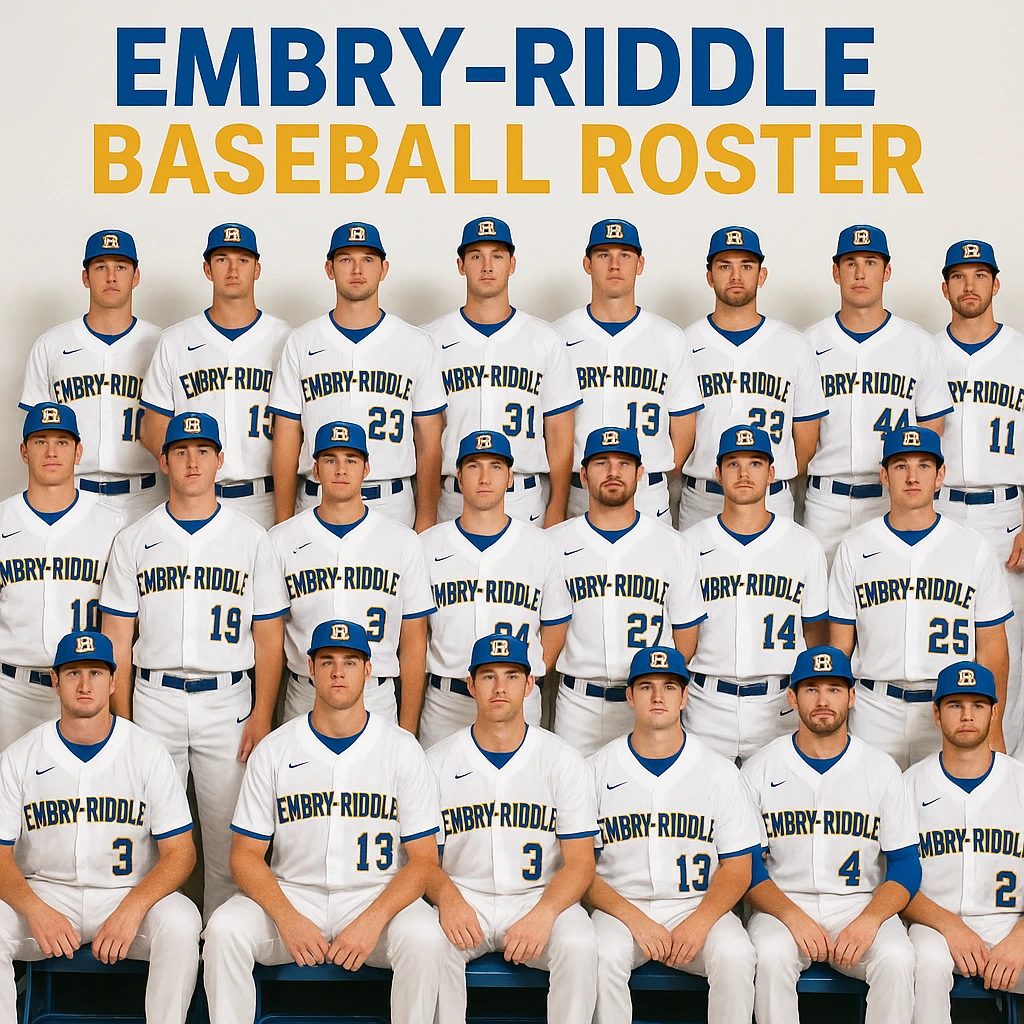
If you’ve searched for the Embry-Riddle baseball roster, you’re not alone. Fans, families, and recruits all want a clear picture of who’s wearing the Eagles uniform each season. At Embry-Riddle, that picture can mean multiple teams across Florida, Arizona, and even club baseball.
This guide walks through how those rosters work, how they change from year to year, and how to read them like a coach. Along the way, you’ll see how rosters connect to stats, scholarships, and recruiting so you can use them as a real tool, not just a long list of names.
Quick Answer
The Embry-Riddle baseball roster is a season-by-season list of student-athletes for the university’s varsity and club teams, split across the Florida and Arizona campuses. You’ll find numbers, positions, class years, majors, and hometowns on official roster pages, plus links to schedules and stats. To stay current, always choose the latest season on the athletics site, since rosters update every year with new recruits and graduates.
Table of Contents
• Embry-Riddle Baseball Roster Overview
• Embry-Riddle Baseball Roster 2025–2026 Season Snapshot
• Embry-Riddle (Fla.) Baseball Roster And Program Profile
• Embry-Riddle (AZ) Baseball Roster And Program Profile
• Embry-Riddle Baseball Roster By Position And Role
• Embry-Riddle Baseball Roster By Class Year And Eligibility
• Embry-Riddle Baseball Roster Size, Limits, And Depth
• Embry-Riddle Club Baseball Roster And How It Fits In
• Embry-Riddle Baseball Recruiting And Future Roster Spots
• Embry-Riddle Baseball Scholarships, Walk-Ons, And Roster Chances
• Embry-Riddle Baseball Roster, Lineups, And Game-Day Usage
• Embry-Riddle Baseball Roster, Stats, And Performance Storylines
• How To Read An Embry-Riddle Baseball Roster Page Step-By-Step
• Using The Embry-Riddle Baseball Roster For Scouting And Prep
• Balancing Academics And Baseball As Seen On The Roster
• Embry-Riddle Baseball Roster History, Alumni, And Legacy
• FAQs
• Conclusion
TL;DR
• Embry-Riddle keeps separate Florida, Arizona, and club baseball rosters.
• Official rosters list numbers, positions, measurables, majors, and hometowns.
• Season selectors let you open current or archived roster years.
• Recruits can study rosters to gauge depth and playing opportunity.
• Stats and box scores link roster names to on-field performance.
• Archived rosters highlight alumni and the program’s long-term growth.
Embry-Riddle Baseball Roster Overview
Before diving into specific seasons, it helps to zoom out. “Embry-Riddle baseball roster” can refer to several teams under the same university umbrella. There’s a varsity program in Florida, a varsity program in Arizona, and a separate club baseball team.
Each roster is structured in a similar way, though. You’ll usually see columns for jersey number, name, position, bat/throw, class year, height, weight, hometown, and sometimes major. That consistency makes it easier to compare different seasons and campuses once you know where to look.
• Roster pages live on official athletics sites, not random blogs.
• Each campus runs its own baseball page with roster links.
• Roster layouts stay similar from year to year for clarity.
• Column headers explain what each number or abbreviation means.
• Players are sorted by jersey number, not position, most of the time.
• Some pages include headshots; others focus on text listings.
• Many players have clickable bios with more background detail.
• Majors and hometowns show the program’s geographic reach.
• Rosters connect directly to schedule, stats, and news pages.
• Varsity and club rosters are housed under different organizations.
• Archived seasons remain accessible through a season dropdown.
• New rosters typically publish ahead of the spring baseball schedule.
Embry-Riddle Baseball Roster 2025–2026 Season Snapshot
For the 2025–2026 window, the key is understanding that rosters are always labeled by season. You don’t search for “current roster” alone; instead, you choose the baseball season from a dropdown and open that year’s roster. Both campuses use that pattern so fans can compare past and present teams.
Because college baseball overlaps academic years, you’ll see rosters tagged as 2025 or 2026 even though players may appear across multiple springs. The best move is to look for the newest active season and then scan how many returners and newcomers appear compared with the year before.
• Use the “Choose A Season” menu on roster hubs.
• Select the 2025 or 2026 season for the latest varsity lists.
• Compare current season to 2024 to see who graduated.
• Expect several freshmen and transfers to appear each year.
• Note returning upperclassmen holding down key positions.
• Look for updated heights, weights, or position changes.
• Watch for redshirt designations in older bios when present.
• Link from the current roster to this year’s schedule page.
• Check box scores to see which players are active contributors.
• Remember that midyear roster tweaks can still happen.
• Club baseball rosters may show 2025–2026 separately, too.
• Treat each roster as a live snapshot, not a permanent list.
Embry-Riddle (Fla.) Baseball Roster And Program Profile
On the Florida campus in Daytona Beach, the Embry-Riddle baseball roster represents a varsity program competing in a strong regional conference and national division. That roster reflects athletes balancing demanding travel, practice, and academic schedules while playing a full spring slate. sportsrecruits.com+1
Because of that level, the Florida roster tends to include a mix of high school standouts, junior college transfers, and occasionally four-year transfers. The roster page lets you see where those players came from, which positions they fill, and what they study at the university.
• Look for “Daytona Beach” or “(Fla.)” in page headings.
• Check the conference listing to confirm the competition level.
• Scan hometowns to see heavy recruiting regions and pipelines.
• Note majors like engineering, business, and aeronautical fields.
• Identify veteran infielders and outfielders anchoring the lineup.
• See which pitchers are listed as starters versus relievers.
• Use class year to spot which roles may open soon.
• Explore full bios for background on previous schools or honors.
• Notice how many catchers appear for depth and practice needs.
• Compare roster size to other conference opponents’ numbers.
• Tie roster names back to box scores from recent series.
• Bookmark the roster page; it’s updated as changes occur.
Embry-Riddle (AZ) Baseball Roster And Program Profile
Over in Prescott, Arizona, Embry-Riddle fields its own varsity baseball program with a distinct roster, schedule, and conference footprint. Even though the school name matches, this is not just a regional branch of the Florida team; it’s a separate program with its own staff and opponents. eraueagles.com+1
For prospects west of the Mississippi, that roster can feel more geographically accessible, and the page layout makes it easy to see how many players come from Arizona, California, and other western states. You’ll also notice the same emphasis on majors tied to aviation and engineering.
• Confirm you’re on the Arizona athletics site before reading.
• Look for “Prescott” references in logos or header text.
• Check the conference listed to understand the competition field.
• Scan for a strong mix of in-state and out-of-state players.
• Note how many two-way players show up on the roster.
• Use class years to see long-term roster building in the West.
• Compare pitching depth here with the Florida roster’s staff.
• Watch for transfers from junior colleges in the region.
• Check the schedule tab to see typical travel distances.
• Use stats pages to gauge performance by year and opponent.
• Remember that Florida and Arizona never share varsity rosters.
• Treat this roster as its own path into Embry-Riddle baseball.
Embry-Riddle Baseball Roster By Position And Role
Once you’ve chosen the right campus, the next step is understanding positions. College roster pages often list players by jersey number, so it’s on you to notice position abbreviations and how they map to roles on the field.
Even if you’ve watched baseball for years, college rosters introduce wrinkles like “UTL” for utility players or two-way designations for athletes who pitch and hit. Learning those details helps you see where a team is deep and where spots might be opening soon.
• “P” or “RHP/LHP” marks pitchers as right- or left-handed.
• “C” stands for catchers, often a small but vital group.
• “INF” covers infielders at second, short, or third base.
• “OF” identifies outfielders patrolling left, center, or right.
• “UTL” or “UTIL” can mean flexible infield or outfield roles.
• Two-way players may list “INF/RHP” or similar combinations.
• Position labels hint at defensive responsibilities and value.
• Larger pitching groups reflect college-level workloads.
• Infield depth matters for late-inning defensive changes.
• Outfield speed shows up in stolen base stats and notes.
• Role notes sometimes mention “closer” or “starter” duties.
• Recruits should compare their position to roster depth first.
Embry-Riddle Baseball Roster By Class Year And Eligibility
Class year on the roster tells you much more than age. It signals where a player stands in their college journey and how long they might remain on the field. Designations like freshman, sophomore, junior, and senior map to academic progress, while “R-So.” or “Gr.” hint at redshirt years or graduate study.
Because of eligibility rules, some players stay an extra season, so you’ll occasionally see older class labels still on the roster. For recruits and fans, this information helps forecast when starting spots might open up, especially at positions where upperclassmen currently dominate.
• “Fr.” usually marks first-year players seeing early college action.
• “So.” indicates athletes with at least one season completed.
• “Jr.” players often hold big roles in lineups or rotations.
• “Sr.” designations point to final-year contributors and leaders.
• “R-So.” or “R-Jr.” signals a redshirt year in their history.
• “Gr.” or “Grad” marks graduate students using extra eligibility.
• Class year guides expectations about experience and maturity.
• Heavy senior groups suggest upcoming roster turnover soon.
• Younger across-the-board rosters hint at growing programs.
• Recruits should note class stacks at their primary position.
• Parents can use class year to understand time horizons.
• Fans can track how classes evolve from year to year.
Embry-Riddle Baseball Roster Size, Limits, And Depth
College baseball rosters are bigger than pro rosters, and Embry-Riddle is no exception. Extra pitchers, role players, and developmental athletes help teams handle long seasons, weather delays, and doubleheaders while still getting through class and travel days.
The exact size can vary by year and campus, but rosters commonly include several dozen players. What matters most for parsing that list is understanding depth at key positions, especially on the mound, behind the plate, and up the middle of the field.
• Expect more total players than an everyday starting lineup.
• Pitchers often account for a large segment of the roster.
• Teams carry multiple catchers for bullpens and game days.
• Infield depth covers injuries and matchup-based lineups.
• Outfield groups mix speed, power, and defensive range.
• Walk-ons can expand roster size in some seasons.
• Injured players may still appear on the official roster.
• Redshirts stay listed even if not playing that season.
• Depth charts shift as players earn or lose innings.
• Coaches balance roster spots with scholarship limits.
• Prospects should view depth as competition, not a barrier.
• Fans can read depth as a sign of program health.
Embry-Riddle Club Baseball Roster And How It Fits In
Beyond varsity, Embry-Riddle club baseball gives students another way to compete on the diamond. This team operates under the club sports umbrella and often plays a league schedule against other schools’ club teams, with its own standings, stats, and roster. div2.clubbaseball.org
For some students, club baseball is the right balance between staying in the game and managing a demanding academic load. Its roster looks similar on paper, but the expectations, travel scope, and time commitments are usually more flexible than varsity.
• Club rosters appear on league or campus recreation sites.
• The team may play in a national club baseball association.
• Tryouts can be more open than varsity recruiting.
• Travel usually focuses on regional opponents and tournaments.
• Players fund parts of travel and gear more often.
• Coaching may be student-led or supported by volunteers.
• Stats and standings still matter within the club league.
• Club rosters change as students study abroad or intern.
• Some varsity hopefuls use club ball to keep developing.
• Club and varsity rosters are separate, not interchangeable.
• Prospects should clarify which team they’re contacting.
• Fans should check which roster they’re reading before games.
Embry-Riddle Baseball Recruiting And Future Roster Spots
Every name on an Embry-Riddle baseball roster once started as a recruit. Whether that path went through high school showcases, junior college, or a recruiting questionnaire, each player worked through a process to earn a spot. Official athletics pages often link to forms and recruiting contacts that begin that conversation. erauathletics.com+2eraueagles.com+2
For prospects, the current roster is a valuable scouting report. It tells you which positions are crowded, which class years will leave soon, and which geographic pipelines the staff already trusts. Used the right way, it can shape your highlight video, email outreach, and camp choices.
• Start by filling out the official recruiting questionnaire.
• Use the roster to see how many players share your position.
• Note which states and clubs appear often in hometown lines.
• Watch recent game recaps to see who plays regularly.
• Mention specific roster needs when emailing the staff.
• Keep messages short while linking your video or profile.
• Show academic strength alongside athletic experience.
• Attend camps where Embry-Riddle staff are listed to appear.
• Update coaches when you reach new measurable milestones.
• Stay honest about your grad year and eligibility timeline.
• Respect that roster spots are limited and competitive.
• Treat the roster as a living blueprint, not a guarantee.
Embry-Riddle Baseball Scholarships, Walk-Ons, And Roster Chances
Behind every roster is a blend of scholarship players and non-scholarship walk-ons. Exact amounts and distributions stay private, but understanding the general concepts makes the roster easier to interpret. Scholarship players often fill heavily recruited roles, while walk-ons earn space through strong tryouts and consistent improvement. sportsrecruits.com+1
For families planning college costs, it’s smart to treat athletic money as one part of a bigger financial package. Academic awards, need-based aid, and outside scholarships usually combine with any baseball support a player receives.
• Roster pages don’t list who has scholarship money.
• Some positions, like catchers or starting pitchers, draw focus.
• Coaches still value walk-ons who can help the team win.
• Tryout chances depend on roster size and returning players.
• Academic scholarships often help more than people expect.
• Financial aid offices handle non-athletic assistance options.
• Families should ask big-picture questions, not dollar amounts.
• Recruits must weigh cost, major, and roster fit together.
• Walk-ons need realistic expectations and strong work habits.
• Over time, some walk-ons earn bigger roles or support.
• Every name on the roster still represents a real opportunity.
• Communication with coaches should stay respectful and patient.
Embry-Riddle Baseball Roster, Lineups, And Game-Day Usage
When game day arrives, not every player on the roster will appear in the lineup card. Coaches set starting lineups based on matchups, recent performance, rest days, and health. Over the course of a long season, though, many players contribute through spot starts, pinch-hitting, defensive replacements, and bullpen roles. eraueagles.com+1
To understand how the roster functions in real time, fans can watch how often certain names appear in box scores and play-by-play recaps. That connection between static roster pages and dynamic game results shows the story behind every season.
• Lineup cards list only nine starters plus a designated hitter.
• Pitching rotations usually span several starting pitchers.
• Bullpens include middle relievers, setup men, and closers.
• Utility hitters move between infield and outfield as needed.
• Defensive replacements protect late leads with fresh gloves.
• Pinch runners appear for speed in key situations.
• Injuries and slumps change lineup patterns week to week.
• Doubleheaders require deeper rotation usage and bench roles.
• Home and away splits may affect starting decisions.
• Box scores reveal who plays regularly versus occasionally.
• Recaps often mention standout performances from lesser-known names.
• Over a season, most rostered players see some game action.
Embry-Riddle Baseball Roster, Stats, And Performance Storylines
Stats pages connect the names on a roster to measurable results on the field. Batting averages, on-base percentages, earned run averages, and fielding percentages all appear alongside player names and numbers. When read together, rosters and stats form a complete picture of how a season is unfolding. eraueagles.com+2tampaspartans.com+2
Because baseball stats can feel intimidating at first, it helps to focus on a few simple numbers and trends. You don’t have to be an analyst to notice that certain hitters reach base often or that particular pitchers rack up strikeouts.
• Use the roster to match jersey numbers to stat lines quickly.
• Start with basic hitting stats like average and RBI totals.
• Watch on-base and slugging to gauge overall offensive impact.
• For pitchers, focus on innings, ERA, and strikeouts.
• Fielding stats show how often players appear defensively.
• Splits by game or opponent reveal matchup strengths.
• Year-over-year trends highlight player development stories.
• Big jumps in stats often follow role changes on the roster.
• Team stat pages compare Embry-Riddle to its conference peers.
• Opponent recaps reveal how the roster stacks up in key series.
• Box scores help connect single-game spikes to bigger patterns.
• Fans can follow favorite players through entire college careers.
How To Read An Embry-Riddle Baseball Roster Page Step-By-Step
If you’re new to college roster pages, all those columns can feel cluttered. A step-by-step approach makes it easy. Start left to right, then drill into player bios once you’ve spotted someone you want to learn more about.
Most of the abbreviations you’ll see are standard across college baseball. After a few minutes, you’ll read them automatically, which helps when you flip between Embry-Riddle’s different campuses or compare with other schools during recruiting.
• First, note the “Choose A Season” dropdown and set the year.
• Scan jersey numbers to see who might become fan favorites.
• Read full names carefully to avoid confusing similarly named players.
• Check position abbreviations using the legend above the table.
• Look at bats/throws columns to spot righties and lefties.
• Glance at height and weight for a feel of physical profiles.
• Scan hometowns for local players from your area.
• Look at majors to understand academic interests and balance.
• Click any biography links for deeper background stories.
• Use search on the page to find specific names fast.
• On mobile, scroll slowly; wide tables may wrap differently.
• Bookmark the roster for quick midseason reference later.
Using The Embry-Riddle Baseball Roster For Scouting And Prep
For opposing coaches, serious fans, and even broadcasters, the roster doubles as a scouting report. It doesn’t tell you everything, but it gives clues about handedness, experience, and positional options before you even see a pitch thrown.
Paired with box scores and video, the roster becomes a map to possible matchups. You can spot which hitters are likely to bat in the heart of the order and which pitchers log the most high-leverage innings, then plan accordingly.
• Identify left-handed hitters who might face certain relievers.
• Note tall starting pitchers who create downhill angles.
• Watch for two-way players who impact both lineup and bullpen.
• Use class year to gauge experience in pressure situations.
• Track catchers who start most games behind the plate.
• Check how many middle infielders the team carries.
• Look for late-inning specialists with strong strikeout numbers.
• Use hometowns to anticipate travel fatigue or home comfort.
• Combine roster details with opponent scouting video.
• Update notes during the season as roles evolve.
• Treat the roster as a baseline, not a finished scouting report.
• Share concise roster insights with players before each series.
Balancing Academics And Baseball As Seen On The Roster
One unique feature of Embry-Riddle rosters is how often they highlight demanding majors. It’s common to see aerospace engineering, aeronautical science, or business fields listed right next to player names, which says a lot about the culture. erauathletics.com+1
For recruits and families, those details show that baseball sits alongside serious academic goals, not instead of them. When you scan a roster and see the course loads players carry, it becomes easier to picture what managing both commitments might really look like.
• Use majors to gauge how programs support tough class schedules.
• Notice clusters of similar majors among position groups.
• Ask current players about balancing labs and travel days.
• Plan realistic weekly routines with study halls and practice.
• Remember that academic success keeps eligibility intact.
• Look for honors or academic awards mentioned in bios.
• Choose a major you’d love even without baseball.
• Treat baseball as a big piece, not the whole college puzzle.
• Use the roster to spot peers in your interest area.
• Consider campus resources like tutoring and advising.
• Families should discuss time management openly with recruits.
• A strong roster reflects both classroom and on-field commitment.
Embry-Riddle Baseball Roster History, Alumni, And Legacy
Finally, the roster isn’t just about today. Archived seasons show how Embry-Riddle baseball has grown, which positions have produced standout players, and which alumni have gone on to pro or international opportunities. Features on former Eagles often trace their path straight back to those old rosters. erauathletics.com+2thesunconference.com+2
Looking back through those lists, you’ll see how the program’s recruiting map has expanded, how academic majors have shifted with new degrees, and how different coaching eras shaped roster construction. That long view can be inspiring for anyone considering joining the story.
• Use the season selector to open past rosters year by year.
• Track how hometown maps change across recruiting cycles.
• Notice repeat last names that hint at family legacies.
• Look for players later featured in alumni or pro stories.
• Compare roster sizes over a decade of growth.
• Study which positions consistently produce all-conference talent.
• Use old rosters to appreciate current program stability.
• Remember every alumnus once read the roster as a recruit.
• Let past success fuel realistic, exciting future goals.
• Fans can celebrate history while supporting today’s roster.
• Families can picture long-term impact beyond four seasons.
• Prospects can imagine their own name joining those archived lists.
FAQs
Where can I find the official Embry-Riddle baseball roster?
You can find official rosters on each campus’s athletics website. Choose baseball, then use the season dropdown to select the year you care about, such as 2025 or 2026. That page lists current players with numbers, positions, and other key details, plus links to schedules and stats.
What’s the difference between the Florida and Arizona baseball rosters?
The Florida roster represents the Daytona Beach varsity program, while the Arizona roster represents the Prescott campus. They have separate coaching staffs, conferences, schedules, and recruiting pipelines, even though they share the Embry-Riddle name and similar academic focus.
Does Embry-Riddle have a club baseball roster too?
Yes. In addition to varsity teams, Embry-Riddle fields a club baseball team that competes in a club league structure. Its roster appears on club or league sites and is distinct from varsity rosters, with different time commitments and travel expectations. div2.clubbaseball.org
How often does the Embry-Riddle baseball roster change?
Rosters change every season as seniors graduate, transfers arrive, and new recruits enroll. Some players stay for graduate years, while others redshirt and appear across more than four seasons, so it’s important to check the newest roster each year rather than relying on old lists.
Can reviewing the roster help me get recruited?
The roster won’t guarantee anything, but it’s a smart research tool. By studying positions, class years, and recent stats, you can see where needs might be coming. Pair that understanding with a recruiting questionnaire, highlight video, and clear communication with coaches to give yourself the best chance to fit.
How big is a typical Embry-Riddle baseball roster?
Exact numbers vary by year and campus, but college teams usually carry several dozen players to cover long schedules and pitching demands. Expect more pitchers than everyday hitters, several catchers, and enough depth at each position to handle injuries and doubleheaders.
Do roster pages show who is on scholarship?
No. Official rosters don’t list scholarship status or amounts. They simply show who is on the team. Scholarship decisions and financial packages happen privately through the coaching staff and financial aid office, often blended with academic and need-based support.
Conclusion
The Embry-Riddle baseball roster is more than a list of names; it’s a living snapshot of student-athletes balancing serious academics with high-level competition across multiple campuses and levels. Whether you’re a fan, a parent, or a recruit, understanding how to read those rosters makes every box score and campus visit more meaningful.
By choosing the right campus, opening the correct season, and paying attention to positions, class years, and majors, you’ll see how the Embry-Riddle baseball roster evolves each year—and where you or someone you care about might fit into that story next.

David Miller is a USA-based puzzle blogger known for his sharp and tricky riddles. With a background in logic games and quizzes, his work focuses on keeping readers hooked with every twist and turn.