
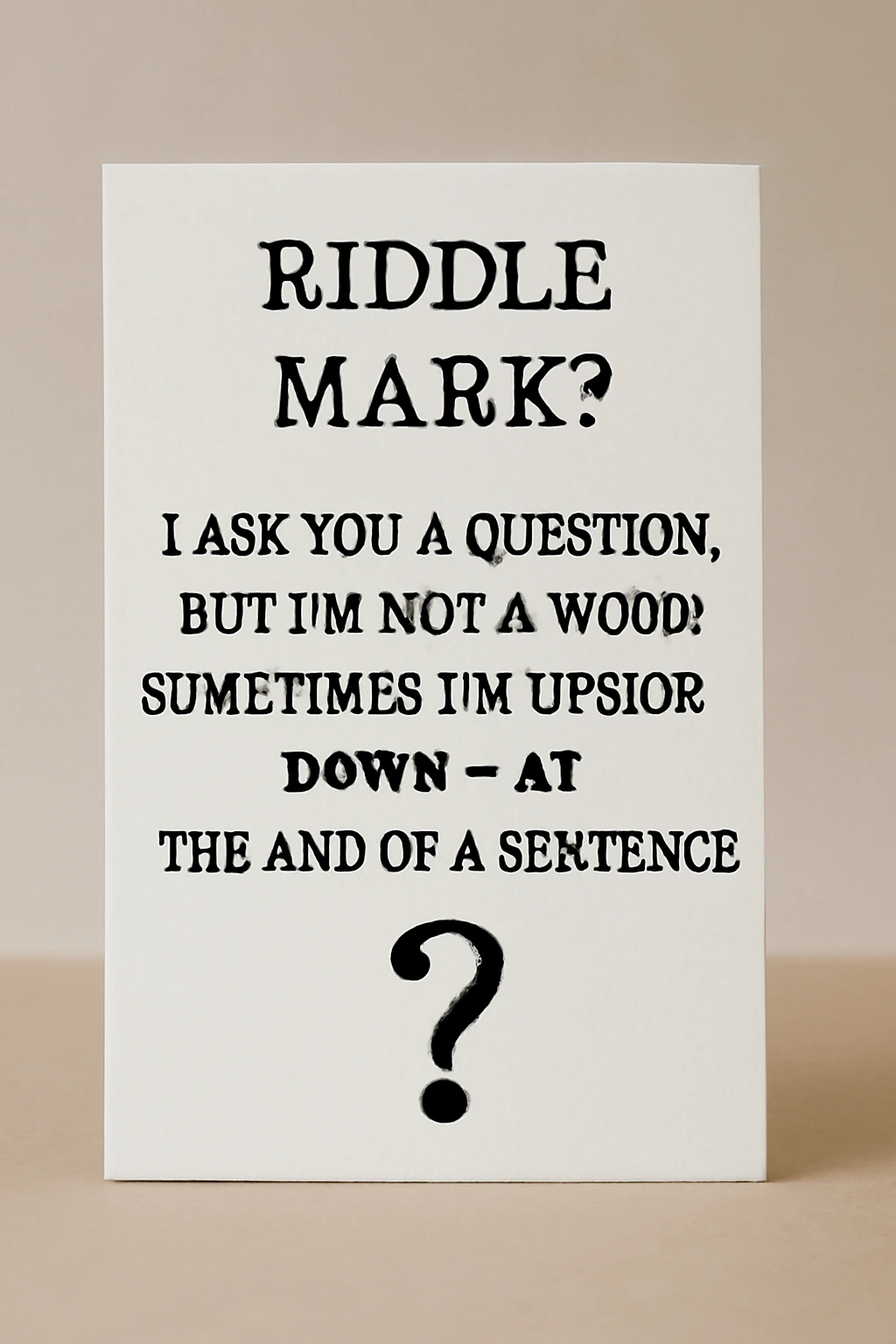
Riddles have been a source of fun, challenge, and learning for centuries, weaving mystery and amusement into our daily lives. A “riddle mark,” whether literal or metaphorical, refers to the cleverness and intrigue a riddle brings — a mark that invites the solver to think, reflect, and engage with the puzzle. From brain‑teasing wordplay to simple descriptive questions, riddles are enjoyed by people of all ages. In this article, we’ll explore what a riddle mark really is, the different types of riddles, how to craft them, and how they’re used in learning and games. Whether you’re a seasoned puzzle enthusiast or someone who enjoys a bit of mystery, riddles can light up your imagination and bring people together through their shared love of a good challenge.
Quick Answer
A riddle mark is simply a riddle — a playful puzzle posed as a question or statement that hides its answer until you think. It uses clues, misdirection, or wordplay to test wit. Its goal is to delight with surprise or insight.
Table of Contents
• What a Riddle (or “Riddle Mark”) Really Is
• Why People Love Riddles
• Types of Riddles
• Riddle Mark for Grammar & Punctuation
• Historical & Cultural Roots of Riddles
• What Makes a Good Riddle
• How to Write Your Own Riddle
• Examples of Simple Riddles
• Examples of Grammar or Punctuation Riddles
• How to Adapt Riddles for Audience (Kids, Teens, Adults)
• Common Mistakes When Writing Riddles
• Why “Less Is More”
• Using Riddles in Games and Activities
• Sharing and Publishing Your Riddles
• When a Riddle Becomes a “Riddle Mark”
• FAQs
• Conclusion: The Enduring Charm of a “Riddle Mark.”
TL;DR
• A riddle mark is a puzzle disguised as a question or statement.
• Riddles appeal universally through mystery and surprise.
• Good riddles strike balance: clear clues, subtle misdirection.
• You can write riddles by listing traits, adding metaphors or rhyme.
• Riddles work for fun, teaching, writing games, or social sharing.
What a Riddle (or “Riddle Mark”) Really Is
A riddle is a statement, question, or phrase with a hidden meaning that invites solving. (en.wikipedia.org)
It often wraps description in metaphor or double meaning — making the solver rethink ordinary ideas.
Why People Love Riddles
Because riddles surprise us. They challenge our assumptions. They mix logic with imagination. People enjoy that small “aha!” moment when the answer clicks.
Riddles cross age and culture easily — a universal brain‑teaser many know and love.
Types of Riddles
Riddles generally fall into two broad types: enigmas and conundrums. (britannica.com)
• Enigmas use metaphorical or poetic language to describe something indirectly.
• Conundrums rely on wordplay or puns — tricking expectation with language.
Many riddles mix both description and pun for extra twist.
Riddle Mark for Grammar & Punctuation
Riddles aren’t just for objects — they can teach punctuation or grammar. Educators often hide clues describing what punctuation marks do, then ask students to guess which mark fits. (tutor.com)
That makes learning interactive and fun.
Historical & Cultural Roots of Riddles
Riddles have a long history — ancient peoples used them for oral entertainment, wit contests, and moral lessons. (en.wikipedia.org)
Even in classic literature, riddles and “speaking objects” challenged listeners to see the ordinary in new light.
What Makes a Good Riddle
A strong riddle balances clarity and mystery. The clues should hint at the answer without giving it away instantly. Metaphor, rhyme, or subtle misdirection adds charm.
A good riddle is fair: the answer must feel satisfying — not forced or unfairly obscure.
How to Write Your Own Riddle
Start by picking a simple answer — an object, idea, or concept. (word.studio)
List its traits: what it looks like, what it does, where it lives. Then brainstorm metaphors or poetic descriptions.
Mix concrete and abstract elements. Optionally, add rhyme or wordplay. Finally, frame it as a question: “What am I?” Keep wording simple but evocative.
Examples of Simple Riddles
• I fly without wings, I cry without eyes, I bring shade under sunlit skies. What am I?
• I stand still on the wall but catch every call — I ring but never speak. What am I?
• I store your words but stay silent and still — I guard your secrets until you will. What am I?
Examples of Grammar or Punctuation Riddles
• I wear a little curve and sit at sentence ends; I ask without a voice — what am I? (Answer: question mark)
• I shout surprise or show strong feeling; I stand bold at a sudden reveal — what am I? (Answer: exclamation mark)
How to Adapt Riddles for Audience (Kids, Teens, Adults)
For kids — keep language simple, clues concrete, answer obvious.
teens/adults — you can use more abstract or metaphorical clues, subtle wordplay.
For mixed groups — aim for medium difficulty so everyone feels challenged but capable.
Common Mistakes When Writing Riddles
• Over‑complicating clues — obscure vocabulary makes riddles frustrating.
• Being too vague — solver feels lost rather than intrigued.
• Relying on too many clues — spoils the mystery.
• Making answer ambiguous — causes confusion or disagreement.
Why “Less Is More”
Often the most satisfying riddles are short, clean, and to the point. Minimal wording forces the brain to connect dots — triggering that satisfying “aha!”
Clarity wrapped in mystery usually beats long, over‑wrought riddles.
Using Riddles in Games and Activities
Riddles spark quick fun at parties, classrooms, or casual gatherings.
Use them in warm‑ups, ice‑breakers, or challenge rounds.
They also work in writing games — ask friends to invent riddles for each other, or build riddle‑chains.
Sharing and Publishing Your Riddles
You can share riddles in blog posts, social media, group chats, or on paper cards.
Riddles make great content — people enjoy guessing, debating answers, sharing laughter.
They also build engagement — inviting others to comment or respond with their own guesses or variants.
When a Riddle Becomes a “Riddle Mark”
Sometimes “riddle mark” is used loosely — not just as a puzzle, but as a symbol of mystery, curiosity, or hidden meaning.
You might write a metaphorical riddle about an emotion, a memory, or a concept. That still captures the essence: a prompt to think deeper.
FAQs
What is a riddle?
A riddle is a question or statement posing a puzzle in disguised form. Its answer often surprises or twists expectation. (en.wikipedia.org)
What are common types of riddles?
Main types are enigmas (metaphorical/poetic) and conundrums (wordplay or puns). Many riddles blend both. (britannica.com)
Why use riddles in education or grammar lessons?
Riddles make learning interactive and fun. They engage curiosity, encourage critical thinking, and help internalize concepts like punctuation or grammar rules. (planetspark.in)
How hard should a riddle be?
It depends on your audience. Aim for a balance: not too easy, not too obscure. A short “aha!” delay is ideal.
Can riddles be serious or symbolic, not just playful?
Yes. Riddles can reflect abstract ideas or emotions. They can challenge assumptions or prompt introspection — that’s the deeper power of a “riddle mark.”
Conclusion
Riddles — or a “riddle mark” — carry a timeless spark. They challenge our mind, stir our imagination, and bring simple delight whether we’re kids, teens, or adults. Writing or sharing a clever riddle connects people across ages and cultures. Keep them clear, playful, and honest — and your riddle mark will always hit home.
Edgar Allan Poe is one of America’s most iconic literary figures, celebrated for his mysterious short stories and haunting poems. Known as the master of gothic fiction, Poe’s works often contain riddles, codes, and puzzles that continue to inspire mystery lovers around the world.