
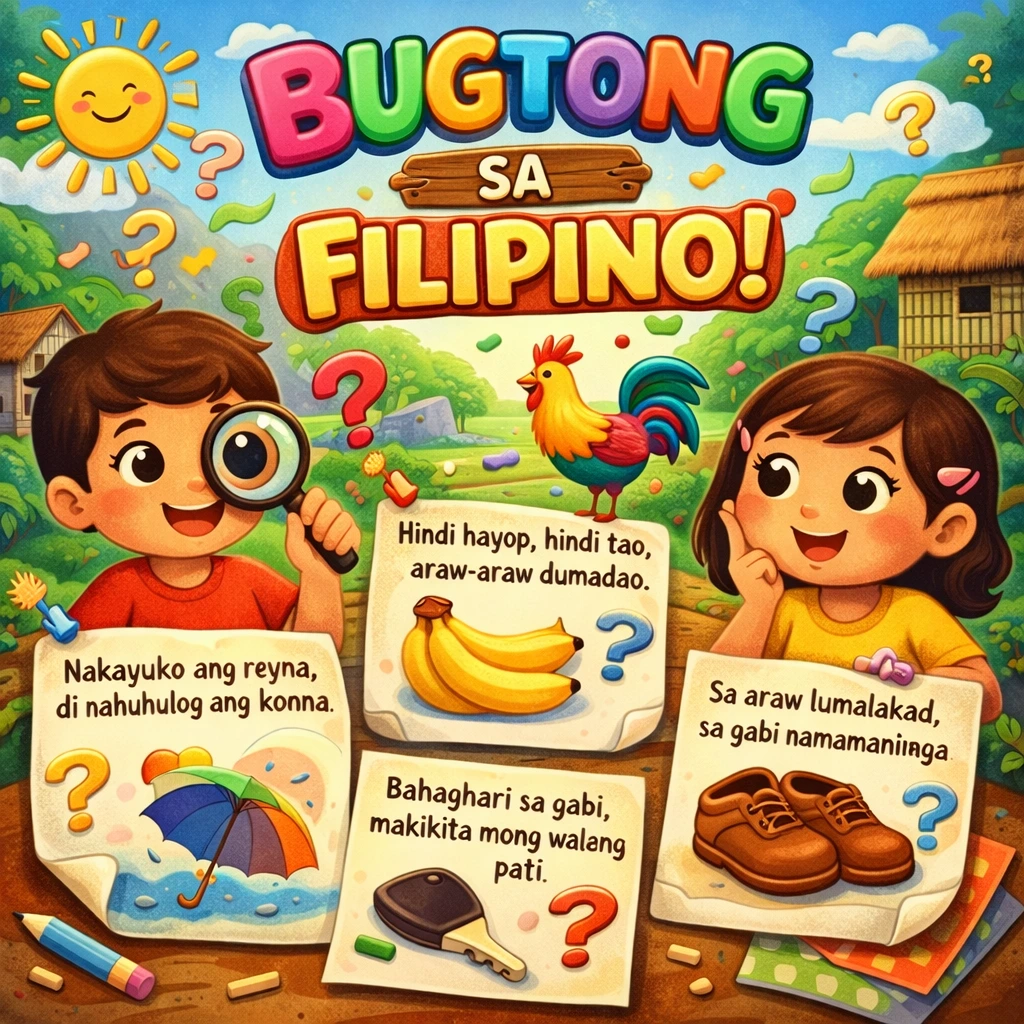
Filipino riddles, known as bugtong in Tagalog, are short, poetic brain teasers that challenge your imagination while reflecting Philippine culture. Passed down through generations, these playful puzzles use imagery from everyday life, nature, and folklore to spark curiosity and laughter. Whether you’re learning a new language, sharing a fun activity with kids, or exploring Filipino traditions, these riddles offer something for everyone. Riddles Quest+1
Quick Answer
Filipino riddles (bugtong) are clever verbal puzzles from the Philippines that describe objects, animals, or ideas in metaphorical ways. They test wit, encourage creative thinking, and often reveal cultural insights. punnypulse
Table of Contents
• What Are Filipino Riddles
• How Bugtong Works
• Classic Filipino Riddles With Answers
• Easy Tagalog Riddles for Kids
• Tricky Filipino Riddles to Challenge You
• Filipino Riddles & Culture
• How to Create Your Own Riddles
• Tagalog Riddle Translation Tips
• Riddle-Playing Traditions in the Philippines
• Popular Themes in Filipino Riddles
• Examples of Nature-Based Riddles
• Everyday Object Riddles
• Filipino Riddles About Animals
• Riddles That Teach Lessons
• Riddle Games to Play With Friends
• Why Filipino Riddles Still Matter
• FAQs
What Are Filipino Riddles
• Filipino riddles are called bugtong in Tagalog. FilipiKnow
• They’re short puzzles based on metaphor and symbolism. punnypulse
• Usually shared orally between people. Riddles Quest
• Answers can reveal everyday objects or familiar experiences. Tagalog Lang
• They promote creative thinking. punnypulse
• No strict rules for structure. FilipiKnow
• Some rhyme or rhythm for fun. Tagalog Lang
• Often used in family gatherings. Riddles Quest
• Passed down through generations. punnypulse
• Can be humorous or tricky. Riddlos
• Linked to folklore traditions. FilipiKnow
• Great for language learners. Styleynails
How Bugtong Works
• A riddle uses clues in poetic language. FilipiKnow
• The listener guesses the answer by thinking laterally. punnypulse
• Poetry often disguises the object. FilipiKnow
• Symbolism and imagery are key. Tagalog Lang
• Answers may be literal objects or abstract ideas. Styleynails
• Wordplay is central. punnypulse
• The challenge is part of the fun. Riddles Quest
• Some riddles use humor. Styleynails
• Others teach subtle lessons. punnypulse
• Riddles reflect local culture. FilipiKnow
• Answers often surprise you. Riddles Quest
• They’re designed to make you think. Riddlos
Classic Filipino Riddles With Answers
• Isang balong malalim, punong-puno ng patalim.
Answer: Mouth (Bibig).
• Basa na, hindi pa naliligo.
The answer is Fish (Isda).
• May mata ngunit hindi nakakakita describes a sharp object.
Correct answer: Needle (Karayom).
• Laging sumasama sa iyo, ngunit walang sariling katawan.
That’s a Shadow (Anino).
• Mayroong dalawang kamay ngunit walang braso, at palaging gumagalaw.
This riddle points to a Clock (Orasan).
• Kung kailan mo pinatay, saka pa humaba ang buhay plays with logic.
The answer is a Candle (Kandila).
• Hindi tao, hindi hayop, ngunit nakikipaglaro sa hangin hints at movement.
The solution is a Kite (Saranggola).
• Sa umaga, apat; sa tanghali, dalawa; sa gabi, tatlo describes life stages.
This classic answer is Human (Tao).
• Lumilipad nang walang pakpak refers to something abstract.
The answer is Time (Oras).
• Puno ng mga susi, ngunit walang pinto describes a musical object.
That would be a Piano (Piyano).
If you want, I can also tighten this further, convert it to kid-friendly wording, or align it perfectly with your site’s style guide.
Easy Tagalog Riddles for Kids
• Riddles often start simple. Riddlos
• Example: Dalawang batong maitim. Tagalog Lang
• Answer: Your eyes. Tagalog Lang
• A coconut riddle uses familiar trees. Riddlos
• Kids love animal riddles. Styleynails
• Rhymes help memory. FilipiKnow
• Easy ones build confidence. Riddlos
• They spark curiosity. punnypulse
• Group play boosts fun. Riddles Quest
• Teachers use them in class. Styleynails
• Great for language learners. Styleynails
• They connect generations. punnypulse
• Answers feel rewarding. Riddlos
Tricky Filipino Riddles to Challenge You
• Some riddles hide meanings deeply. punnypulse
• Wordplay can mislead on purpose. FilipiKnow
• You must think laterally. Riddles Quest
• Traditional versions use metaphor. FilipiKnow
• Clever twists make you guess twice. Riddlos
• Answers might surprise you. Tagalog Lang
• They teach patience and logic. punnypulse
• Try solving with friends. Riddles Quest
• Discussion leads to learning. Styleynails
• Cultural references make them rich. FilipiKnow
• They’re fun to revisit. Riddlos
• Even adults enjoy them. punnypulse
Filipino Riddles & Culture
• Bugtong are part of Filipino oral tradition. FilipiKnow
• Linked with folklore and stories. Riddles Quest
• Passed down in families. punnypulse
• Reflect local life and nature. Riddlos
• They teach cultural values. punnypulse
• Playful language keeps traditions alive. Styleynails
• Used in gatherings and games. Riddles Quest
• Some riddles are centuries old. FilipiKnow
• They encourage imagination. Riddlos
• Tagalog is widely used, but other languages have riddles too. FilipiKnow
• Understanding increases language interest. Styleynails
• They connect kids to heritage. punnypulse
How to Create Your Own Riddles
• Start with a familiar object.
• Describe it in unexpected ways.
• Use metaphor and imagery.
• Keep clues subtle but fair.
• Test with friends.
• Adjust until it clicks.
• Use rhyme if you like.
• Think about culture.
• Make it fun, not confusing.
• Share widely and enjoy.
Tagalog Riddle Translation Tips
• Literal phrases often hide deeper meaning. Styleynails
• English equivalents aren’t always direct. Tagalog Lang
• Cultural context matters. FilipiKnow
• Think metaphorically. punnypulse
• Some words double as clues. Styleynails
• Ask a native speaker for nuance. FilipiKnow
Riddle-Playing Traditions in the Philippines
• Played at fiestas and gatherings. Riddles Quest
• Elders challenge younger ones. punnypulse
• Friendly competitions spark fun. Styleynails
• Stories accompany some riddles. FilipiKnow
• They’re shared at bedtime. Riddles Quest
• Kids compare answers. Styleynails
• School activities use them. Riddlos
• They preserve language. FilipiKnow
• New riddles are still made. Riddlos
• They’re part of oral heritage. punnypulse
(continued next)
continued next
Continuing the article exactly where it left off:
Popular Themes in Filipino Riddles
• Nature like trees, rain, and rivers appears often.
• Farming tools reflect rural life.
• Body parts are common answers.
• Household items inspire clever clues.
• Animals symbolize traits or habits.
• Food represents abundance and sharing.
• Light and darkness show contrast.
• Time and age appear symbolically.
• Shadows and reflections confuse guesses.
• Movement hints at life and change.
• Sound-based clues add difficulty.
• Everyday routines ground the riddles.
Examples of Nature-Based Riddles
• Trees often hide simple answers.
• Rain symbolizes constant movement.
• Mountains suggest strength and stillness.
• Rivers point to flow and time.
• The sun appears without being named.
• The moon reflects quiet observation.
• Wind is described as unseen traveler.
• Fire hints at life and danger.
• Stones represent silence.
• Leaves signal change and seasons.
• Stars confuse with distance metaphors.
• Earth appears as giver of life.
Everyday Object Riddles
• Needles describe eyes or sharp vision.
• Chairs stand without walking.
• Tables hold without hands.
• Shoes travel without feet.
• Clocks speak without mouths.
• Doors guard without thinking.
• Lamps shine without fire.
• Mirrors show without judging.
• Keys open without strength.
• Pots sing when boiling.
• Brooms walk without legs.
• Windows see without eyes.
Filipino Riddles About Animals
• Chickens symbolize mornings.
• Dogs show loyalty clues.
• Cats hint at silence.
• Fish represent constant wetness.
• Birds confuse with flight imagery.
• Carabaos symbolize strength.
• Ants describe teamwork.
• Snakes mislead with shape clues.
• Frogs hint at jumping sounds.
• Horses show speed metaphors.
• Pigs symbolize appetite.
• Butterflies suggest change.
Riddles That Teach Lessons
• Patience is rewarded through thinking.
• Humility hides behind simple answers.
• Observation beats guessing fast.
• Listening carefully improves results.
• Creativity solves confusion.
• Teamwork finds solutions quicker.
• Respect for elders’ wisdom appears.
• Nature appreciation grows.
• Humor eases frustration.
• Curiosity drives learning.
• Culture strengthens identity.
• Language skills improve naturally.
Riddle Games to Play With Friends
• Take turns asking riddles.
• Set time limits for answers.
• Form small teams.
• Keep score for fun competition.
• Let kids ask adults.
• Explain answers afterward.
• Act out clues silently.
• Write your own riddles together.
• Mix easy and tricky ones.
• Play during travel downtime.
• Use riddles as icebreakers.
• Share laughter freely 🙂
Why Filipino Riddles Still Matter
• They preserve oral tradition.
• Language stays alive through play.
• Families bond across generations.
• Learning feels enjoyable.
• Cultural pride grows naturally.
• Creativity is encouraged.
• They’re accessible to everyone.
• No tools are required.
• They cross age groups.
• They spark conversations.
• Modern kids still enjoy them.
• Heritage remains relevant.
FAQs
What are Filipino riddles called?
They’re commonly called bugtong, especially in Tagalog. Other Philippine languages also have their own riddle traditions.
Are Filipino riddles good for kids?
Yes. Many are designed for children and help develop thinking, language, and cultural awareness.
Do Filipino riddles rhyme?
Some do, but rhyme isn’t required. Imagery and metaphor matter more than sound.
Can beginners understand Filipino riddles?
Yes. Starting with simple riddles and translations makes them accessible to beginners.
Are there modern Filipino riddles today?
Absolutely. People still create new riddles inspired by daily life and technology.
What language are Filipino riddles written in?
Most are in Tagalog, but many exist in Cebuano, Ilocano, and other local languages.
Conclusion
Filipino riddles are more than word games. They’re playful reflections of life, culture, and imagination passed down through time. Whether you’re solving them for fun or learning a new tradition, riddles in Filipino continue to connect people through shared curiosity and joy.

David Miller is a USA-based puzzle blogger known for his sharp and tricky riddles. With a background in logic games and quizzes, his work focuses on keeping readers hooked with every twist and turn.