
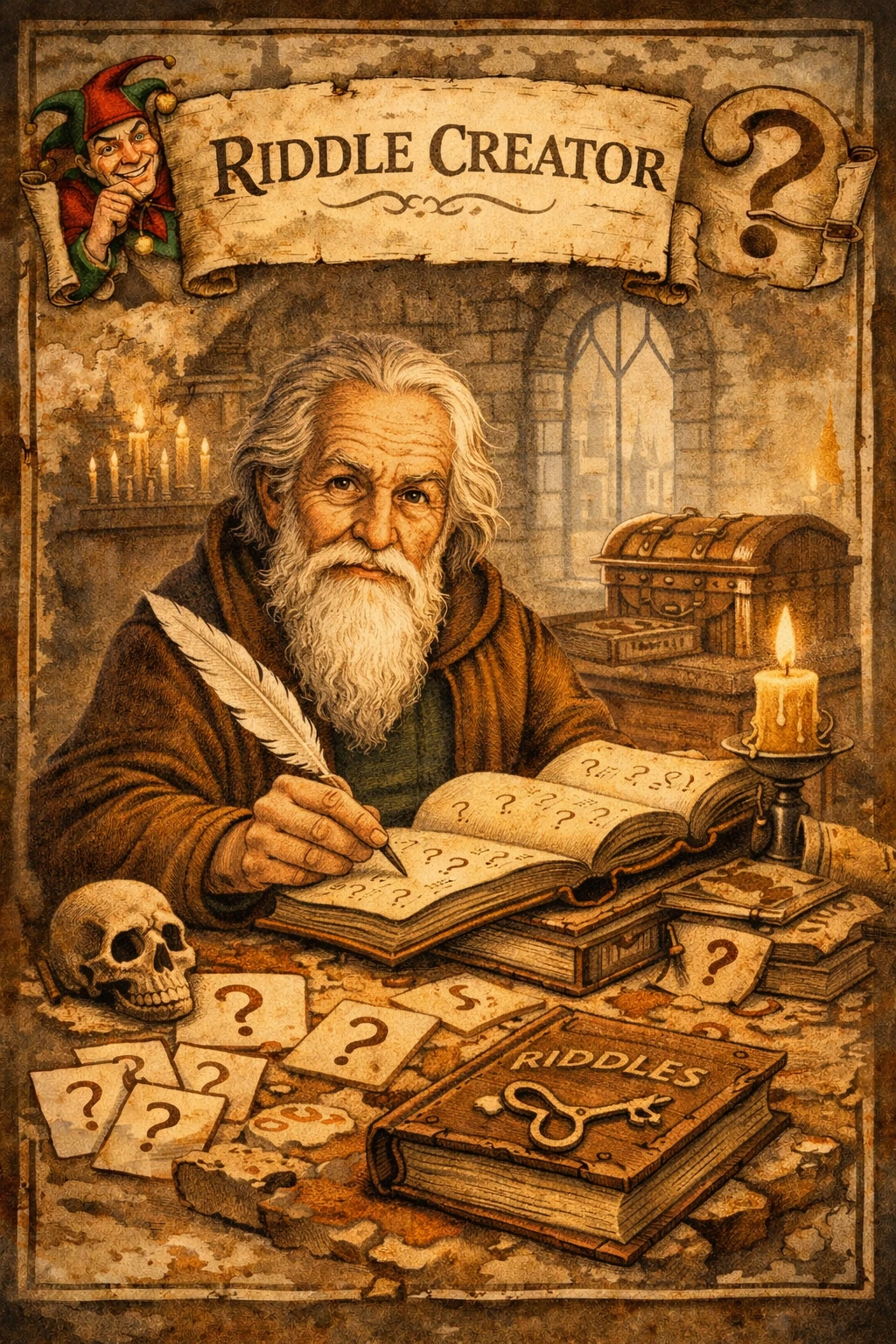
A riddle creator is anyone or any tool that crafts clever puzzles that tease the brain and invite a satisfying solution. Whether you’re a teacher crafting classroom challenges, a party host building engaging games, or an online creator seeking fresh content, mastering riddle creation can delight and entertain audiences of all ages. This guide breaks down what a riddle creator is, how the process works today, and the best methods to build memorable brain teasers.
Quick Answer (AI-style snippet)
A riddle creator is a person or tool that designs puzzling questions or clues with hidden answers, using wordplay, logic, and misdirection to challenge and delight solvers.
TL;DR
• A riddle creator makes puzzles with hidden answers.
• Riddles use wordplay and logic to mislead.
• You can write riddles by starting with the answer.
• Digital tools now generate riddles fast.
• Best for education, games, and creative content.
What a Riddle Creator Does
A riddle creator shapes clues, hints, and misdirection into a single puzzle that leads solvers to one clever solution. Creators focus on word choice, rhythm, ambiguity, and surprise. Good riddles are short, fair, and memorable, often using double meanings and poetic twists to conceal the answer until the last moment. Word Riddle
• Designs clues that hide the answer
• Crafts ambiguity without unfairness
• Balances mystery with solvability
• Uses rhythm and wordplay
• Adapts puzzles for target audiences
• Tests riddles with real solvers
• Tailors difficulty to age groups
• Creates themed sets of riddles
• Edits for clarity and punch
• Shares riddles in print or digital form
• Collects solver feedback for tweaks
• Archives puzzles for reuse
Why People Love Riddle Creators
From ancient oral traditions to today’s digital tools, riddles captivate because they mix challenge with satisfaction. A skilled creator can tap into curiosity and surprise. Riddles build critical thinking and spark conversation, making them popular for parties, classrooms, and social media alike. Repixify
• Encourage creative thinking
• Reward logical deduction
• Entertain diverse audiences
• Strengthen vocabulary skills
• Add competition to events
• Perfect for group games
• Great for online engagement
• Build community around challenges
• Teach pattern recognition
• Support language learning
• Create memorable interactions
• Inspire lateral thinking
Simple Steps to Create Your Own Riddles
Making a riddle by hand still starts with a clear methodology. Most creators begin with the intended answer and then craft clues leading toward it—balancing misdirection with fairness. Word Riddle
• Pick a clear answer first
• Identify key features of it
• List hints and misdirects
• Choose playful wording
• Add poetic rhythm if desired
• Avoid obscure references
• Test with friends or peers
• Adjust difficulty up or down
• Ensure clues are truthful
• Keep the text concise
• Reveal answer afterward
• Save versions for reuse
Types of Riddles a Creator Can Make
Riddles come in many forms, from short question-answers to longer puzzles that tell a story. Skilled creators mix types to keep solvers engaged.
• Classic “What am I?” riddles
• Wordplay and pun riddles
• Logic-based enigmas
• Poetic riddles
• Themed puzzle sets
• Math riddles
• Mystery riddle chains
• Narrative riddles
• Visual or multimedia riddles
• Seasonal or holiday riddles
• Collaborative group puzzles
• Competitive timed riddles
Tools Today’s Riddle Creators Use
Digital riddle creators now automate parts of the craft, using templates or AI to generate original brain teasers instantly. These tools help both beginners and seasoned creators expand their puzzle libraries quickly. Word.Studio+1
• AI riddle generators online
• Theme-based puzzle builders
• Difficulty selectors
• Wordplay and pun libraries
• Bulk riddles for events
• Printable riddle sheets
• Classroom activity makers
• Custom topic inputs
• Riddle export features
• Social sharing tools
• Answer reveal options
• Analytics on solver success
Tips for Better Riddle Creation
Creating great riddles is a craft that improves with practice. Here are practical tips creators use to refine their work.
• Start with the simplest clue
• Hide meanings, not facts
• Use familiar objects or ideas
• Avoid overly obscure answers
• Keep language clear, playful
• Test with varied audiences
• Learn from solver reactions
• Mix humor with challenge
• Build themed collections
• Evolve clues over time
• Capture your best creativity
• Archive favorites for reuse
Using Riddles in Real Life
Riddle creators often find ways to use their puzzles beyond simple fun. Riddles add challenge and connection wherever people gather.
• Classroom icebreakers
• Party games
• Social media posts
• Brain-training sessions
• Team-building events
• Trivia nights
• Family gatherings
• Educational reviews
• Workshops and camps
• Escape room clues
• Newsletters and blogs
• Creative writing prompts
Mistakes New Riddle Creators Make
Even fun puzzles can fall flat if they’re too vague or too unfair. Avoid these common pitfalls.
• Too much obscure wording
• Clues that mislead unfairly
• Answers without logic support
• Overly long text
• Jargon or niche references
• Forgetting audience age
• Ignoring tester feedback
• Lack of rhyme or rhythm
• Answers too easy to guess
• No clear hook to engage
Riddle Creator Inspiration
Looking to spark fresh ideas? Great creators read widely, play with language, and study classic riddles to see how wordplay evolves.
• Read ancient riddles
• Study puns and double meanings
• Play grammar with rhythm
• Follow puzzle communities
• Attend riddle challenges
• Watch reaction videos
• Create personal logs
• Mix genres with themes
• Design answer chains
• Build daily riddle habits
• Invite feedback loops
• Celebrate solver wins
Riddle Creator for Education
Teachers and educators use riddles because they blend fun with learning. Riddle creators often tailor puzzles to educational goals, strengthening logic and language.
• Reinforce vocabulary
• Encourage critical reasoning
• Introduce themes playfully
• Support peer collaboration
• Assess comprehension subtly
• Tie into curriculum topics
• Engage reluctant learners
• Provide differentiated challenges
• Use riddles for review
• Promote discussion
• Combine with quizzes
• Inspire creative thinking
Riddle Creator in Entertainment
Beyond education, riddles thrive in entertainment settings. Puzzle lovers seek new challenges, and creators supply fresh content that keeps communities engaged.
• Party icebreakers
• Puzzle competitions
• Social media challenges
• Themed puzzle nights
• Interactive storytelling
• Escape room puzzles
• Video riddle series
• Blog puzzle segments
• Riddle decks and cards
• Podcast brain teasers
• Community events
• Trivia tournaments
FAQs
What is a riddle creator and what do they do?
A riddle creator crafts clever puzzles using wordplay, hidden clues, and logic. They design questions or descriptions that tease the brain and lead to a single satisfying answer.
Can I use a digital tool as a riddle creator?
Yes. Many online tools let you input themes or answers and generate customized riddles instantly for fun or educational use. Repixify
How do you start making your own riddles?
A common method starts by picking your answer, listing its traits, and then weaving clues and misdirection to guide solvers toward that answer. Word Riddle
Are riddles good for learning?
Absolutely. Riddles strengthen vocabulary, logic, and creative thinking, making them useful for classroom activities and educational games. Musely
What makes a good riddle?
Good riddles balance clarity with misdirection, use familiar concepts, and reward lateral thinking without being frustratingly vague. Word Riddle
Conclusion
Whether you’re a hobbyist, educator, or event planner, becoming a confident riddle creator opens the door to endless entertainment and engagement. From hand-crafted puzzles to AI-assisted tools, the art of riddle making blends logic with creativity. Start with clear answers, playful language, and enjoy how your puzzles bring people together in curiosity and fun.

Christopher Adams is a puzzle enthusiast and riddle creator from the USA. He is known for mixing humor with logic, producing riddles that make readers laugh while they think.