
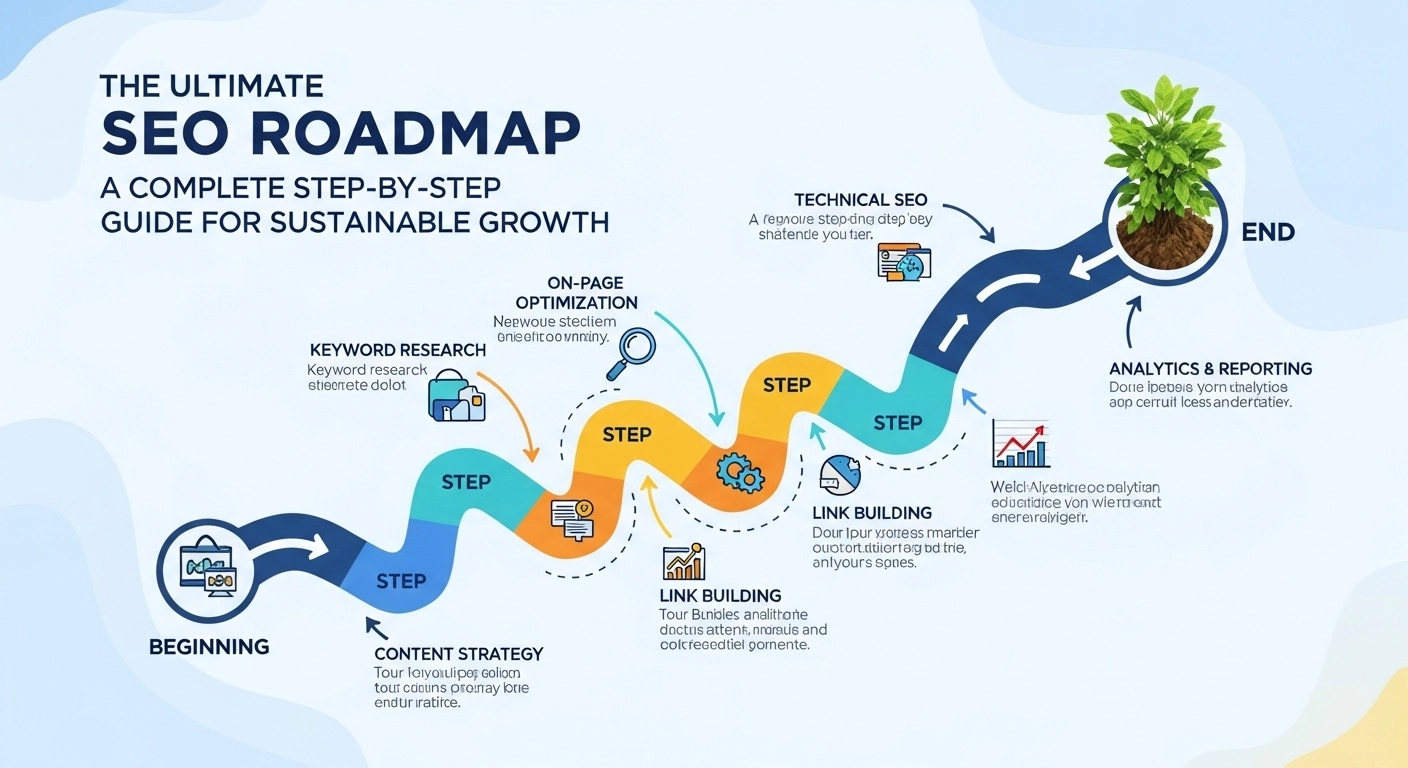
If you’ve ever wondered how some websites consistently attract traffic, generate leads, and grow without relying heavily on ads, the answer lies in a well-planned SEO roadmap. It’s not about random tactics or chasing trends—it’s about building a structured, long-term strategy that delivers measurable results.
An SEO roadmap acts as your strategic blueprint. It tells you what to do, when to do it, and how to prioritize efforts for maximum impact. Without it, even the best ideas can lead to scattered execution and missed opportunities.
This guide will walk you through a complete, practical roadmap—from foundation to scaling—so you can build a strong, sustainable presence that grows over time.
What Is an SEO Roadmap?
An SEO roadmap is a structured plan that outlines all the tasks, priorities, timelines, and strategies needed to improve a website’s visibility in search engines.
Instead of guessing what to do next, a roadmap helps you:
- Focus on high-impact activities
- Avoid wasting time on low-value tasks
- Track progress over time
- Align efforts with business goals
In simple terms, it turns chaos into clarity.
Why an SEO Roadmap Matters
Without a roadmap, efforts often become reactive. You might publish content randomly, fix issues inconsistently, or chase rankings without understanding why.
A proper roadmap provides:
Direction and Focus
It ensures every action contributes to a clear goal.
Better Resource Allocation
You spend time and money where it matters most.
Measurable Progress
You can track what’s working and improve what’s not.
Long-Term Growth
Instead of short bursts of traffic, you build lasting visibility.
The Complete SEO Roadmap (Step-by-Step)
Goal Setting and Planning
Before doing anything technical or creative, define what success looks like.
Ask yourself:
- Do you want more traffic, leads, or sales?
- Who is your target audience?
- What problems are you solving?
Set measurable goals such as:
- Increase organic traffic by 50% in 6 months
- Rank on the first page for specific keywords
- Generate a certain number of leads
Clear goals guide every decision that follows.
Website Audit
A thorough audit reveals where you currently stand.
Technical Audit
Check for:
- Broken links
- Slow page speed
- Mobile usability issues
- Indexing problems
Content Audit
Evaluate:
- Outdated content
- Thin or low-quality pages
- Duplicate content
Performance Audit
Analyze:
- Current rankings
- Traffic sources
- Top-performing pages
This phase helps you identify gaps and opportunities.
Keyword Research
Keyword research is the backbone of your roadmap.
Focus on finding:
- High-intent keywords (users ready to act)
- Long-tail keywords (less competition, higher conversion)
- Informational queries (to build authority)
Example:
Instead of targeting “shoes,” target “best running shoes for beginners.”
This phase helps you understand what your audience is searching for and how to meet their needs.
Competitor Analysis
Understanding competitors gives you a strategic advantage.
Look at:
- What keywords they rank for
- Their top-performing content
- Their backlink sources
Ask:
- What are they doing well?
- Where are they weak?
Use this insight to create better content and smarter strategies.
Content Strategy and Planning
Content is the core of your roadmap.
Build a Content Plan
Create a structured plan that includes:
- Blog posts
- Guides
- Product or service pages
Content Types to Include
- Educational articles
- Problem-solving guides
- Comparison posts
- Case studies
Content Calendar
Plan content weekly or monthly to stay consistent.
Consistency builds authority and trust over time.
On-Page Optimization
This step ensures your content is properly structured and easy to understand.
Focus on:
- Clear headings and structure
- Natural keyword placement
- Engaging introductions and conclusions
- Internal linking between pages
Make content readable for both users and search engines.
Technical Improvements
Even great content won’t perform well if your website has technical issues.
Key areas to optimize:
- Page speed
- Mobile responsiveness
- Secure connection (HTTPS)
- Clean URL structure
A technically strong website improves user experience and performance.
Link Building Strategy
Links from other websites act as trust signals.
Focus on:
- Guest posting
- Creating shareable content
- Outreach to relevant websites
Quality matters more than quantity. A few strong links are better than many weak ones.
Tracking and Analytics
You can’t improve what you don’t measure.
Track:
- Traffic growth
- Keyword rankings
- User behavior
- Conversion rates
Use this data to refine your strategy continuously.
Continuous Optimization
SEO is not a one-time task. It requires ongoing improvement.
Regularly:
- Update old content
- Add new information
- Improve underperforming pages
Small improvements over time lead to big results.
This phased approach ensures steady progress.
Important Things Most People Overlook
Many people focus only on content and keywords but ignore critical elements.
Search Intent
Understanding why users search is more important than the keyword itself.
User Experience
If visitors leave quickly, rankings won’t improve.
Content Depth
Shallow content rarely performs well. Depth and value matter.
Patience
Results take time. Consistency is key.
Common Mistakes and Misconceptions
Expecting Instant Results
SEO is a long-term strategy, not a quick fix.
Keyword Stuffing
Overusing keywords harms readability and performance.
Ignoring Technical Issues
Even small technical problems can limit growth.
Publishing Without Strategy
Random content rarely delivers meaningful results.
Focusing Only on Traffic
Traffic without conversions has little value.
Practical Tips and Best Practices
Focus on solving real problems. Content that genuinely helps people performs better over time.
Write for humans first, not algorithms. Natural language always wins.
Keep updating your content. Fresh and relevant information maintains rankings.
Build authority gradually. Consistency matters more than speed.
Track your results regularly. Data-driven decisions lead to better outcomes.
Keyphrase density: The keyphrase was found 0 times. That’s less than the recommended minimum of 2 times for a text of this length. Focus on your keyphrase!
FAQs
How long does it take to see results from an SEO roadmap?
Typically, noticeable results take 3 to 6 months. However, competitive niches may take longer.
Can I follow an SEO roadmap without technical knowledge?
Yes. You can start with basic steps like content creation and gradually learn technical aspects.
How often should I update my roadmap?
Review it monthly and adjust based on performance and new opportunities.
Is content more important than technical optimization?
Both are equally important. Content attracts users, while technical optimization ensures smooth performance.
Do I need a large budget to succeed?
Not necessarily. With the right strategy and consistent effort, even small budgets can achieve strong results.
Conclusion
An SEO roadmap is more than just a plan—it’s a long-term strategy for sustainable growth. It helps you stay focused, prioritize effectively, and build a strong foundation that delivers results over time.
By following a structured approach—starting from research and planning to execution and optimization—you can create a system that continuously improves your visibility and performance.
Success doesn’t come from doing everything at once. It comes from doing the right things consistently.
If you commit to the process, stay patient, and keep improving, the results will follow.
