
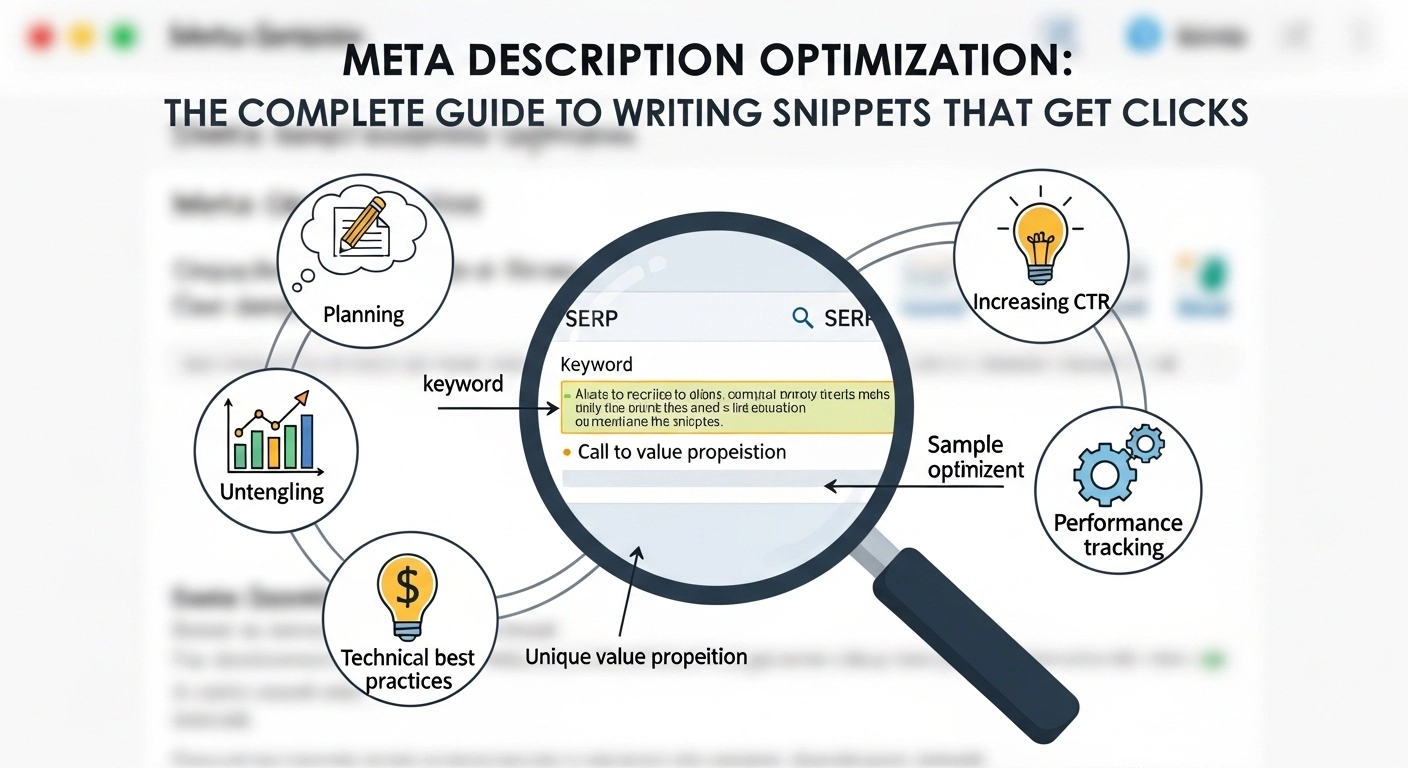
When people search online, they’re presented with a list of results—titles, links, and short descriptions. That short description is your first real opportunity to persuade someone to visit your page. It’s not just a summary; it’s your pitch.
A well-written meta description can dramatically improve how often users click on your page. Even if your content ranks well, a weak description can cause people to scroll past it. On the other hand, a compelling one can attract attention, build trust, and increase traffic without changing your rankings at all.
This guide explains everything you need to know about meta description optimization—from what it is and why it matters to how to write high-performing descriptions step by step.
Quick Answer: What Is Meta Description Optimization?
Meta description optimization is the process of crafting concise, compelling summaries (typically 150–160 characters) that encourage users to click on your page from search results.
It focuses on clarity, relevance, and persuasion—not just describing content, but motivating action.
What Is a Meta Description?
A meta description is a short piece of text that summarizes a webpage’s content. It appears under the page title in search results.
While it doesn’t directly determine where your page ranks, it strongly influences whether users choose to click your link over others.
Think of it as your page’s advertisement in search results. You’re competing for attention in a crowded space, and your description must stand out instantly.
Why Meta Descriptions Matter
Influence on Click-Through Rate
A strong meta description can significantly increase your click-through rate (CTR). Even if you rank in the middle of the page, a persuasive description can attract more clicks than higher-ranking results.
Sets User Expectations
It tells users exactly what they’ll get when they click. Clear expectations reduce bounce rates and improve overall user satisfaction.
Improves Visibility
Search engines often highlight keywords in meta descriptions. When users see their search terms in bold, your result becomes more noticeable.
Supports Brand Voice
It’s a chance to reflect your tone—whether informative, friendly, or authoritative—and build trust before the user even visits your page.
Ideal Length and Structure
Character Limits
The recommended length is around 150 to 160 characters. Shorter descriptions may not provide enough detail, while longer ones risk being cut off.
Structure of an Effective Meta Description
A strong meta description usually includes:
- A clear summary of the content
- A relevant keyword or phrase
- A benefit or value proposition
- A subtle call to action
For example:
“Learn how to write compelling meta descriptions that increase clicks. Practical tips, examples, and mistakes to avoid.”
Step-by-Step Guide to Writing an Optimized Meta Description
1. Understand the Page Content
Start by identifying the main purpose of the page. What problem does it solve? What value does it provide?
If your page doesn’t have a clear focus, your description won’t either.
2. Identify User Intent
Ask yourself: what is the user looking for?
Are they:
- Seeking information?
- Looking to compare options?
- Ready to take action?
Your description should match this intent.
3. Include Relevant Keywords Naturally
Use the main phrase users are searching for, but avoid stuffing. It should feel natural and fit smoothly into the sentence.
4. Highlight the Benefit
Explain why the user should click your result instead of others. What makes your page useful, unique, or better?
5. Add a Call to Action
Encourage the user to take the next step. Simple phrases like:
- Learn more
- Discover how
- Get started
- Find out now
These subtly guide behavior without sounding pushy.
6. Keep It Clear and Concise
Avoid complex language or unnecessary words. Every character should serve a purpose.
Examples of Effective Meta Descriptions
Example 1: Informational Content
“Discover practical tips for writing better meta descriptions that boost clicks and improve visibility. Simple steps anyone can follow.”
Why it works: Clear benefit, simple language, and focused message.
Example 2: Guide or Tutorial
“Step-by-step guide to crafting powerful meta descriptions. Learn what works, avoid common mistakes, and improve your results.”
Why it works: Promises actionable value and addresses pain points.
Example 3: Product Page
“Shop high-quality wireless headphones with crystal-clear sound and long battery life. Explore top-rated options and find your perfect fit.”
Why it works: Highlights benefits and encourages exploration.
Important Elements People Often Overlook
Uniqueness Across Pages
Every page should have a unique meta description. Duplicate descriptions confuse users and reduce effectiveness.
Emotional Appeal
Facts matter, but emotion drives clicks. Words like “easy,” “proven,” “fast,” or “powerful” can make a big difference.
Relevance to Content
Misleading descriptions might increase clicks initially, but they harm trust and lead to higher bounce rates.
Alignment with Title
Your title and description should complement each other, not repeat the same information.
Common Mistakes and Misconceptions
Writing for Search Engines Instead of Humans
Many people focus too much on keywords and forget the reader. If it doesn’t sound natural, it won’t work.
Making It Too Vague
Descriptions like “Learn more about this topic here” provide no value. Users need a clear reason to click.
Ignoring Length Limits
If your description gets cut off, key information might be lost. Always check how it appears in search results.
Using the Same Description Everywhere
Copying the same meta description across multiple pages reduces effectiveness and clarity.
Overpromising
If your description promises something your page doesn’t deliver, users will leave quickly.
Meta Description vs Title Tag
While both appear in search results, they serve different roles.
The title tag is the headline. It grabs attention and tells users what the page is about in a few words.
The meta description expands on that idea. It provides context, detail, and persuasion.
Think of the title as the hook and the description as the pitch.
Best Practices for Better Results
Write for Humans First
Focus on clarity, readability, and usefulness. If it sounds good to a human, it’s likely effective.
Use Active Voice
Active sentences are more engaging and easier to understand.
Instead of:
“This guide will be helpful for understanding…”
Use:
“Learn how to write better descriptions…”
Test and Improve
Try different variations and observe which ones attract more clicks. Small changes can lead to noticeable improvements.
Match Tone with Content
If your page is formal, keep the tone professional. If it’s casual, use a conversational style.
Avoid Keyword Stuffing
Repeating the same phrase multiple times makes the description awkward and less effective.
Advanced Tips for Higher Engagement
Use Numbers or Specifics
Specific details catch attention. For example:
“10 proven tips to write better meta descriptions”
Numbers make content feel more concrete and actionable.
Create Curiosity
Give just enough information to spark interest without revealing everything.
Address a Problem
If you highlight a common challenge, users are more likely to click.
Example:
“Struggling to get clicks? Learn how to write descriptions that stand out.”
Include a Value Proposition
Clearly state what the user gains by clicking.
FAQs
Do meta descriptions affect rankings directly?
No, they don’t directly determine rankings. However, they influence click-through rate, which can impact overall performance.
What happens if I don’t write a meta description?
Search engines may generate one automatically using page content. These are often less compelling and less targeted.
Can I use emojis in meta descriptions?
In some cases, yes—but use them carefully. They should match your tone and not distract from the message.
How often should I update meta descriptions?
Review them periodically, especially if your page content changes or performance drops.
Is it okay to reuse parts of a description?
You can reuse structure or ideas, but each page should have a unique description tailored to its content.
Conclusion
Meta description optimization is not about filling a technical requirement—it’s about influencing human behavior. It’s your opportunity to make a strong first impression, communicate value, and stand out in a crowded space.
When done right, it can significantly improve how often people choose your page over others, even without changing your position in search results.
Focus on clarity, relevance, and persuasion. Keep your audience in mind, match their intent, and deliver exactly what you promise. Over time, small improvements in your descriptions can lead to meaningful gains in visibility and engagement.

Shel Silverstein was a multi-talented poet, songwriter, and children’s author from the USA. His playful poems often felt like riddles in disguise, blending humor with deep meaning, making him a timeless favorite for puzzle and word lovers.