
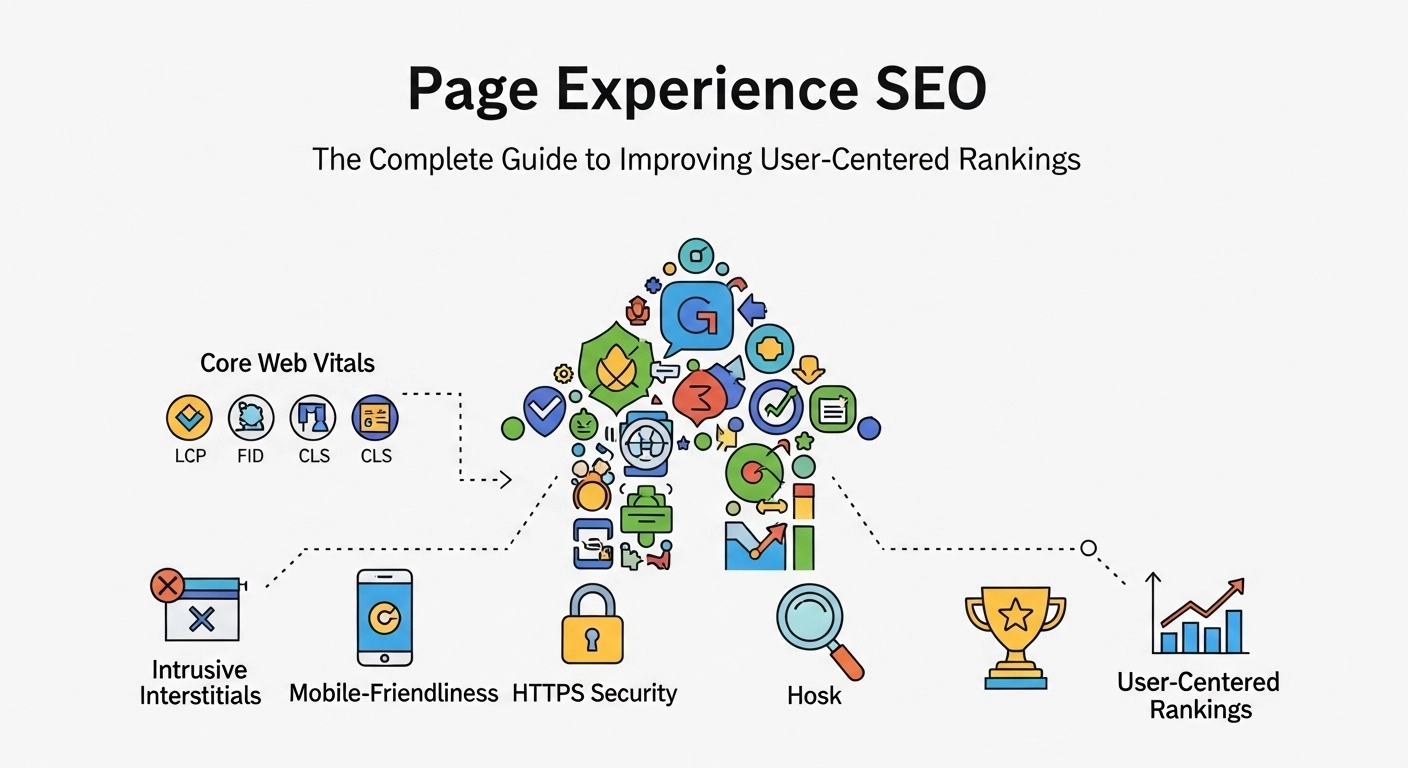
Search engines are no longer focused only on keywords and backlinks. Modern ranking systems also evaluate how users actually experience a webpage after they land on it. This shift has made page experience a critical part of overall search performance.
Page experience SEO is all about how fast, stable, secure, and user-friendly your website feels to real visitors. A page that loads quickly, responds smoothly, and avoids frustrating interruptions is more likely to rank well and retain users. On the other hand, even high-quality content can struggle if the user experience is poor.
In simple terms, page experience SEO is the combination of technical performance and usability factors that shape how people interact with your website.
Quick Answer: What is Page Experience SEO?
Page experience SEO refers to a set of ranking signals that measure how users perceive the experience of interacting with a web page. It includes loading speed, visual stability, interactivity, mobile usability, and website security. The better the experience, the higher the likelihood of improved search visibility and user engagement.
What is Page Experience SEO?
Page experience SEO is a framework used by search systems to evaluate whether a webpage delivers a smooth and satisfying user experience. It is not a single factor but a collection of signals that together define usability.
These signals focus on how users feel when interacting with a page rather than just what the page contains. For example, two pages may have similar content, but the one that loads faster and feels more stable will generally perform better.
The goal is to ensure users are not frustrated by slow loading, unexpected layout shifts, or intrusive pop-ups.
Why Page Experience Matters for Rankings and Users
Page experience matters because search engines aim to serve the most helpful and enjoyable results. If users consistently leave a site due to poor experience, it signals that the page is not satisfying their needs.
A strong page experience improves:
User engagement, because visitors stay longer and interact more
Conversion rates, because smooth navigation builds trust
Search performance, because positive behavior signals reinforce rankings
Brand reputation, because users associate quality experience with credibility
Even if content is excellent, a poor experience can reduce its impact significantly.
Core Elements of Page Experience SEO
Page experience is built on several key components that work together. Each one plays a specific role in shaping how users interact with a website.
Core Web Vitals
Core Web Vitals are the most important technical measurements of page experience. They focus on three key aspects of performance: loading, interactivity, and visual stability.
Largest Contentful Paint (LCP)
LCP measures how long it takes for the main content of a page to load. If a page takes too long to show meaningful content, users may leave before it finishes loading.
A good LCP creates the impression of speed and responsiveness.
Interaction to Next Paint (INP)
INP measures how quickly a page responds when a user interacts with it, such as clicking a button or tapping a link. Slow responses make a website feel laggy or broken.
A strong INP ensures smooth interaction and real-time responsiveness.
Cumulative Layout Shift (CLS)
CLS measures unexpected movement of elements on a page while it is loading. For example, when a user tries to click a button but it suddenly shifts position, it creates frustration.
A low CLS score means the page is visually stable and predictable.
Mobile Friendliness
Most users browse websites on mobile devices, making mobile usability essential. A mobile-friendly page adapts properly to different screen sizes and ensures text, buttons, and images are easy to use without zooming or scrolling excessively.
Poor mobile design often leads to high bounce rates and lost traffic.
HTTPS Security
Secure browsing is a fundamental part of page experience. HTTPS ensures that data exchanged between the user and the website is encrypted and protected.
A secure website builds trust and signals reliability. Browsers also warn users when a site is not secure, which can significantly reduce engagement.
Safe Browsing
Safe browsing ensures that a website is free from malicious content such as malware, deceptive downloads, or harmful scripts.
If a website is flagged as unsafe, it can lose visibility and credibility quickly.
Intrusive Interstitials
Intrusive interstitials are pop-ups or overlays that block access to content, especially on mobile devices. While some pop-ups are acceptable, overly aggressive ones harm user experience.
Pages that avoid disruptive interstitials provide a smoother and more enjoyable browsing experience.
How to Improve Page Experience SEO
Improving page experience requires both technical optimization and user-focused design decisions.
One of the most effective steps is optimizing page speed. This includes compressing images, reducing unnecessary scripts, and using efficient hosting. Faster loading improves both user satisfaction and engagement.
Another important step is improving mobile usability. A responsive design ensures that content automatically adjusts to different screen sizes. Buttons should be easy to tap, and text should remain readable without zooming.
Reducing layout shifts is also essential. This can be achieved by defining image dimensions, avoiding late-loading elements that push content down, and using stable layout structures.
Improving server response time can significantly enhance performance as well. A faster server reduces delays in loading initial content.
Finally, maintaining clean and secure code ensures long-term stability and trustworthiness of the website.
Important Factors People Often Overlook
Many website owners focus only on speed but ignore other subtle elements that impact page experience.
One commonly overlooked factor is font loading behavior. If fonts load slowly or change unexpectedly, it can cause visual instability.
Another overlooked area is third-party scripts. Ads, analytics tools, and embedded widgets can slow down performance if not managed properly.
Image optimization is often ignored as well. Large, uncompressed images can significantly increase load times without adding real value.
User flow clarity is another hidden factor. Even if a page loads quickly, confusing navigation can still harm the experience.
Common Mistakes and Misunderstandings
One common mistake is assuming that page experience is only about speed. While speed is important, it is only one part of a larger system.
Another misunderstanding is overloading pages with too many plugins or scripts. This can slow down performance and create conflicts that affect usability.
Some website owners also ignore mobile optimization, believing desktop performance is enough. In reality, mobile performance is often more important.
Another mistake is focusing only on technical fixes without improving content layout and readability. A fast page that is hard to read still provides a poor experience.
Best Practices for Strong Page Experience
A strong page experience requires consistency and attention to detail.
A clean and lightweight design helps reduce unnecessary load. Simple layouts often perform better than overly complex designs.
Prioritizing above-the-fold content ensures users see meaningful information quickly, improving engagement.
Using modern image formats and compression techniques reduces load time without sacrificing quality.
Keeping scripts minimal and organized prevents performance bottlenecks.
Regular performance testing helps identify issues before they affect users. Monitoring tools can reveal slow pages, layout shifts, and interaction delays.
FAQs
What is the main goal of page experience SEO?
The main goal is to ensure users have a smooth, fast, and secure browsing experience that encourages engagement and satisfaction.
Does page experience affect search rankings?
Yes, page experience is one of many ranking signals that influence visibility, especially when combined with high-quality content.
What are Core Web Vitals in simple terms?
Core Web Vitals are metrics that measure how fast a page loads, how quickly it responds, and how stable it appears while loading.
How can I quickly improve page experience?
You can start by improving page speed, optimizing images, enabling HTTPS, and ensuring your site works well on mobile devices.
Is page experience more important than content?
No, content quality remains essential. Page experience enhances content by making it easier and more enjoyable to access.
Conclusion
Page experience SEO represents a major shift in how websites are evaluated. It goes beyond content and keywords to focus on how users actually feel when interacting with a page. A successful website today must deliver not only valuable information but also a fast, stable, secure, and user-friendly environment.
By improving loading speed, ensuring mobile usability, maintaining visual stability, and providing a secure browsing experience, websites can significantly enhance both user satisfaction and search performance. In the long run, a strong page experience leads to better engagement, higher trust, and more consistent visibility.
