
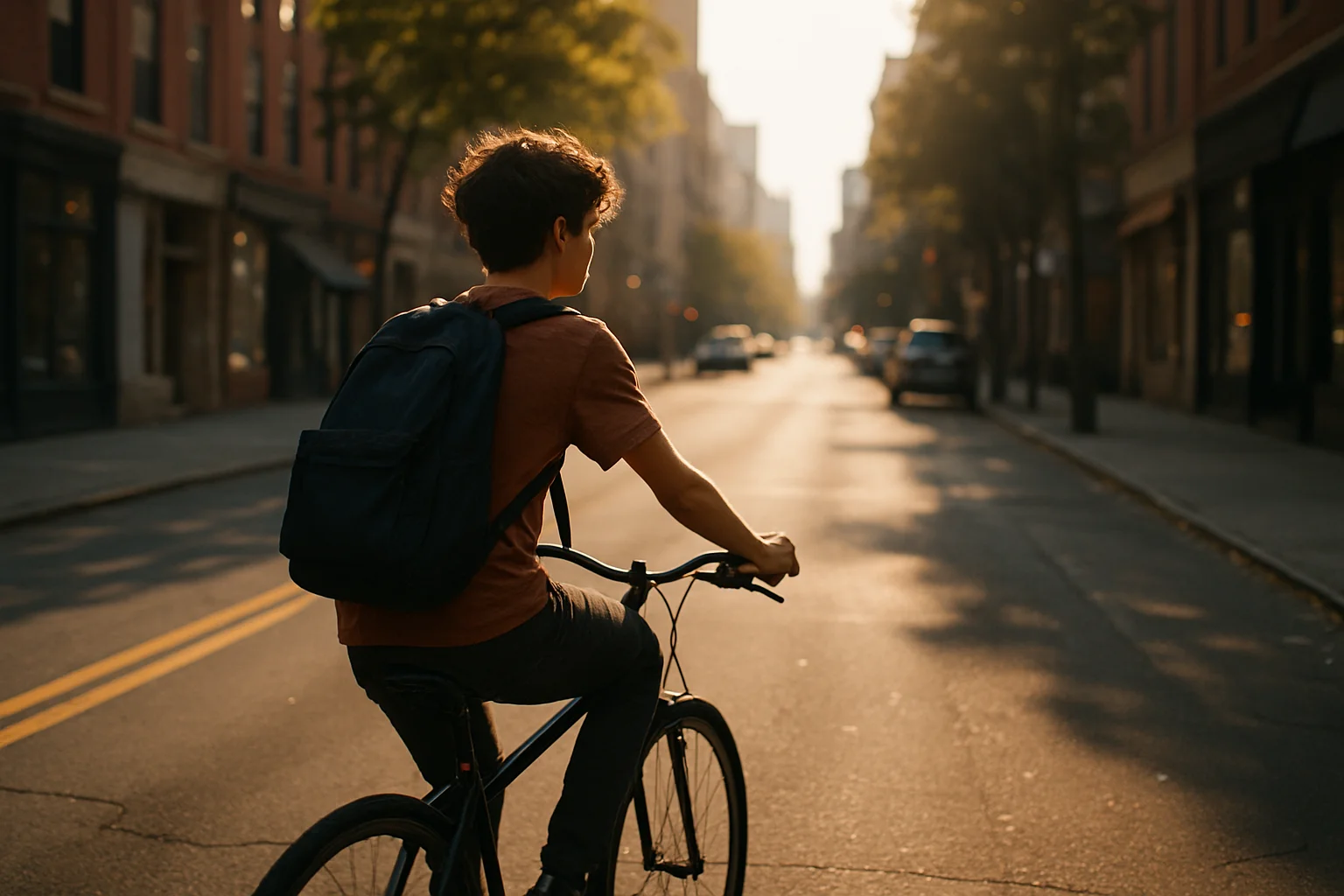
If you’ve come across the “I pedal down the streets” riddle and found yourself second-guessing the answer, you’re definitely not alone. This clever little puzzle pops up everywhere—from classroom worksheets and puzzle apps to family game nights and group chats—and it feels more complicated than it really is. With mentions of pedaling, wind, movement, and a “perfect gift,” the riddle keeps you thinking without ever plainly saying what’s actually in motion.
This guide is designed for teachers, parents, puzzle lovers, and curious kids who want a clear, no-nonsense explanation. You’ll get the complete riddle, the straightforward answer, and a simple, step-by-step breakdown in kid-friendly language. From there, we’ll dive into a collection of fun bicycle riddles, creative ways to use them in classrooms or parties, and easy tips for writing your own. By the end, the mystery won’t just be solved—you’ll have a full set of bike-themed brainteasers ready to roll.
Quick Answer
The “I pedal down the streets” riddle is describing a bicycle. The clues about pedaling, racing the wind, and being a long-time “perfect gift” all match a simple bike that you ride outside. When you picture a childhood present you pedal through the neighborhood, a bicycle fits every line cleanly and fairly.
Table of Contents
- I Pedal Down the Streets Riddle: Full Text
- I Pedal Down the Streets Riddle Answer (Bicycle)
- Meaning and Themes Behind the Bicycle Riddle
- Kid-Friendly Explanation of the Pedal Riddle
- Similar Bicycle Riddles With Clear Answers
- Short Bicycle Riddles for Young Kids
- Tricky Bike Riddles for Teens and Adults
- Funny Cycling Riddles and Light Wordplay
- Riddles About Bike Parts, Gears, and Wheels
- How to Write Your Own Bicycle Riddles
- Using Bicycle Riddles in Classrooms and Homeschool
- Party, Camp, and Game-Night Ideas With Bike Riddles
- Online Games and Apps Featuring Bike Riddles
- Life Lessons and Safety Messages Hidden in Bike Riddles
- Short One-Line Bike Riddles to Memorize Quickly
- Quick Recap of the I Pedal Down the Streets Riddle
- FAQs
- Conclusion
TL;DR
• The answer to the “I pedal down the streets” riddle is a bicycle.
• Clues about pedals, wind, and the “perfect gift” all point to a bike.
• It’s a great icebreaker for kids, teens, and family game nights.
• You can build whole lessons and party games around bicycle riddles.
• Use this guide as a template for creating and sharing your own riddles.
I Pedal Down the Streets Riddle: Full Text
The riddle appears in slightly different versions online, but a common wording is:
“I pedal down the streets, racing wind so bold and swift.
Been using it forever, it was the one and perfect gift.”
It’s short, musical, and packed with clues. At first, many people imagine the speaker as a person pedaling. But the riddle never says “I’m a kid” or “I’m a rider”—and that detail is what makes it a fair puzzle. The trick is to think about what object is being described, not who is sitting on it.
• The riddle uses a tiny poem with rhythm and motion.
• “Pedal down the streets” instantly suggests feet on pedals.
• The wind clue hints at outdoor speed in the open air.
• “Been using it forever” points to something long-lasting.
• Calling it “the one and perfect gift” feels like childhood nostalgia.
• There’s no mention of engines, fuel, or electricity.
• The setting feels like sidewalks and neighborhood streets.
• The object carries a rider but the riddle never says “person.”
• The lines are easy to read out loud and remember.
• The answer hides in plain sight by staying unnamed.
I Pedal Down the Streets Riddle Answer (Bicycle)
The direct solution is simple: the riddle is talking about a bicycle. Once you picture a bike rolling down a quiet street, everything clicks into place. Pedals, wind, neighborhood roads, and a favorite gift all line up with a classic two-wheeler.
The clever twist is that the “I” is the bicycle itself. It “pedals down the streets” because its pedals are turning, even though it doesn’t have feet. It “races wind so bold and swift” because bikes are open to the air, especially when a child rides fast. And for many families, a first bike really is “the one and perfect gift” that gets used for years.
• Pedals are the strongest clue that the object is a bike.
• The riddle describes a ride powered by legs, not an engine.
• The speaker never has hands, feet, or a voice of its own.
• A well-loved bike can be used for many seasons.
• First bicycles are classic birthday or holiday gifts.
• Riding fast makes you “race the wind” naturally.
• Streets and sidewalks are standard bike spots for kids.
• Other toys like scooters and skateboards don’t match every detail.
• The simplest answer that fits every clue is usually the right one.
Meaning and Themes Behind the Bicycle Riddle
Beyond the answer, this riddle carries a cozy, throwback feeling. It quietly reminds people of learning to ride, wobbling, falling, trying again, and finally gliding down the block with wind in their face. That emotional layer is part of why the riddle travels so well online.
It also shows how everyday objects are perfect for brainteasers. You don’t need something magical or rare. By letting the bicycle “speak,” the riddle turns a common object into a tiny story about freedom, practice, and growing up.
• The riddle nudges you to remember early riding memories.
• Wind and speed suggest freedom, courage, and independence.
• The “perfect gift” line hints at birthdays and big milestones.
• Personifying the bike makes it feel like a narrator, not just a tool.
• The mystery comes from leaving one obvious word unsaid.
• Listeners learn to question their first picture of the scene.
• The puzzle never lies; it just hides one piece of information.
• Themes of childhood, effort, and fun sit just under the surface.
• The final answer feels fair and satisfying, not like a trick.
Kid-Friendly Explanation of the Pedal Riddle
Younger kids often picture a person doing the pedaling, not the bike. That’s normal, because in real life we talk about people riding, not bicycles “riding themselves.” A gentle, step-by-step explanation helps them flip that idea and see the object as the “I” in the poem.
Walk them through each clue. Ask what things have pedals, move outdoors, and are often given as big presents. Let them think about the bikes they see on sidewalks, then connect the clues back to that mental picture. When they finally say “bicycle,” reread the riddle together so they can feel that satisfying “aha” moment.
• Start by asking what objects use pedals every day.
• Let kids name bikes, trikes, and pedal cars.
• Point out that the riddle never mentions an engine.
• Explain that the speaker has no body—only parts like wheels.
• Ask who might call a bicycle the “perfect gift.”
• Connect wind in the riddle to riding outside at speed.
• Show a picture of a bike while you read the lines again.
• Invite kids to explain why “bicycle” fits every clue.
• Praise close thinking and effort, not just fast answers.
• Remind them that good riddles are allowed to sound tricky.
Similar Bicycle Riddles With Clear Answers
Once the pedal riddle makes sense, it’s fun to build on that success with similar puzzles. These short brainteasers all point to a bicycle, but from slightly different angles. They use clear, fair clues so solvers can practice the same type of reasoning.
Use these as warm-ups, transitions, or quick brain breaks. Read them aloud, let kids guess, then reveal the answer. Over time, they’ll notice the shared pattern: two wheels, pedals, no engine, and outdoor fun.
• I race down quiet streets with two wheels and no roar.
• I carry kids to friends using only leg power.
• I have a seat and handlebars but never eat lunch.
• I ring a little bell yet never open doors.
• I love paved paths, but I’m no car at all.
• I rest in the garage then roll out for adventures.
• I help you balance, but I never take a test.
• I travel far on rubber feet that never sleep.
• I make you stronger each time you spin my pedals.
• I turn corners smoothly while my rider leans in.
• I stand still unless someone climbs onto my seat.
• I’m a classic birthday gift with spokes that shine.
Short Bicycle Riddles for Young Kids
For early readers and younger children, shorter is better. One-line or two-line riddles let them focus on just a couple of clues at a time. These bike riddles keep the language simple while still rewarding careful listening and thinking.
Write them on cards, display them on a board, or use them during circle time. After students answer, ask which word or phrase gave the answer away. That quick reflection teaches how clues work.
• I have two wheels and a seat but no voice.
• I roll to school without needing any fuel.
• I wear a chain but never lock any doors.
• I stay upright best when someone holds my bars.
• I nap on a kickstand beside the front steps.
• I love sunny days but can handle light rain.
• I move when you pedal yet never grow tired.
• I sometimes carry baskets filled with books or snacks.
• I help you visit parks faster than your feet.
• I share bike lanes with riders wearing bright helmets.
• I squeak sometimes until someone oils my little chain.
• I wait patiently until playtime after homework ends.
Tricky Bike Riddles for Teens and Adults
Older solvers usually want a bit more challenge. You can give it to them by layering in metaphors, comparisons, and less direct clues. These puzzles still play fair, but they ask for one more beat of thinking before the answer appears.
Use them in group chats, game nights, clubs, or youth groups. Encourage people to explain why they chose their answer, not just shout it out. The reasoning conversation often becomes the best part.
• I’m a quiet chariot whose engine is your heartbeat.
• I trade your footsteps for circles on hidden gears.
• I tame long roads with nothing but spinning metal bones.
• I draw invisible lines of motion across each neighborhood.
• I turn sweat into distance without burning any fuel.
• I fly without wings whenever courage meets balance.
• I’m a puzzle of triangles rolling on rubber rings.
• I’m freedom on two wheels, parked between school days.
• I vanish from sight whenever you forget your helmet.
• I’m speed you can steer with only slight fingertips.
• I stitch together city blocks using loops of chain.
• I’m the whispering vehicle that speaks only in clicks.
Funny Cycling Riddles and Light Wordplay
Not every riddle has to be serious or poetic. A little silliness keeps groups relaxed and laughing. These light, bike-themed questions are great as icebreakers, party fillers, or quick text messages.
They work especially well when someone in the group is known as the “bike person.” Let that friend enjoy being the star for a little while as others try to catch up.
• After school, why did my bike blush on the ride home?
• Two tired wheels still never ask for a nap.
• Drama-free, this little vehicle only cares about good brakes.
• Balance jokes always make my bike giggle the loudest.
• Rolling into class, it somehow never takes attendance.
• Gas money? No thanks—my bike still offers daily rides.
• Hills turn into surprise workouts whenever my bike shows up.
• Silent as ever, it still manages to ring in happy ears.
• Always ready, my bike begs for one more little spin.
• Every night it gets locked up without a single complaint.
• Autumn might be its favorite, with crunchy leaves under the tires.
• In winter, the same bike suddenly becomes a coat rack in the garage.
Riddles About Bike Parts, Gears, and Wheels
Once students know the main object, you can zoom in on its parts. These riddles focus on chains, wheels, seats, helmets, and more. They’re perfect for science units, safety lessons, or vocabulary practice.
Have students guess the bike part, then find it on a real bicycle or in a labeled diagram. Solving the riddle and then touching the part helps the idea stick.
• I bite the road softly with a ring of rubber teeth.
• I spin and sparkle while holding silver metal spokes.
• I guard your thoughts when you ride beyond the driveway.
• I flash bright red behind you to warn passing traffic.
• I grip the path tightly whenever the ground turns slick.
• I change your effort with clicks of tiny hidden teeth.
• I let your hands steer, even over little bumps.
• I carry your weight on a narrow padded island.
• I loop around cogs, pulling wheels forward each turn.
• I squeal for attention whenever I’m dry or rusty.
• I rest across metal bars keeping your feet from slipping.
• I glow in the dark stripes sewn onto safe clothing.
How to Write Your Own Bicycle Riddles
After a few examples, many kids want to make their own puzzles. That’s a perfect chance to mix writing, logic, and creativity in one activity. A simple plan keeps it fun instead of overwhelming.
Start by choosing one object—like a bike, helmet, or wheel. List what it looks like, what it does, and where you see it. Then hide the object’s name and turn those facts into clues. You’ve just written a new riddle.
• Choose one object first, such as a bike or helmet.
• List five to ten clear facts about only that object.
• Circle the facts that feel most interesting or surprising.
• Turn each circled fact into a short, clue-style line.
• Use “I” language to personify the object.
• Never name the object directly anywhere in the riddle.
• Keep early riddles to just a few short lines.
• Read them aloud to check rhythm and sense.
• Test them on friends or classmates without extra hints.
• Fix clues that feel unfair, muddy, or misleading.
• Write the answer under the riddle for your own record.
• Collect everyone’s work into a class or family riddle book.
Using Bicycle Riddles in Classrooms and Homeschool
Bike riddles fit neatly into reading, writing, and science lessons. They’re short enough for warm-ups but rich enough for real discussion. You can pair them with art, P.E., or safety units for a full theme.
Because bikes are familiar, most students already have a mental picture to work with. That makes these riddles less scary for reluctant readers or language learners who might struggle with unfamiliar topics.
• Use the pedal riddle as a bell-ringer at the start of class.
• Ask students to underline the context clues in the text.
• Have pairs circle words that hint at motion and outdoors.
• Let groups design posters illustrating their favorite riddle.
• Connect bike riddles to a unit on forces and motion.
• Practice expression and fluency by performing riddles aloud.
• Use them as quick brain breaks between longer tasks.
• Invite multilingual students to translate riddles carefully.
• Tie safety-themed riddles to bike helmet reminders in health.
• Build a rotating “riddle wall” in your reading corner.
• Add one bike riddle to each weekly note home.
• Encourage students to submit original riddles for display.
Party, Camp, and Game-Night Ideas With Bike Riddles
Riddles are easy to plug into parties, camps, and game nights. When the event already includes biking or outdoor games, bicycle riddles feel extra on-theme and fun. Best of all, they don’t require expensive supplies.
Divide players into teams and read a clue aloud. Give each group a short time limit to talk and write their guess. Mix easy and tricky riddles so everyone gets a fair shot at success.
• Set up a “Riddle Relay” with clue stations around the yard.
• Have kids ride or run to each station before reading the puzzle.
• Award bonus points for clear explanations, not just right answers.
• Let winning teams choose the next riddle for the group.
• Turn riddles into clues on a treasure hunt route.
• Print riddle cards as simple party favors.
• Mix riddles into charades or drawing games.
• End the night with one last, extra-tricky bike riddle.
• Invite guests to invent a group riddle together.
• Keep the mood friendly—no shaming for wrong guesses.
• Offer small prizes like stickers, bracelets, or pencils.
• Save your favorite riddles to reuse at future events.
Online Games and Apps Featuring Bike Riddles
Some story games and puzzle apps hide riddles inside their levels, including the pedal-down-the-streets one. Players might find it in a diary, on a note, or as a code to unlock a door. That’s how many people meet this riddle for the first time.
When you see it in a game, it helps to treat it as its own mini lesson. Pause, write the riddle down, and try to solve it before clicking any in-game hint. Suddenly it becomes more than just a small obstacle—it turns into a true thinking moment.
• Look for story-based games that include written journal clues.
• Pause the game whenever a text riddle pops up on screen.
• Have players copy the lines onto paper or a whiteboard.
• Let everyone guess together before checking any hints.
• Talk through why the correct answer fits each clue.
• Encourage kids not to search for solutions right away.
• Use bike riddles from games as writing prompts.
• Remind players to take screen breaks between puzzle sessions.
• Choose age-appropriate games with clear content ratings.
• Discuss kindness and respect in online riddle communities.
• Praise effort, teamwork, and reasoning—not only speed.
Life Lessons and Safety Messages Hidden in Bike Riddles
Even light riddles can carry serious lessons. The pedal riddle reminds people of practice, patience, and taking care of something they love. Many riders remember falling, trying again, and finally feeling that smooth, confident glide.
You can use that feeling to talk about safety and responsibility. The same bike that seems magical in a puzzle still needs helmets, good brakes, and clear rules in real life. That balance between freedom and care is a powerful teaching tool.
• Use the riddle to open a talk about helmet safety.
• Ask kids what rules they follow when riding outside.
• Connect falling while learning to trying again in school or life.
• Talk about sharing paths with walkers, pets, and other riders.
• Mention quick checks on brakes, tires, and chains.
• Compare bike practice to practicing reading or sports.
• Highlight how small skills grow into big adventures.
• Encourage respect for family and local riding rules.
• Remind kids that fun and safety can go together.
• Invite students to share stories of learning to ride carefully.
• Tie the conversation back to kindness on roads and trails.
Short One-Line Bike Riddles to Memorize Quickly
Sometimes you just need a quick brainteaser to drop into conversation, texts, or morning meetings. These one-line bike riddles are easy to remember and fast to share.
Challenge yourself to memorize two or three and try them on friends, students, or campers. They work especially well with kids who love short, punchy questions more than long poems.
• Every afternoon, which buddy glides along on two rubber wheels?
For this faithful ride, fresh air always beats a cramped car seat.
Even when covered in wrapping paper, it keeps moving once the gift is opened.
Riding right beside you, what travels along but never pays for a seat?
Parked by the doorway, a patient partner waits until schoolwork is finished.
Each weekday, it hauls backpacks without ever stepping into a classroom.
On certain weekends, your ride feels more cheerful than you—without saying a word.
It has a seat of its own, yet never borrows anyone else’s chair.
As the sun goes down, it rests against fences, quietly taking in the scene.
Rough gravel slows it down, while smooth pavement is its favorite route.
This silent assistant covers miles without stopping for a single bite.
When its small chain dries out, it simply starts making more noise.
Quick Recap of the I Pedal Down the Streets Riddle
At first, the “I pedal down the streets” riddle sounds mysterious. But once you slow down and check each clue, it all points to one clear answer: a bicycle, remembered as a perfect gift that can “race the wind” without any engine at all.
Now you have the solution, plus a full lineup of extra bike riddles for kids, teens, and adults. Use them as warm-ups, party games, writing prompts, or just for fun. The more you practice solving and creating riddles, the easier those “aha” moments become.
• The riddle’s hidden speaker is a beloved bicycle.
• Pedals, wind, streets, and “perfect gift” all support that answer.
• You’ve seen many new bike riddles in different styles and levels.
• You’ve learned how to explain the puzzle clearly to younger kids.
• You’re ready to invent and share your own bicycle riddles.
FAQs
What is the answer to the “I pedal down the streets” riddle?
The answer is a bicycle. The riddle talks about pedaling, racing the wind, and being a long-used “perfect gift,” which all match a simple bike you ride outside. No other everyday object fits every clue as neatly.
Why does “bicycle” make more sense than a scooter or skateboard?
Scooters and skateboards aren’t usually described with the word “pedal.” Many versions of the riddle suggest two wheels, a seat, and leg-powered movement. A bicycle uses pedals, can race the wind without an engine, and is a classic “big” gift, so it fits best.
Where does the “I pedal down the streets” riddle appear online?
You may see it in mobile games, riddle blogs, homework-style Q&A pages, and social threads. Story games sometimes hide it in a diary or note as a clue. Once it spread online, people began copying and sharing it in many different formats.
How can I explain the bicycle riddle to younger children?
Break the riddle into pieces and ask guiding questions. Have kids name things with pedals, that live outside, and can be favorite gifts. Link each clue back to a picture of a bike, let them talk through their reasoning, and celebrate their thinking even if they reach the answer slowly.
Are there other riddles like this about everyday objects?
Yes. Many popular riddles personify simple items like clocks, chairs, books, or shoes. They describe what the object does without naming it. The bike riddle belongs to this group, where the fun comes from finally recognizing something you see all the time.
Can I safely use these riddles in class or at kids’ parties?
Absolutely. The riddles in this guide are clean, light, and focused on bikes, safety, and everyday fun. You can use them in classrooms, camps, family events, and youth groups, adjusting the difficulty to match your students’ ages and comfort levels.
Conclusion
The “I pedal down the streets” riddle sounds tricky at first, but it turns out to be a fair, friendly puzzle about a bicycle. By unpacking each clue, exploring extra bike riddles, and learning how to write your own, you’ve turned one short poem into a whole set of engaging brainteasers. Keep this guide handy, share the riddle with someone new, and let that simple bicycle keep rolling through your games, lessons, and conversations.

Christopher Adams is a puzzle enthusiast and riddle creator from the USA. He is known for mixing humor with logic, producing riddles that make readers laugh while they think.