
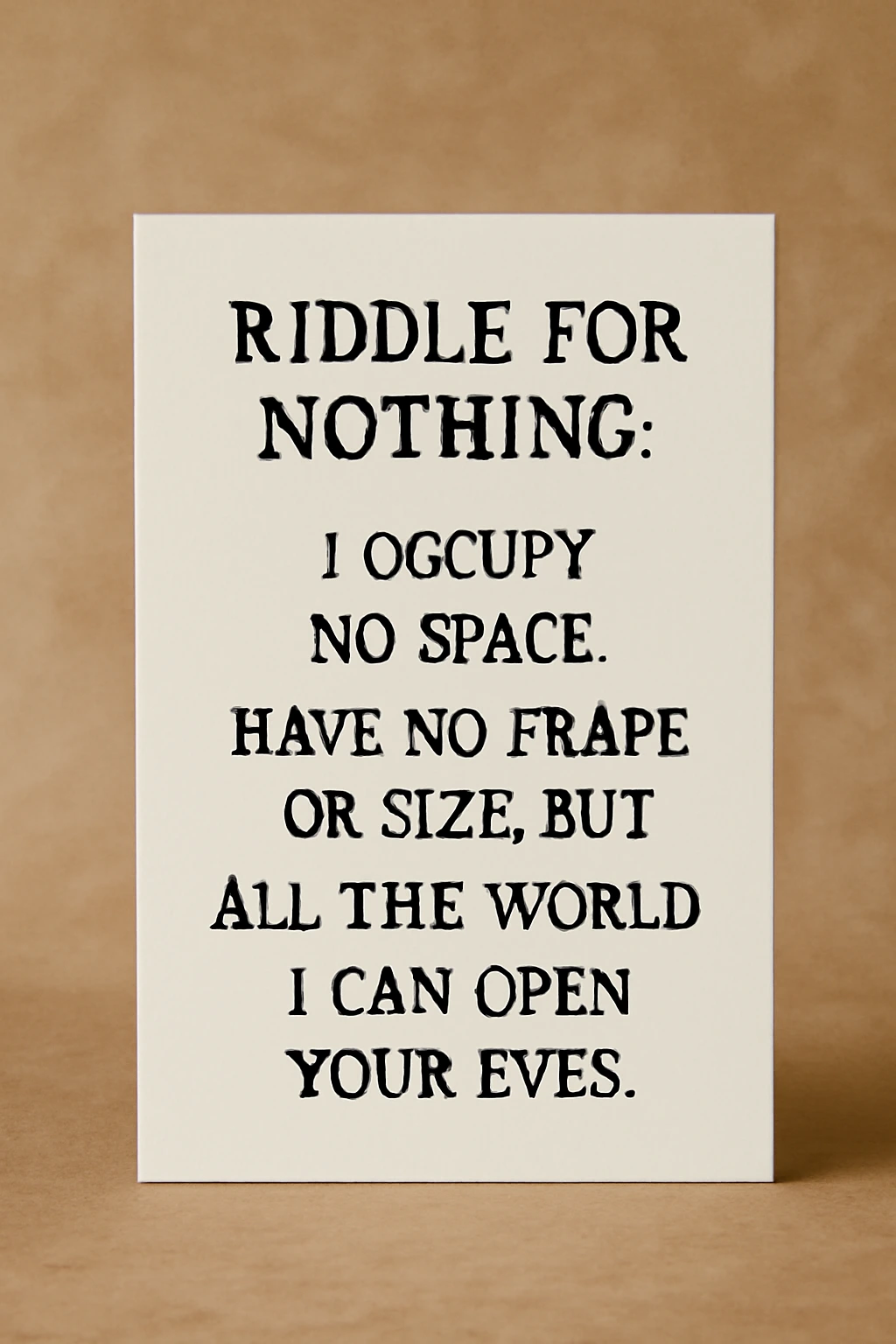
If you’re looking to puzzle your friends or spark a grin with a twist, riddles where the answer is “nothing” deliver a clever surprise. These “riddle for nothing” puzzles work across ages — from kids to adults — and often twist language or logic to reveal emptiness in a fun, unexpected way. Below you’ll find a mix of easy, tricky, classic, and philosophical riddles about nothing — all ready to use.
Quick Answer
A “riddle for nothing” is a brain‑teaser whose answer is “nothing,” “zero,” “silence,” or another expression of absence. These riddles play with paradox, wordplay, or logic — prompting the solver to realize that what seems like a missing answer is the actual answer.
Table of Contents
• Why Riddles About Nothing Are So Popular
• What Makes a Good Nothing Riddle
• Easy Nothing Riddles for Kids
• Classic “Nothing” Riddles (All Ages)
• Wordplay & Funny Nothing Riddles
• Slightly Tricky Nothing Riddles (Teens & Adults)
• Philosophical & Deep Nothing Riddles
• How to Write Your Own Nothing Riddle
• Common Mistakes to Avoid in Nothing Riddles
• Using Nothing Riddles for Games & Ice‑Breakers
• When Nothing Riddles Work Best
• Printable & Shareable Formats for Nothing Riddles
• FAQs
• Conclusion: Why Nothing Riddles Still Delight
Why Riddles About Nothing Are So Popular
Riddles about nothing tap into our surprise for absence. They twist expectations: we look for something, but the answer is emptiness. That contrast — between thought and void — makes them memorable. They’re also highly adaptable: from kids to adults, from silly jokes to deep reflections.
What Makes a Good Nothing Riddle
A good nothing riddle gives you enough clues to mislead your mind, but also subtle hints pointing to absence.
• It often presents contrasts or paradoxes.
• It hints at common assumptions (life, death, possession) then subverts them.
• It encourages mental re‑thinking rather than obvious deduction.
• It uses simple language — even profound riddles can be easy to read.
Easy Nothing Riddles for Kids
Try these with younger puzzlers:
• What’s left when you eat all your cookies?
• What do you see when your eyes are closed?
• What happens when you remove everything from a jar?
• What has nothing inside, yet can hold your hopes?
• What becomes bigger the more you take away from it?
Classic “Nothing” Riddles (All Ages)
These are timeless riddles — simple setups, surprising answers:
• What is greater than God, more evil than the devil, the poor have it, the rich need it — and if you eat it, you die?
• What’s something the poor have, the rich need, contented men desire, and the miser spends?
• What can you hold in your hand when it’s empty?
• What’s invisible, weightless, and nobody wants — yet everybody has it?
• What disappears if you say its name — yet remains afterward?
Wordplay & Funny Nothing Riddles
Playful riddles thrive when “nothing” becomes a joke:
• I’m a word of six letters; take one away and I become something — what am I?
• What’s spelled with five letters, as empty as can be — the answer’s in its name: “empty.”
• What’s full of emptiness but everyone knows it?
• What has no beginning, no end, and no shape — yet people speak of it often?
• What always costs zero but can make you think?
Slightly Tricky Nothing Riddles (Teens & Adults)
For more challenge, these require a bit more reflection:
• I am everywhere yet nowhere; I contain all and none — what am I?
• I grow when you subtract from me; I shrink when you add to me — what am I?
• I’m the thing people seek when they want peace — yet I am invisible, silent, unseen.
• I’m what remains when memory fades and words fail — what am I?
• I’m neither object, nor sound, nor motion — yet I can change everything by nothing.
Philosophical & Deep Nothing Riddles
Some riddles about nothing lean into abstract thought, inviting wonder:
• What lies between two thoughts — yet has no shape?
• What is always with you, yet never tangible?
• What never moves, yet can change how you see the world?
• What can be heavier than lead, yet nothing at all?
• What is the end of every story and the beginning of every silence?
How to Write Your Own Nothing Riddle
Want to invent riddles about nothing? Keep this in mind:
• Start with a paradox or contrast — think “something vs. nothing.”
• Use common experiences but twist them (empty jar, full silence, lack of sound).
• Build expectation of “some object,” then subvert it with absence.
• Keep language simple — clarity helps the “aha” moment land.
• Test it on a friend — if they guess “something,” you’re on track.
Common Mistakes to Avoid in Nothing Riddles
Avoid pitfalls that make riddles fail:
• Don’t make clues too vague — people may guess random abstract ideas.
• Don’t load too many contradictions — confusion kills fun.
• Avoid overly long or convoluted phrasing — simplicity often works better.
• Don’t assume solver knows obscure references — keep it universal.
Using Nothing Riddles for Games & Ice‑Breakers
Nothing riddles are perfect for group fun:
• Quick party ice‑breakers — short, shareable puzzles.
• Classroom warm‑ups — help students think abstractly.
• Family game nights — fun for kids and adults alike.
• Online chats or social media — easy to post and share.
• Brain‑teasers at work breaks — a quick mental stretch between tasks.
When Nothing Riddles Work Best
They shine when solvers expect concrete objects. They work with diverse groups — kids, teens, adults. They’re ideal in casual settings where laughs or reflections matter more than challenge. They hit hardest when solvers pause, rethink assumptions, and realize that “nothing” can be surprisingly clever.
Printable & Shareable Formats for Nothing Riddles
Make your riddles easy to share:
• Write them on index cards or sticky notes.
• Use social‑media posts or messaging apps — short riddles travel well.
• Pair with minimal graphics (empty space backgrounds, simple icons).
• Combine with themed puzzles (silence, emptiness, blank pages) for variety.
FAQs
What is a good riddle whose answer is “nothing”?
One classic: “What is greater than God, more evil than the devil, the poor have it, the rich need it — and if you eat it, you die?” Answer: Nothing.
Why do riddles about nothing often use paradox or extremes?
Because paradox highlights the contrast between expectation and emptiness — making the answer surprising.
Can children understand nothing riddles?
Yes — with simple language and clear clues, kids often enjoy the twist and the reveal.
Is “nothing” always the answer in these riddles?
Usually yes — though some riddles may use related concepts (silence, zero, emptiness) depending on wording.
Are nothing riddles good for group games and ice‑breakers?
Absolutely — their brevity and surprise factor make them great for quick fun or casual puzzle sharing.
Conclusion
Riddles about nothing prove that sometimes, the absence of something can be the puzzle’s hidden gem. Whether you want a quick laugh, a moment of reflection, or a playful challenge for friends or family, a well‑crafted “riddle for nothing” can deliver surprisingly much. Dive in, share these riddles, or create your own — and embrace the cleverness of nothing.
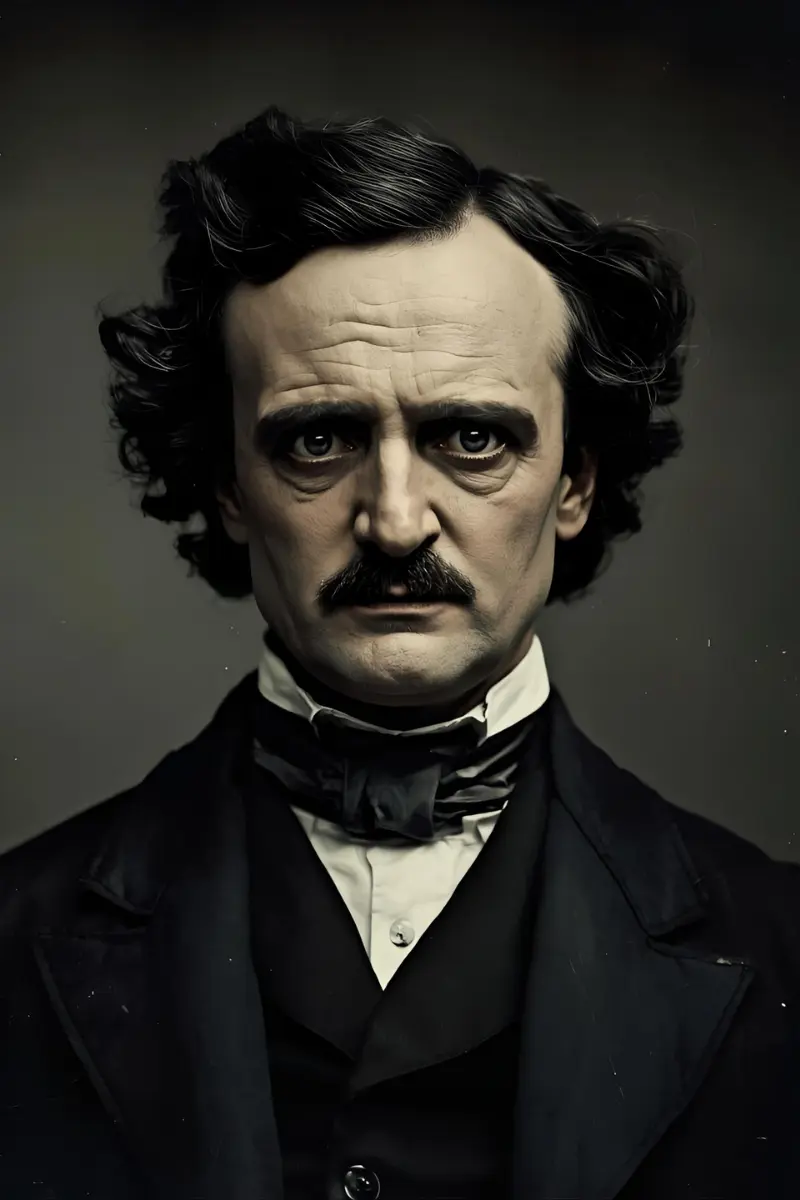
Edgar Allan Poe is one of America’s most iconic literary figures, celebrated for his mysterious short stories and haunting poems. Known as the master of gothic fiction, Poe’s works often contain riddles, codes, and puzzles that continue to inspire mystery lovers around the world.