
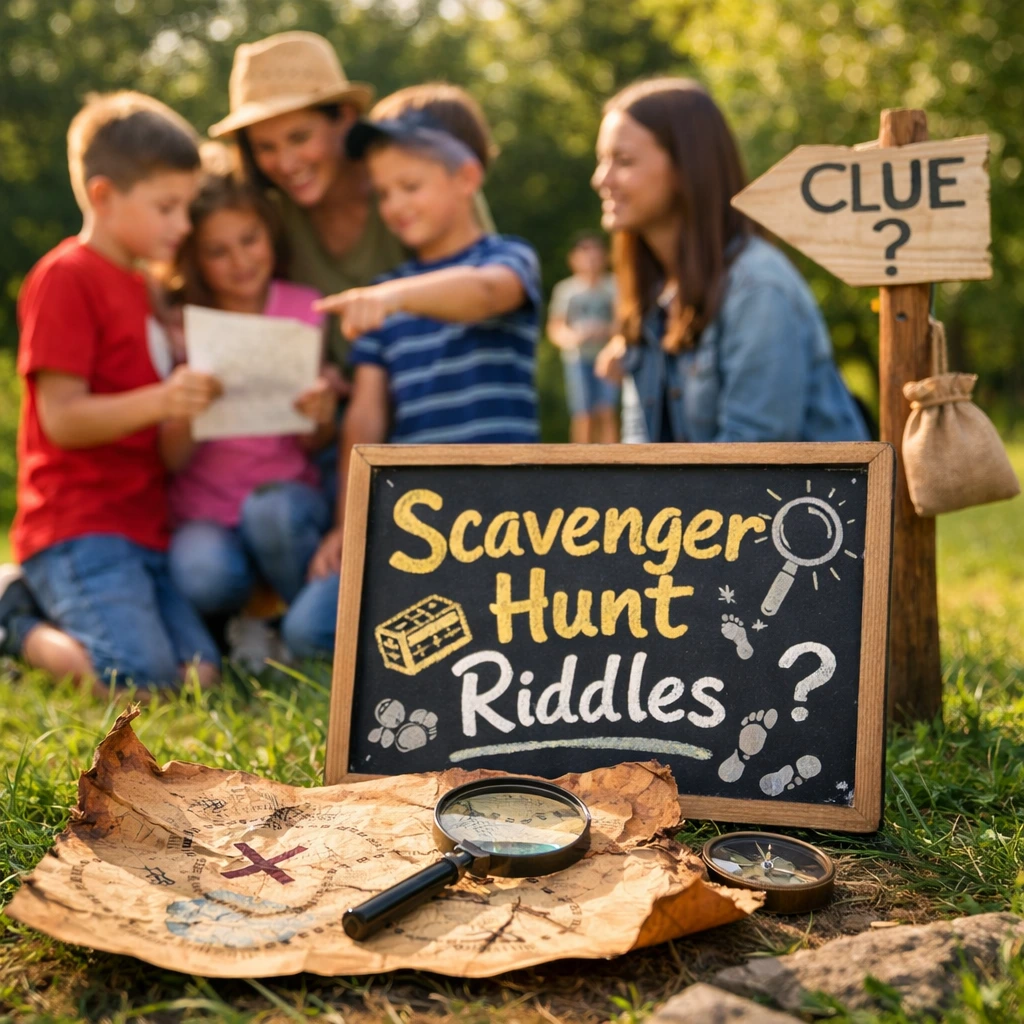
A scavenger hunt riddle transforms an ordinary game into an exciting adventure filled with curiosity and discovery. Instead of simply telling players where to go, riddles challenge them to think, laugh, and solve clever clues along the way. This makes scavenger hunts perfect for birthdays, classrooms, family gatherings, team events, and community activities.
In this complete guide, you’ll find everything you need to know about scavenger hunt riddles. From understanding what they are to exploring examples, themes, and writing tips, this pillar article is designed to help you plan a truly memorable hunt in 2025 and beyond.
Quick Answer
A scavenger hunt riddle is a short, clever clue that hints at an object or location without naming it directly. It uses wordplay, logic, or rhyme to guide players to the next step in a scavenger hunt.
TL;DR
• Scavenger hunt riddles make games more engaging
• Suitable for kids, teens, and adults
• Work for indoor and outdoor hunts
• Easy to customize by theme or difficulty
• Perfect for parties, schools, and teams
What Is a Scavenger Hunt Riddle
A scavenger hunt riddle is a puzzle-style clue that leads players to a hidden item or place. It replaces simple instructions with creativity and imagination. Players must think carefully to solve each clue before moving forward.
Riddles can be short and simple or layered and challenging. The best ones balance clarity with fun, ensuring players feel rewarded rather than frustrated.
• Uses hints instead of direct instructions
• Encourages problem-solving and logic
• Can rhyme or use descriptive language
• Fits any age group or setting
• Adds excitement to every step
Why Scavenger Hunt Riddles Are So Popular
Scavenger hunt riddles remain popular because they combine play, thinking, and movement. They appeal to both children and adults by turning a simple search into a shared experience.
Riddles create moments of surprise and teamwork. They also make events more interactive and memorable.
• Spark curiosity and excitement
• Promote teamwork and communication
• Easy to adapt for any occasion
• Encourage creative thinking
• Keep players actively engaged
Types of Scavenger Hunt Riddles
There are many styles of scavenger hunt riddles, each suited to different players and goals. Choosing the right type helps keep the hunt enjoyable.
Some riddles focus on logic, while others rely on humor or observation.
• Rhyming riddles for younger players
• Logic riddles for teens and adults
• Picture-based riddles for visual learners
• Wordplay riddles for language lovers
• Simple clues for beginners
Indoor Scavenger Hunt Riddle Ideas
Indoor scavenger hunts are perfect for homes, classrooms, and offices. Riddles can point to everyday objects players already recognize.
These riddles work well in smaller spaces and controlled environments.
• Clues for furniture and appliances
• Riddles about books and shelves
• Hints leading to doors and windows
• Puzzles for desks and drawers
• Wordplay based on common rooms
Outdoor Scavenger Hunt Riddle Ideas
Outdoor scavenger hunts add exploration and movement to the game. Riddles can reference nature, landmarks, and surroundings.
They’re ideal for parks, yards, schools, and camps.
• Clues about trees and plants
• Riddles pointing to playground equipment
• Hints using weather or sunlight
• Puzzles based on paths and signs
• Creative clues for open spaces
Scavenger Hunt Riddles for Kids
Kids enjoy riddles that are playful, visual, and easy to solve. Simple language and clear hints help keep them motivated.
These riddles should focus on fun rather than difficulty.
• Short and easy-to-understand clues
• Familiar objects and places
• Rhymes and repetition
• Bright and playful wording
• Clear, rewarding answers
Scavenger Hunt Riddles for Adults
Adult scavenger hunt riddles can be more complex and layered. They often involve clever wordplay, logic, or cultural references.
These riddles are great for parties and team activities.
• Multi-step clues
• Clever metaphors and humor
• Logic-based challenges
• Subtle hints and misdirection
• Thought-provoking wording
Funny vs Classic Scavenger Hunt Riddles
Both funny and classic riddles have their place. The choice depends on your audience and the mood of the event.
Funny riddles add laughter, while classic riddles focus on timeless puzzle-solving.
• Funny riddles lighten the mood
• Classic riddles feel traditional
• Humor works well for parties
• Classic style suits learning events
• Mixing both keeps things fresh
How to Write Your Own Scavenger Hunt Riddle
Creating your own scavenger hunt riddle is easier than it sounds. Start with the answer and build clues around it.
Focus on what makes the object or place unique.
• Identify the final answer first
• List key features or uses
• Turn features into hints
• Add rhyme or rhythm if needed
• Test the riddle before using
Choosing the Right Difficulty Level
Difficulty plays a huge role in how enjoyable your scavenger hunt feels. Too easy can be boring, while too hard can be frustrating.
Always match the challenge to your players.
• Easier riddles for younger players
• Moderate difficulty for mixed groups
• Harder riddles for adults
• Gradually increase challenge
• Avoid overly vague clues
Using Themes in Scavenger Hunt Riddles
Themes make scavenger hunts more immersive. They help tie all riddles together into one cohesive experience.
Themes also inspire creative clue ideas.
• Holiday-based themes
• Birthday or party themes
• School or classroom themes
• Adventure or mystery themes
• Seasonal scavenger hunts
Scavenger Hunt Riddles for Team Building
Scavenger hunt riddles are powerful tools for team building. They encourage communication, cooperation, and shared success.
Teams must work together to solve each clue.
• Promote collaboration
• Build problem-solving skills
• Encourage leadership roles
• Improve group communication
• Create shared memories
Common Mistakes to Avoid
Even great ideas can fall flat if common mistakes aren’t avoided. Planning ahead helps ensure success.
Keep the experience smooth and enjoyable.
• Making riddles too vague
• Using unfamiliar references
• Skipping test runs
• Hiding clues unsafely
• Overcomplicating instructions
Tips for a Successful Scavenger Hunt
A successful scavenger hunt feels exciting from start to finish. Thoughtful preparation makes all the difference.
Small details often have the biggest impact.
• Plan the route in advance
• Keep clues organized
• Set clear rules
• Prepare a fun reward
• Watch player engagement
FAQs
What makes a good scavenger hunt riddle?
A good riddle is clear, clever, and solvable. It should challenge players without confusing them.
How long should a scavenger hunt riddle be?
Most riddles work best when they are one to four short lines. Short riddles are easier to remember.
Can scavenger hunt riddles be reused?
Yes, riddles can be reused, especially if the audience is different. Changing locations also keeps them fresh.
Are scavenger hunt riddles educational?
They can be. Riddles help develop logic, reading skills, and critical thinking.
How many riddles should a scavenger hunt have?
Most hunts use five to fifteen riddles, depending on time and player age.
Conclusion
A scavenger hunt riddle is more than just a clue—it’s the heart of an unforgettable game. When thoughtfully written, riddles spark curiosity, teamwork, and joy for players of all ages. Whether you’re planning a small family activity or a large group event, using creative riddles will elevate the entire experience. With the ideas and tips in this guide, you’re ready to create a scavenger hunt riddle adventure that truly stands out.

Christopher Adams is a puzzle enthusiast and riddle creator from the USA. He is known for mixing humor with logic, producing riddles that make readers laugh while they think.