
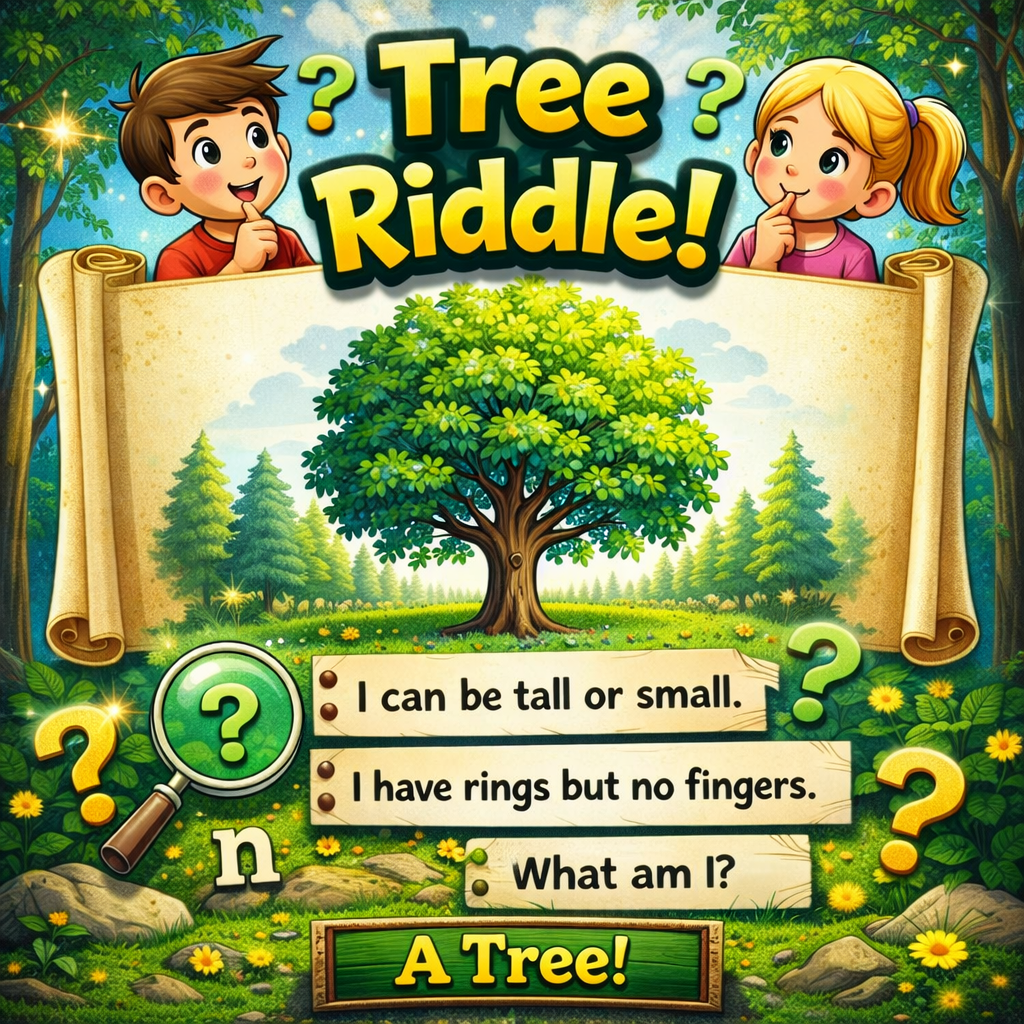
Tree riddles may seem simple at first, however, they are surprisingly powerful when it comes to sparking curiosity and creative thinking. They use familiar elements of nature—leaves, roots, bark, branches, and seasons—to form clever puzzles that challenge the mind in an enjoyable way.
Whether you’re a parent looking for fun activities, a teacher aiming to add creativity to lessons, or simply someone who enjoys clever wordplay, a tree riddle offers something for everyone. In this complete guide, you’ll explore what tree riddles are, why they’re popular, examples for all ages, and how to create your own.
Quick Answer
A tree riddle is a short puzzle that uses characteristics of trees or tree-related wordplay to challenge the reader to guess an object, idea, or concept.
TL;DR
• Tree riddles are nature-inspired puzzles
• They work for kids and adults
• Great for learning and entertainment
• Easy to share and create
• Boost creativity and thinking skills
What Is a Tree Riddle
A tree riddle is a type of word puzzle built around the features, behaviors, or symbolism of trees. It often relies on metaphor, observation, or playful misdirection.
Tree riddles are popular because they combine familiar natural imagery with clever language, making them easy to understand yet fun to solve.
• Uses tree features as clues
• Often phrased as a mystery
• Encourages imagination
• Can be literal or symbolic
• Works well in spoken form
• Suitable for all ages
• Often short and memorable
• May include humor
• Sparks curiosity
• Easy to adapt
• Can rhyme or not
• Encourages discussion
Popular Tree Riddle Examples
Classic tree riddles rely on well-known tree traits that trick the listener into thinking creatively.
• I have bark but never bite
• I have leaves but no pages
• My rings reveal my age
• I stand still yet grow taller
• I change clothes every season
• I give shade without moving
• I drink water, not wine
• Birds visit me rent-free
• My crown has no jewels
• I fall but never trip
• I grow upward, not outward
• I whisper when windy
Why Tree Riddles Are So Popular
Tree riddles have remained popular because they are timeless and flexible. They feel playful, but they also encourage deeper thinking.
• Easy to understand
• Fun for groups
• No special tools needed
• Encourage creative thinking
• Work indoors or outdoors
• Appeal to all ages
• Connect language with nature
• Great for social interaction
• Inspire curiosity
• Easy to remember
• Quick to share
• Non-competitive fun
Types of Tree Riddles
Not all tree riddles are the same. Some are simple, while others require deeper thinking.
• Easy riddles for kids
• Funny tree riddles
• Hard logic puzzles
• Wordplay-based riddles
• Seasonal tree riddles
• Educational riddles
• Metaphorical riddles
• Nature trivia riddles
• Classroom riddles
• Outdoor activity riddles
• Party riddles
• Storytelling riddles
Tree Riddles for Kids
Tree riddles for kids focus on clear clues, familiar ideas, and playful language. They’re often used to encourage learning without pressure.
• Simple vocabulary
• Clear imagery
• Often rhyming
• Short sentences
• Easy answers
• Fun guessing
• Builds confidence
• Encourages curiosity
• Great for groups
• Works in classrooms
• Promotes nature awareness
• Boosts listening skills
Tree Riddles for Adults
Adult tree riddles tend to rely more on metaphor and clever misdirection. They can be thoughtful, humorous, or even philosophical.
• Deeper meanings
• Subtle wordplay
• Metaphorical clues
• Logical twists
• Thought-provoking
• Social fun
• Conversation starters
• Mental challenge
• Often symbolic
• Requires inference
• Encourages creativity
• Memorable solutions
How to Solve a Tree Riddle
Solving a tree riddle becomes easier when you slow down and think beyond the obvious.
• Read clues carefully
• Visualize a tree
• Identify metaphors
• Ignore literal traps
• Consider tree features
• Think symbolically
• Break clues apart
• Eliminate wrong ideas
• Test possible answers
• Think creatively
• Don’t rush
• Enjoy the process
How to Create Your Own Tree Riddle
Creating a tree riddle is a fun exercise in creativity and observation.
• Choose a tree feature
• Pick a hidden angle
• Use descriptive language
• Add misdirection
• Keep it short
• Test it aloud
• Adjust difficulty
• Add rhythm if desired
• Avoid obvious clues
• Include a twist
• Make it playful
• Refine wording
Educational Uses of Tree Riddles
Tree riddles are widely used in education because they combine fun with learning.
• Teach nature concepts
• Improve vocabulary
• Encourage observation
• Promote critical thinking
• Enhance reading skills
• Support outdoor learning
• Engage students
• Encourage teamwork
• Inspire creativity
• Strengthen memory
• Improve listening
• Make lessons enjoyable
Tree Riddles in Games and Events
Tree riddles fit perfectly into games, parties, and group activities.
• Scavenger hunts
• Family game nights
• Camp activities
• Classroom challenges
• Birthday parties
• Nature walks
• Icebreakers
• Group puzzles
• Picnic games
• Holiday events
• Team building
• Storytelling sessions
Seasonal Tree Riddles
Seasonal riddles add variety and keep tree puzzles fresh throughout the year.
• Spring growth riddles
• Summer shade riddles
• Autumn leaf riddles
• Winter bare-branch riddles
• Holiday tree riddles
• Seasonal symbolism
• Nature cycle puzzles
• Weather-based clues
• Seasonal change metaphors
• Time-based riddles
• Seasonal storytelling
• Nature awareness
Common Mistakes to Avoid
Even simple riddles can fail if not written carefully.
• Too vague clues
• Overly obvious answers
• Long descriptions
• Confusing metaphors
• Forced rhymes
• Too many hints
• Unclear wording
• Age mismatch
• Overcomplication
• Weak imagery
• No clear answer
• Poor pacing
Benefits of Tree Riddles
Tree riddles offer more than entertainment. They support learning, creativity, and social interaction.
• Boost problem-solving
• Improve focus
• Encourage creativity
• Reduce stress
• Build vocabulary
• Inspire curiosity
• Promote nature awareness
• Strengthen memory
• Improve reasoning
• Encourage discussion
• Fun learning tool
• Accessible to all
FAQs
What is the answer to most tree riddles?
Most tree riddles are answered with “a tree,” though some lead to objects, ideas, or concepts related to trees.
Are tree riddles good for learning?
Yes, they help build vocabulary, reasoning skills, and nature awareness in a fun way.
Can adults enjoy tree riddles?
Absolutely. Many tree riddles use metaphor and wordplay designed for mature thinking.
How long should a tree riddle be?
A good tree riddle is usually short, clear, and easy to remember.
Can I use tree riddles in classrooms?
Yes, teachers often use them to engage students and introduce nature topics.
Do tree riddles need to rhyme?
No, rhyming is optional and depends on style and audience.
Conclusion
Tree riddles are a timeless form of wordplay that blend nature, creativity, and thinking into a simple yet powerful experience. From classrooms to campfires, they entertain, educate, and inspire curiosity at every age. By understanding how tree riddles work and learning their basic structure, you can better appreciate their clever wordplay. Moreover, as you start creating your own tree riddles, you sharpen your thinking skills and deepen your creativity. As a result, you enjoy endless moments of clever fun while viewing the natural world from a fresh perspective.
