
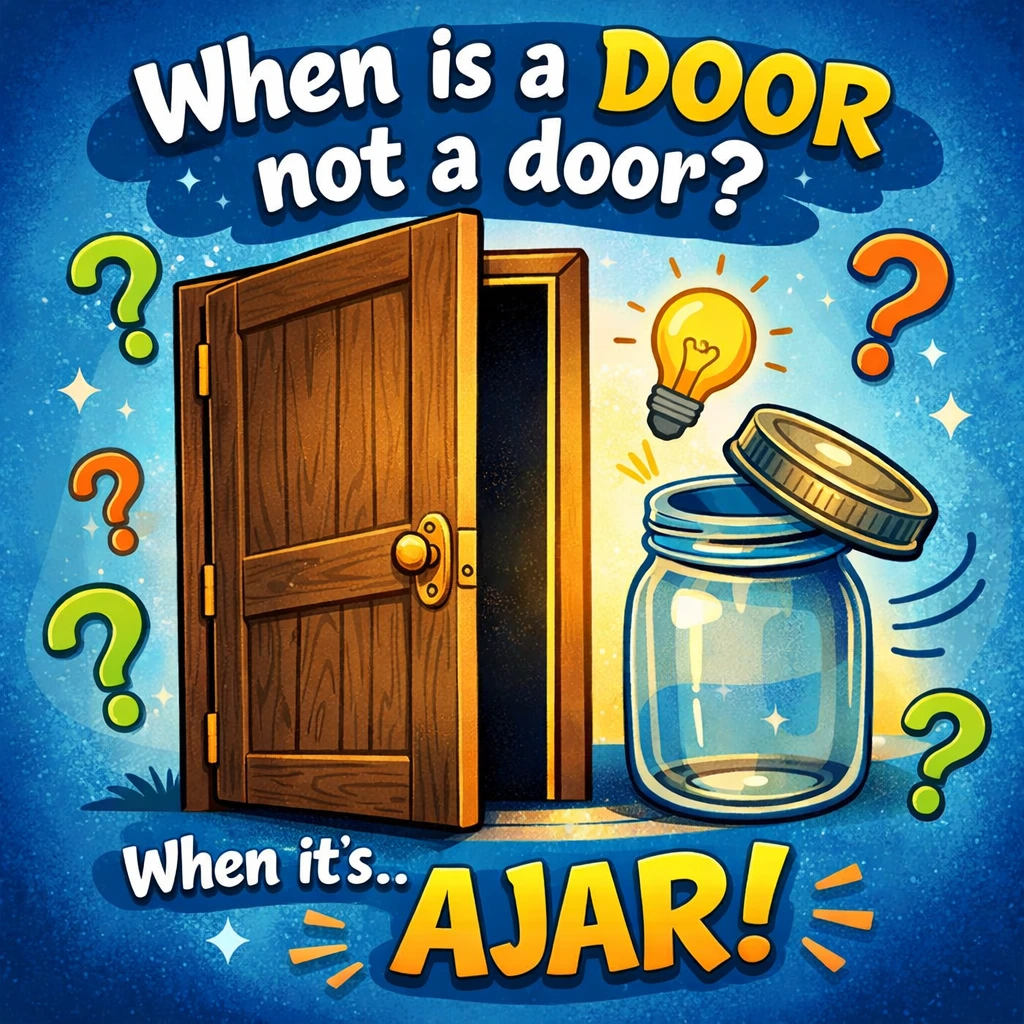
Riddles have a way of sticking with us. Some are tricky, while others feel instantly clever. The when is a door not a door riddle is one most Americans hear early in life. It’s short, funny, and surprisingly smart. This guide explains the meaning, history, and lasting appeal. Whether you’re sharing it with kids or revisiting it yourself, you’ll see why it still works so well.
Quick Answer (H3)
The when is a door not a door riddle is answered with: when it’s ajar. The humor comes from wordplay, not logic.
TL;DR (H3)
• The answer is “when it’s ajar”
• It’s based on a pun
• Easy for all ages
• Short and memorable
• A true classic
When Is a Door Not a Door Riddle Explained
This riddle sounds confusing at first. That’s part of the fun.
It relies on sound, not definition.
• Uses spoken English cleverly
• Sounds logical but playful
• Works best aloud
• Depends on listener attention
• Feels surprising yet simple
• Needs no setup
• Easy to remember
• Short enough to repeat
• Clear once explained
• Focuses on language
• Not math-based
• Appeals to all ages
The Simple Answer Everyone Remembers
The answer is short and catchy.
That’s why it spreads so easily.
• “When it’s ajar”
• Sounds like “a jar”
• Easy to recall
• Often shared verbally
• Rarely forgotten
• No extra explanation needed
• Feels clever instantly
• Recognized across generations
• Works in any setting
• Requires no props
• Fits casual conversation
• Leaves people smiling
Why This Riddle Uses Wordplay
Wordplay is the core device here.
It plays with sound-alike words.
• Uses a pun
• Depends on pronunciation
• English-language specific
• Sounds like a trick
• Rewards listening
• Encourages thinking differently
• Simple language twist
• No visual clues needed
• Common in classic riddles
• Makes language fun
• Highlights meaning shifts
• Easy to explain later
The Meaning Behind “Ajar”
“Ajar” means slightly open.
That definition drives the joke.
• Describes a door position
• Sounds like “a jar”
• Creates the pun
• Simple vocabulary
• Common English word
• Understood by kids
• Often taught early
• Adds clarity to answer
• Makes riddle logical
• Connects sound and meaning
• Works only in English
• Key to understanding
Origins Of The Door Riddle
Its exact origin is unclear.
But it’s been shared for decades.
• Likely oral tradition
• Passed through families
• Appears in joke books
• Used in classrooms
• Popular in print media
• Common in riddles lists
• Survived generations
• Shared before the internet
• Still told today
• Part of folk humor
• No known single author
• Truly traditional
Why It’s Considered A Classic Riddle
Classics are simple and lasting.
This one checks every box.
• Short length
• Easy wording
• Clear answer
• Funny payoff
• Broad appeal
• Memorable structure
• No cultural barrier
• Works across ages
• Requires no updates
• Still shared today
• Fits many settings
• Timeless humor
How Kids Understand This Riddle
Kids usually love it.
It helps them notice sounds.
• Encourages listening skills
• Builds vocabulary
• Sparks curiosity
• Easy to repeat
• Makes learning fun
• Boosts confidence
• Introduces puns
• Safe and clean
• Works in groups
• Good for classrooms
• Promotes laughter
• Simple explanation needed
Why Adults Still Enjoy It
Adults appreciate the cleverness.
It feels nostalgic and smart.
• Brings back memories
• Easy icebreaker
• Quick humor
• No effort required
• Clever language use
• Familiar comfort
• Works in social settings
• Lighthearted fun
• Easy to share
• No setup needed
• Appeals instantly
• Still feels witty
What Makes This Riddle Funny
The humor is subtle.
It comes from surprise.
• Unexpected answer
• Sound-based joke
• Simple misdirection
• Quick realization
• Language twist
• Gentle humor
• No insult involved
• Universally safe
• Clean punchline
• Easy laugh
• No explanation first
• Works aloud best
Similar Wordplay Riddles To Know
Many riddles use this style.
They sound tricky but aren’t.
• Pun-based riddles
• Sound-alike jokes
• Short question formats
• Oral tradition favorites
• Kid-friendly riddles
• Classic joke riddles
• Language-focused puzzles
• Easy brain teasers
• One-line answers
• No props needed
• Common in books
• Shared socially
Variations Of The Door Riddle
Some versions tweak wording.
The core idea stays the same.
• Slight phrasing changes
• Same punchline
• Regional wording shifts
• Used in jokes
• Sometimes expanded
• Often shortened
• Told with pauses
• Emphasized verbally
• Adapted for kids
• Still recognizable
• Meaning unchanged
• Humor preserved
Using This Riddle In Classrooms
Teachers use it often.
It supports language lessons.
• Introduces puns
• Builds listening skills
• Encourages participation
• Sparks discussion
• Easy warm-up activity
• No materials needed
• Fits language arts
• Engages students quickly
• Safe for all ages
• Promotes laughter
• Quick explanation
• Memorable example
Using Riddles For Family Fun
Riddles bring people together.
This one works every time.
• Great conversation starter
• Easy to share
• Fun at gatherings
• Kid-safe humor
• No prep required
• Encourages laughter
• Cross-generational appeal
• Short attention span friendly
• Works anywhere
• Easy to remember
• Promotes bonding
• Lighthearted fun
Why Short Riddles Stick In Memory
Brevity matters.
Short riddles spread faster.
• Easy recall
• Simple structure
• Quick payoff
• Minimal words
• Oral-friendly
• Fits casual talk
• No confusion
• Clear answer
• Strong punchline
• Less effort
• More repetition
• Long-lasting impact
Cultural Impact Of Classic Riddles
Classic riddles shape humor.
They reflect language creativity.
• Passed through generations
• Shared informally
• Part of folk culture
• Used in education
• Referenced in media
• Known widely
• Reinforces language play
• Builds shared humor
• Simple cultural markers
• Low barrier entry
• Still relevant
• Universally understood
How To Explain The Riddle Simply
Keep it short and clear.
Focus on the pun.
• Say the riddle aloud
• Pause before answer
• Explain “ajar”
• Mention sound similarity
• Keep explanation brief
• Use examples if needed
• Avoid overthinking
• Let listener react
• Encourage repeat telling
• Make it fun
• Use simple words
• Smile while explaining
FAQs
What is the answer to when is a door not a door?
The answer is: when it’s ajar. The joke relies on wordplay.
Why is this riddle funny?
It surprises listeners by using a sound-alike word instead of logic.
Is this riddle suitable for kids?
Yes, it’s clean, simple, and easy for kids to understand.
What type of riddle is this?
It’s a classic wordplay riddle based on a pun.
Why has this riddle lasted so long?
Its simplicity, humor, and memorability keep it relevant.
Are there other riddles like this?
Yes, many classic riddles use similar sound-based humor.
Conclusion
The when is a door not a door riddle remains popular because it’s simple, funny, and clever. Its wordplay makes it easy to remember and fun to share. That’s why it continues to be told across generations.
