
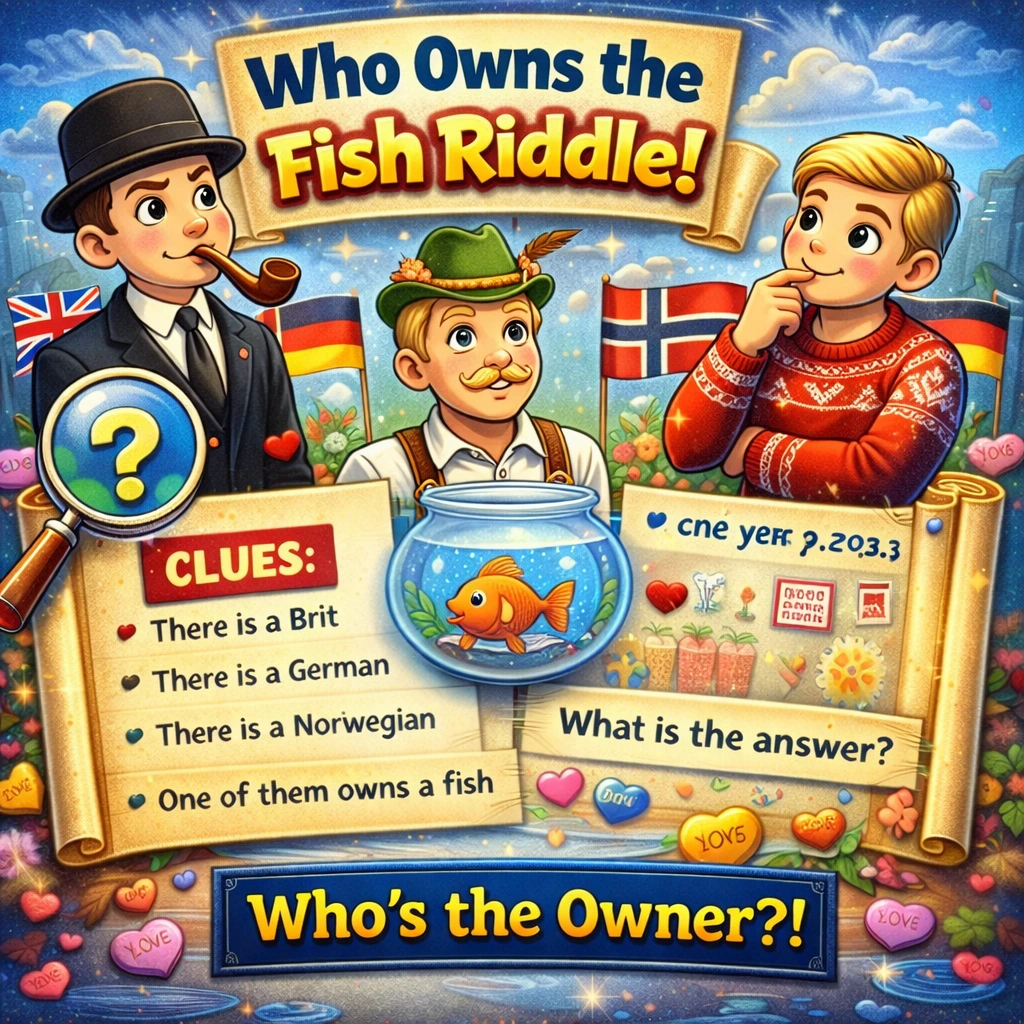
The question “who owns the fish riddle” comes from one of the most famous logic puzzles ever created. It’s a brain teaser that has challenged students, mathematicians, and puzzle lovers for decades. At first glance, the riddle looks simple. However, once you begin working through the clues, it becomes a true test of logical thinking and patience.
Often referred to as Einstein’s Riddle or the Zebra Puzzle, this problem requires careful deduction rather than guesswork. By the end, only one answer fits every clue without contradiction. This article explains the riddle, its background, and the final solution in a clear and complete way.
Quick Answer
The German owns the fish.
This conclusion comes from logically applying every clue in the riddle until only one possible owner remains.
TL;DR
• The riddle involves five houses and five categories
• Each house has unique traits with no repeats
• Logical elimination solves the puzzle
• The German is the only possible fish owner
• The puzzle rewards structured reasoning
What Is the “Who Owns the Fish” Riddle
The fish riddle is a logic puzzle built around a fixed set of rules. Each clue narrows the possibilities until a single solution remains. Although it’s often presented as a casual brain teaser, the structure is very precise.
• Five houses stand in a row
• Each house has a different color
• Each owner has a unique nationality
• Every owner drinks a different beverage
• Each owner smokes a different brand
• Every owner keeps a different pet
Why It’s Often Called Einstein’s Riddle
The riddle is widely associated with Albert Einstein, even though there is no proof he created it. Still, the name stuck because of its reputation for difficulty.
• Attributed to Einstein in popular culture
• Sometimes called the Zebra Puzzle instead
• Known for testing pure logical deduction
• Often used in classrooms and interviews
• Famous worldwide despite unclear origins
The Core Rules You Must Follow
The puzzle only works if every rule is followed exactly. Skipping or bending a rule leads to incorrect answers.
• No two houses share the same trait
• Each clue must be true simultaneously
• Left and right positions matter
• Clues cannot be reordered or ignored
• Deduction replaces guessing completely
Categories Used in the Puzzle
The riddle organizes information into clearly defined groups. These categories interact with one another through the clues.
• House colors
• Nationalities
• Beverages
• Cigarette brands
• Pets
How the Clues Are Structured
Each clue provides a specific relationship between two or more traits. Some clues give direct links, while others describe positions.
• One nationality linked to one house color
• One drink paired with one cigarette brand
• Some houses placed next to others
• One house fixed in a central position
• One owner placed at an end
Why the Puzzle Feels Difficult
The riddle feels challenging because it requires you to track many conditions at once. Still, every clue reduces uncertainty.
• Many variables must be tracked together
• Some clues only make sense later
• Early assumptions can cause confusion
• Visual tables help reduce errors
• Logical patience is essential
Step-by-Step Logic Behind the Solution
The solution emerges when all clues are applied systematically. Each confirmed detail removes multiple possibilities.
• Start with fixed positions
• Assign direct clue relationships first
• Eliminate impossible combinations
• Fill gaps only when forced
• Check consistency at every step
Who Owns the Fish and Why
After every clue is applied without contradiction, only one owner remains unassigned a pet. That pet is the fish.
• Every other pet is already placed
• Only one nationality remains unpaired
• The final match completes all clues
• No rule is broken by this result
• The German owns the fish
Common Mistakes When Solving the Riddle
Many people struggle because of small logic errors. These mistakes often come from rushing.
• Guessing instead of deducing
• Ignoring position-based clues
• Reusing traits accidentally
• Forgetting earlier eliminations
• Skipping written tracking tables
Why This Riddle Is Still Popular
Despite its age, the fish riddle remains relevant. It teaches thinking skills that apply far beyond puzzles.
• Encourages structured reasoning
• Improves attention to detail
• Rewards patience and discipline
• Feels satisfying when solved
• Works without math formulas
Variations of the Fish Riddle
Over time, many versions of the puzzle have appeared. While details change, the core logic stays the same.
• Different nationalities used
• Pets replaced with other items
• Cigarette brands modernized
• Drinks swapped for foods
• Same final logic structure
Can Everyone Solve It
Yes, anyone can solve the riddle with time and care. It doesn’t require advanced education.
• No math beyond basic logic
• No special background required
• Writing tools help significantly
• Time matters more than speed
• Practice improves success
FAQs
Is the fish riddle really created by Einstein?
There is no verified evidence that Albert Einstein created the riddle. The name likely stuck due to its reputation for difficulty.
Why is the German the answer in most versions?
Because the clues eliminate all other possibilities, leaving the German as the only consistent owner of the fish.
How long does it take to solve the riddle?
For beginners, it may take 30 minutes or more. With practice, it becomes much faster.
Is the solution always the same?
Yes, as long as the clues remain unchanged, the solution will always be the same.
What is the best way to solve it?
Creating a grid or table and eliminating options step by step works best.
Conclusion
The mystery behind who owns the fish riddle is solved through pure logic, not luck. When every clue is applied correctly, the answer becomes unavoidable. The German owns the fish, and no other solution satisfies all conditions at once.
More than just a puzzle, this riddle demonstrates the power of clear thinking and careful reasoning. That’s why it remains one of the most famous logic challenges ever created—and why people continue to enjoy solving it today.
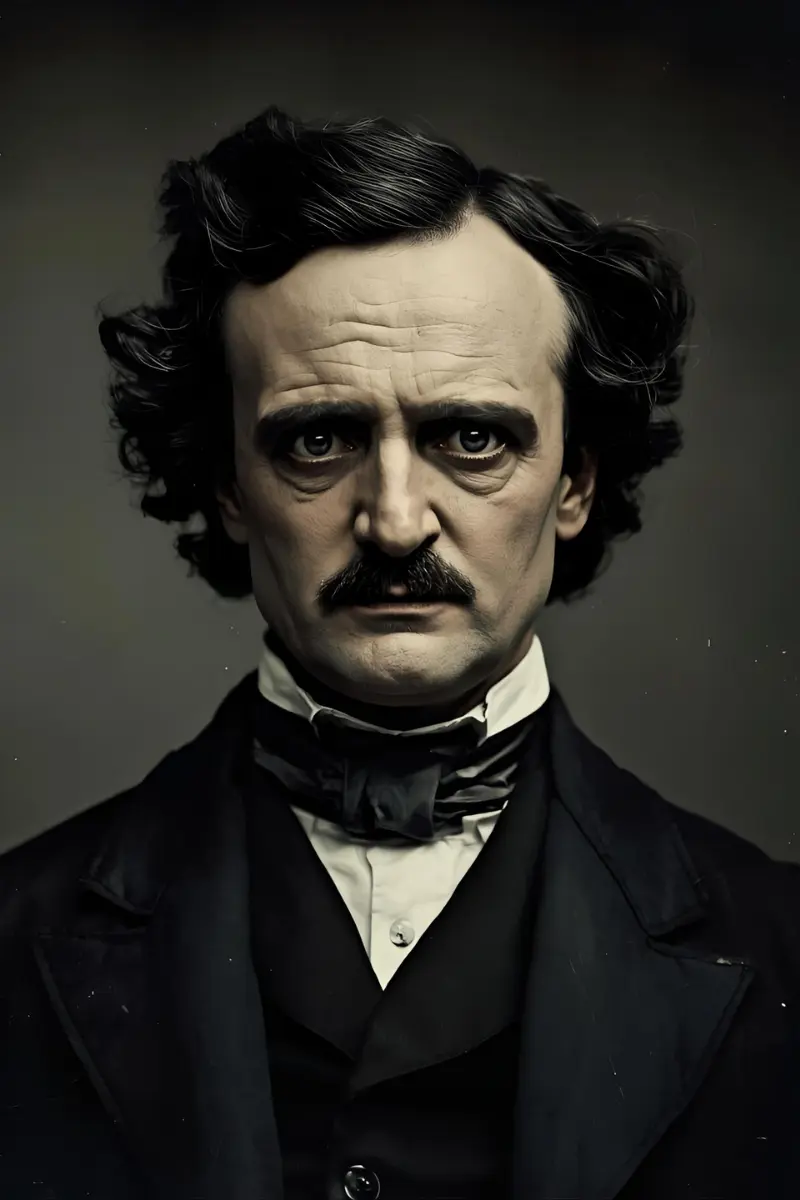
Edgar Allan Poe is one of America’s most iconic literary figures, celebrated for his mysterious short stories and haunting poems. Known as the master of gothic fiction, Poe’s works often contain riddles, codes, and puzzles that continue to inspire mystery lovers around the world.