
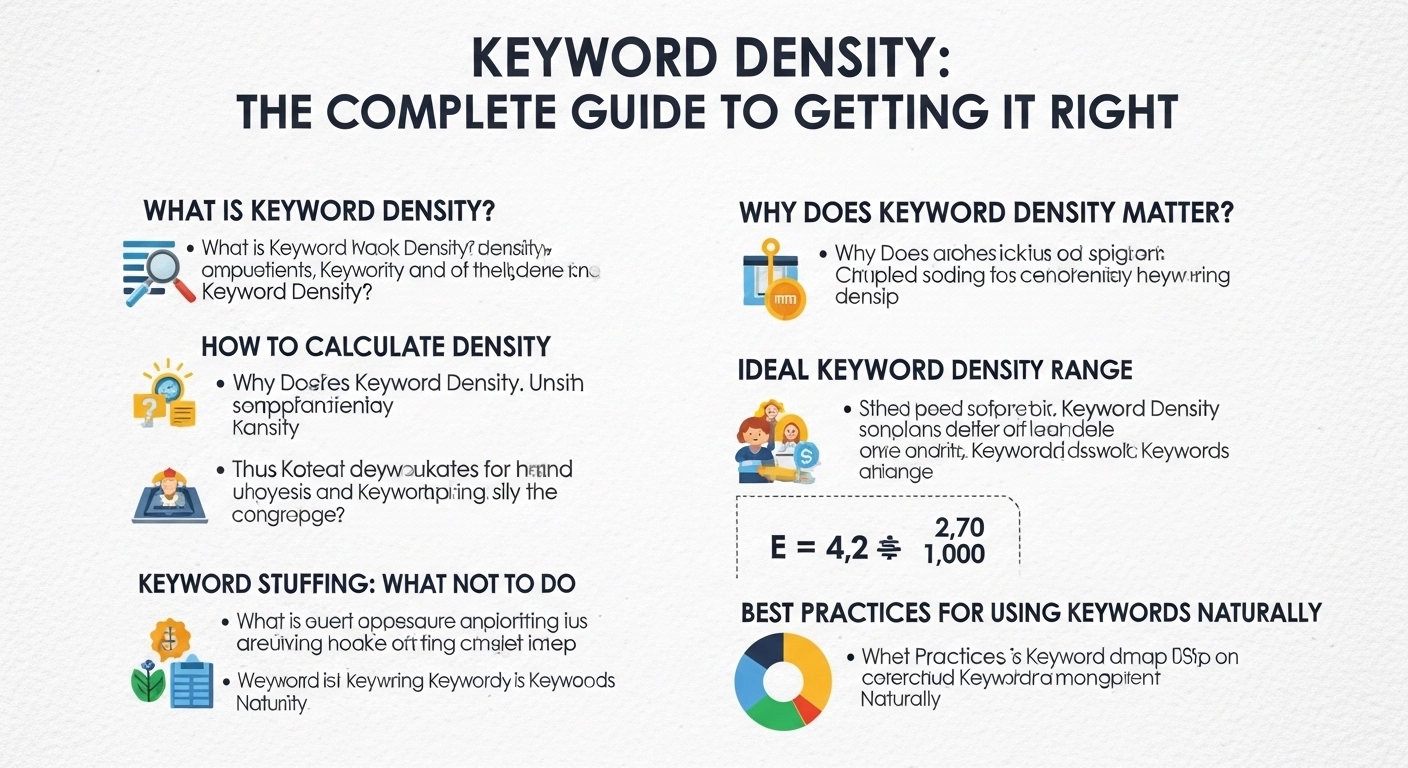
When it comes to improving content visibility, one of the most frequently discussed concepts is keyword density. Many people hear about it early on, yet few truly understand how it works—or how to use it effectively without harming their content.
Used correctly, keyword density helps signal what your content is about. Used poorly, it can make your writing feel forced, unnatural, and difficult to read. That’s why understanding the balance is crucial.
This guide breaks down keyword density in a clear, practical way. You’ll learn what it is, how it works, how to calculate it, and—most importantly—how to use it wisely in real-world content.
What Is Keyword Density? (Quick Answer)
Keyword density refers to the percentage of times a specific keyword appears in your content compared to the total number of words.
For example, if your article is 1,000 words long and your keyword appears 10 times, your keyword density is 1%.
It’s a simple concept—but applying it correctly requires more nuance than just hitting a number.
Why Keyword Density Matters
Keyword density plays a role in helping search engines understand the topic of your content. However, it’s not about stuffing keywords repeatedly. Instead, it’s about clarity and relevance.
When used properly, it helps:
- Reinforce the main topic of your content
- Improve readability when naturally integrated
- Support overall content structure and focus
But it’s important to understand that keyword density alone doesn’t determine success. It’s just one piece of a much larger puzzle.
How to Calculate Keyword Density
The formula for keyword density is straightforward:
Keyword Density (%) = (Number of times keyword appears ÷ Total word count) × 100
Example
Let’s say:
- Total word count: 1,500 words
- Keyword appears: 15 times
Calculation:
(15 ÷ 1500) × 100 = 1%
So, your keyword density is 1%.
Tools vs Manual Calculation
While you can calculate this manually, many writers use tools that automatically show keyword frequency. These tools can save time, but understanding the formula helps you stay in control.
Ideal Keyword Density: Is There a Perfect Percentage?
This is one of the most common questions—and one of the most misunderstood.
There is no universal “perfect” keyword density.
However, most high-quality content naturally falls within the range of:
- 0.5% to 2%
Why There’s No Fixed Rule
Search engines have evolved. They no longer rely heavily on keyword repetition alone. Instead, they analyze:
- Context
- Meaning
- Related terms
- Overall content quality
So instead of aiming for a rigid number, focus on writing naturally while keeping your topic clear.
Keyword Density vs Keyword Stuffing
Understanding the difference between healthy keyword usage and keyword stuffing is essential.
What Is Keyword Stuffing?
Keyword stuffing happens when you overuse a keyword unnaturally in an attempt to manipulate rankings.
Example of poor usage:
“Keyword density is important because keyword density helps improve keyword density in your keyword density strategy.”
This type of writing feels awkward and adds no value.
Why Keyword Stuffing Is Harmful
- Makes content difficult to read
- Reduces credibility
- Can lead to penalties
- Damages user experience
Modern algorithms prioritize user satisfaction, not keyword repetition.
Natural Usage Is the Goal
Instead of forcing keywords, aim to:
- Use them where they fit naturally
- Focus on clarity and readability
- Write for humans first
Where Should You Place Keywords?
Keyword placement matters just as much as frequency.
Key Areas to Include Your Keyword
Your primary keyword should appear in:
- Title
- Introduction
- At least one subheading
- Throughout the body (naturally)
- Conclusion
Strategic Placement Tips
- Use the keyword early in the introduction
- Avoid clustering keywords too closely together
- Spread usage evenly across the content
This creates a balanced and natural flow.
The Role of Related Keywords and Variations
Focusing only on one exact keyword is outdated. Modern content benefits from using variations and related terms.
Why Variations Matter
Search engines understand context and synonyms. Using related terms helps:
- Improve content depth
- Avoid repetition
- Enhance readability
Example
If your main keyword is “keyword density,” related terms might include:
- keyword frequency
- keyword usage
- content relevance
- keyword placement
Using these naturally strengthens your content without overusing one phrase.
Practical Example of Balanced Keyword Density
Let’s say you’re writing a 1,200-word article.
A healthy approach would be:
- Use the main keyword 8–15 times
- Include variations throughout
- Focus on clarity rather than counting
Good Example Sentence
“Maintaining a balanced keyword density ensures your content remains clear, natural, and easy to read.”
Poor Example Sentence
“Keyword density is key because keyword density improves keyword density in keyword density writing.”
The difference is obvious—one feels helpful, the other forced.
Important Points People Often Overlook
Many writers focus too much on numbers and miss the bigger picture.
Context Matters More Than Count
Search engines analyze meaning, not just repetition. A well-written paragraph with fewer keywords often performs better than a repetitive one.
Readability Is Critical
If your content feels unnatural, readers will leave quickly. This negatively affects performance.
Structure Supports Clarity
Clear headings, logical flow, and organized content help reinforce your topic without overusing keywords.
User Intent Is Key
Understanding what the reader wants is more important than hitting a keyword percentage.
Common Mistakes and Misconceptions
Believing There’s a Magic Number
There’s no exact percentage that guarantees success. Content quality matters more.
Over-Optimizing Content
Trying too hard to insert keywords often leads to awkward writing.
Ignoring Synonyms
Repeating the same keyword instead of using variations limits your content’s depth.
Writing for Algorithms Instead of People
Content should always feel natural and helpful. If it doesn’t, it won’t perform well long-term.
Best Practices for Using Keyword Density Effectively
Write Naturally First
Focus on delivering value. Then review your content to ensure your keyword appears where it makes sense.
Use Keywords Strategically
Place your keyword in important sections, but don’t force it into every paragraph.
Maintain a Smooth Flow
Your content should read like a conversation, not a checklist.
Edit for Balance
After writing, scan your content:
- Remove unnecessary repetitions
- Replace duplicates with variations
- Improve sentence flow
Prioritize Clarity
If a keyword makes a sentence awkward, rephrase the sentence instead of forcing the keyword.
Step-by-Step Guide to Managing Keyword Density
Step 1: Choose a Primary Keyword
Select a clear, focused keyword that matches your topic.
Step 2: Plan Your Content Structure
Outline headings and sections before writing.
Step 3: Write Without Overthinking Density
Focus on explaining the topic clearly.
Step 4: Add Keywords Naturally
Include your keyword where it fits logically.
Step 5: Review and Adjust
Check for:
- Overuse
- Missing placements
- Awkward phrasing
Step 6: Improve with Variations
Replace repetitive keywords with related terms.
FAQs
What is a good keyword density percentage?
A natural range is typically between 0.5% and 2%, but there’s no strict rule. Focus on readability and relevance instead of exact numbers.
Does keyword density still matter?
Yes, but not as much as it once did. It helps clarify your topic, but overall content quality and usefulness matter far more.
Can too many keywords hurt my content?
Yes. Overusing keywords can make your content sound unnatural and reduce its effectiveness.
Should I use the exact keyword every time?
No. Using variations and related terms improves readability and makes your content more comprehensive.
How do I know if I’ve overused a keyword?
If your writing feels repetitive or forced when you read it aloud, you’ve likely overused it. Aim for a natural tone.
Conclusion
Keyword density is a helpful concept—but it’s often misunderstood. It’s not about hitting a specific number or repeating a keyword as many times as possible.
Instead, it’s about balance.
When you focus on clear, natural writing and use keywords thoughtfully, your content becomes more effective, engaging, and easier to understand. That’s what truly matters.
Use keyword density as a guide—not a rule—and you’ll create content that works for both readers and search engines.

Edgar Allan Poe is one of America’s most iconic literary figures, celebrated for his mysterious short stories and haunting poems. Known as the master of gothic fiction, Poe’s works often contain riddles, codes, and puzzles that continue to inspire mystery lovers around the world.