
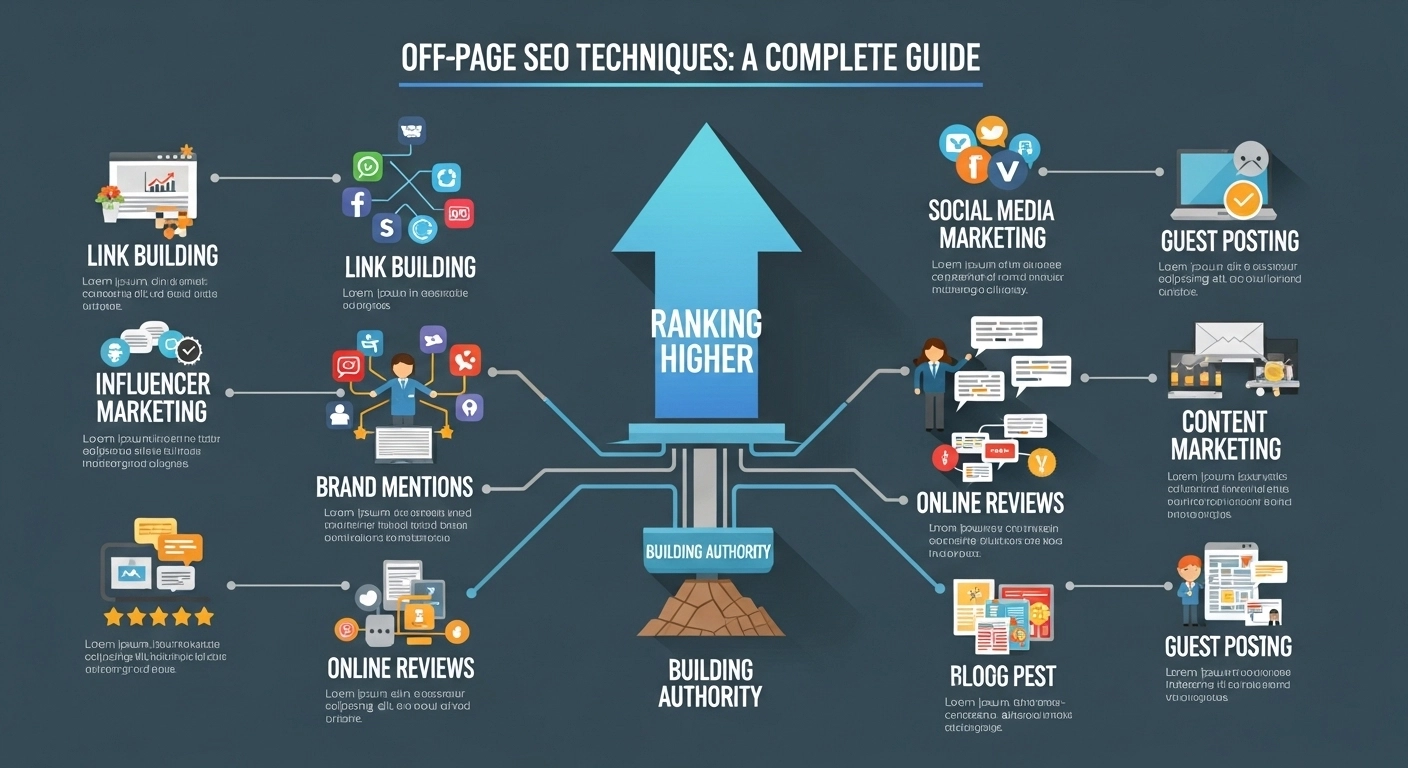
Ranking well on search engines is not just about what happens on your website. While on-page elements like content and structure matter, the real power often lies beyond your site. That’s where off-page SEO comes in.
Off-page SEO refers to all the actions taken outside your website to improve its credibility, authority, and visibility. It’s how search engines determine whether your site is trustworthy, popular, and worthy of higher rankings.
In this guide, you’ll learn everything you need to know about off-page SEO techniques—what they are, why they matter, how to implement them effectively, and what mistakes to avoid.
Quick Answer: What Are Off-Page SEO Techniques?
Off-page SEO techniques are strategies used outside your website to improve its authority, reputation, and rankings. These include building backlinks, social media engagement, brand mentions, influencer outreach, and more.
Why Off-Page SEO Matters
Search engines aim to deliver the most reliable and valuable content to users. Off-page signals help them evaluate your website’s credibility.
When other websites link to you or people mention your brand online, it acts as a vote of confidence. The more high-quality signals you have, the more trustworthy your site appears.
Key benefits include:
- Higher search rankings
- Increased domain authority
- More referral traffic
- Better brand recognition
- Improved trust and credibility
Without strong off-page efforts, even the best content may struggle to rank.
Core Off-Page SEO Techniques
Link Building (Backlinks)
Backlinks are the foundation of off-page SEO. When other websites link to your content, it signals that your content is valuable.
Types of Backlinks
- Natural links: Earned organically when people find your content useful
- Manual links: Acquired through outreach or partnerships
- Self-created links: Added in forums, directories, or comments (least effective if overused)
What Makes a Backlink Valuable?
Not all links are equal. High-quality backlinks usually have:
- High authority websites
- Relevance to your niche
- Natural placement within content
- Proper anchor text
Example
If a well-known blog links to your article as a resource, that link carries more weight than dozens of low-quality directory links.
Guest Posting
Guest posting involves writing content for other websites in your niche. It’s one of the most effective ways to build authority and earn backlinks.
How It Works
You contribute a valuable article to another site, and in return, you usually get:
- A backlink to your website
- Exposure to a new audience
Best Practices
- Choose reputable websites
- Provide high-quality, original content
- Avoid overly promotional writing
Guest posting works best when you focus on value, not just links.
Social Media Engagement
While social media links may not directly influence rankings, they play a powerful role in visibility and traffic.
When your content is shared widely, it increases:
- Brand awareness
- Traffic to your site
- Chances of earning backlinks
Example
A blog post that goes viral on social platforms can attract attention from bloggers and journalists, leading to natural backlinks.
Brand Mentions
Brand mentions occur when your website or business is referenced online, even without a link.
Search engines consider these mentions as trust signals, especially when they come from reputable sources.
Types of Mentions
- Linked mentions (with a backlink)
- Unlinked mentions (without a link)
You can often convert unlinked mentions into backlinks by reaching out and requesting a link.
Influencer Outreach
Collaborating with influencers in your niche can boost your visibility and authority.
How It Helps
- Expands your reach
- Builds trust quickly
- Generates high-quality backlinks
Example
An influencer reviewing your product or mentioning your content can drive both traffic and credibility.
Content Marketing
Creating valuable, shareable content is essential for off-page success.
Types of Shareable Content
- In-depth guides
- Infographics
- Case studies
- Research reports
The better your content, the more likely others will link to it.
Forum Participation and Community Engagement
Participating in forums and online communities helps build your reputation and drive traffic.
Where to Engage
- Industry-specific forums
- Q&A platforms
- Online communities
Best Approach
- Provide helpful answers
- Avoid spammy links
- Build trust first
Over time, this can lead to natural backlinks and increased authority.
Local Listings and Citations
For businesses targeting local audiences, listing your website in directories is crucial.
Examples
- Business directories
- Review platforms
- Local listings
Consistency in your business name, address, and phone number helps build trust.
Reviews and Reputation Management
Online reviews influence both users and search engines.
Why Reviews Matter
- Build trust with potential visitors
- Improve click-through rates
- Strengthen credibility
Encourage satisfied customers to leave honest reviews and respond professionally to feedback.
Step-by-Step Off-Page Strategy
Step 1: Create High-Quality Content
Everything starts with content. Without valuable content, off-page efforts won’t be effective.
Step 2: Identify Link Opportunities
Find websites in your niche that accept guest posts or link to similar content.
Step 3: Outreach
Reach out with personalized messages offering value, not just asking for links.
Step 4: Build Relationships
Focus on long-term relationships with bloggers, editors, and influencers.
Step 5: Promote Your Content
Share your content across platforms to increase visibility.
Step 6: Monitor Results
Track backlinks, traffic, and rankings to measure success.
Important Points People Often Overlook
Many people focus only on getting as many backlinks as possible, but quality matters far more than quantity.
Relevance is another overlooked factor. A link from a related niche is far more valuable than one from an unrelated site.
Consistency is also key. Off-page efforts should be ongoing, not a one-time activity.
Finally, natural growth is essential. Sudden spikes in backlinks can appear suspicious to search engines.
Common Mistakes and Misconceptions
Focusing Only on Quantity
Getting hundreds of low-quality links can do more harm than good.
Ignoring Relevance
Links from unrelated websites provide little value and may even hurt rankings.
Using Spammy Techniques
Buying links or using automated tools can lead to penalties.
Over-Optimizing Anchor Text
Using the same keyword-rich anchor text repeatedly looks unnatural.
Neglecting Content Quality
Even strong off-page efforts can’t compensate for poor content.
Practical Tips and Best Practices
Focus on earning links rather than building them artificially. Create content people naturally want to reference.
Diversify your link sources. Relying on one method, like guest posting alone, limits your growth.
Keep your outreach personal. Generic messages are often ignored.
Track your progress regularly to understand what’s working and what’s not.
Be patient. Off-page SEO takes time, but the results are long-lasting.
Off-Page vs On-Page SEO: A Quick Comparison
On-page SEO focuses on optimizing elements within your website, such as content, structure, and HTML tags.
Off-page SEO focuses on building authority and reputation through external signals.
Both are essential. On-page makes your site understandable, while off-page makes it trustworthy.
FAQs
What is the most important off-page SEO technique?
Link building is considered the most important because backlinks are a major ranking factor and signal trust and authority.
How long does off-page SEO take to show results?
It typically takes a few months to see noticeable improvements, depending on competition and consistency.
Are social media signals a ranking factor?
They are not direct ranking factors, but they help increase visibility, traffic, and backlink opportunities.
Can I do off-page SEO without backlinks?
You can improve brand visibility through mentions and social media, but backlinks remain essential for strong rankings.
Is guest posting still effective?
Yes, as long as it’s done on high-quality, relevant websites and focuses on providing value rather than just gaining links.
Conclusion
Off-page SEO is what transforms a website from just another page on the internet into a trusted and authoritative source. It’s not about shortcuts or quick wins—it’s about building genuine credibility over time.
By focusing on high-quality backlinks, meaningful relationships, valuable content, and consistent efforts, you can significantly improve your website’s visibility and reputation.
If you approach off-page SEO strategically and ethically, the results will not only improve rankings but also strengthen your brand in the long run.

David Miller is a USA-based puzzle blogger known for his sharp and tricky riddles. With a background in logic games and quizzes, his work focuses on keeping readers hooked with every twist and turn.