
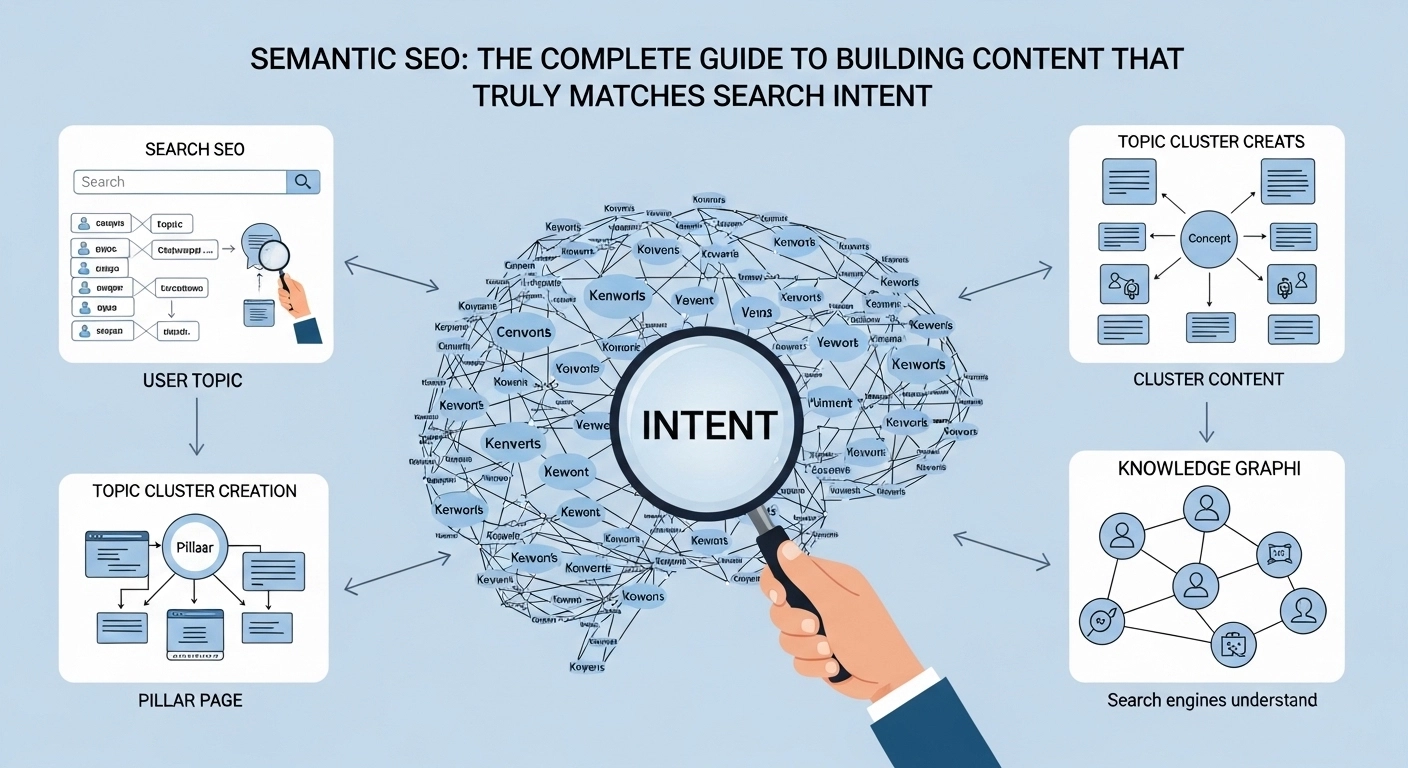
Search has evolved far beyond simple keyword matching. Today, search engines aim to understand meaning, context, and user intent rather than just individual words. This shift has transformed how content needs to be created and structured.
Semantic SEO is the approach that aligns your content with this modern reality. Instead of focusing on repeating keywords, it focuses on delivering complete, context-rich information that answers users’ real questions.
If you’ve ever wondered why some pages rank even without exact keyword matches—or why your well-written article still struggles—this guide will give you clarity. By the end, you’ll understand how to create content that feels natural to readers and meaningful to search engines.
What Is Semantic SEO?
Semantic SEO is the practice of optimizing content based on meaning, context, and user intent rather than relying solely on exact keywords.
It involves covering a topic comprehensively, using related concepts, answering associated questions, and structuring content in a way that reflects how people naturally think and search.
Quick Answer
Semantic SEO means creating content that fully answers a topic by including related ideas, context, and user intent—not just repeating a target keyword.
Why Semantic SEO Matters Today
Search engines now use advanced algorithms to interpret language in a more human-like way. They don’t just look for keywords—they try to understand what the user actually wants.
Better Matching of User Intent
When someone searches for “best running shoes for beginners,” they are not looking for a definition of shoes. They want recommendations, comparisons, and guidance. Semantic SEO ensures your content delivers exactly that.
Improved Rankings Without Keyword Stuffing
Pages that naturally cover a topic in depth tend to rank higher, even if they don’t repeat the same keyword excessively.
Enhanced User Experience
When your content answers multiple related questions in one place, users stay longer and find more value. This improves engagement and builds trust.
How Search Engines Understand Meaning
To apply semantic SEO effectively, it helps to understand how search engines interpret content.
Context Over Keywords
Search engines analyze surrounding words and phrases to understand context. For example, the word “apple” could refer to a fruit or a company depending on the surrounding content.
Entity Recognition
Search engines identify entities such as people, places, products, and concepts. They then connect these entities to build a deeper understanding of the topic.
Topic Relationships
Modern search systems recognize how topics are related. For instance, an article about “digital marketing” is expected to mention content marketing, social media, email campaigns, and analytics.
Core Elements of Semantic SEO
Semantic SEO is not one technique—it’s a combination of several principles working together.
Topic Depth and Coverage
Instead of writing a shallow article targeting one keyword, you cover the entire topic. This includes definitions, benefits, examples, and related subtopics.
Search Intent Alignment
Understanding what the user wants is essential. Intent typically falls into categories such as informational, navigational, or transactional.
Natural Language Usage
Content should sound natural and conversational. It should reflect how people actually speak and search.
Structured Content
Clear headings, logical flow, and organized sections help both users and search engines understand your content better.
Semantic SEO vs Traditional SEO
Understanding the difference helps clarify why this approach is more effective today.
Traditional Approach
Traditional methods focused heavily on exact keyword usage. The idea was simple: include the keyword multiple times, and you might rank.
Semantic Approach
Semantic SEO focuses on meaning and context. Instead of repeating “best laptops,” you discuss performance, battery life, price ranges, use cases, and comparisons.
Key Difference
Traditional SEO asks: “Did you use the keyword?”
Semantic SEO asks: “Did you fully answer the question?”
Step-by-Step Guide to Implement Semantic SEO
Applying semantic SEO doesn’t have to be complicated. Here’s a practical process you can follow.
Step 1: Understand the Main Topic
Start by clearly defining your main topic. Make sure it’s broad enough to allow depth but focused enough to stay relevant.
Step 2: Identify Search Intent
Ask yourself: What does the user really want?
If someone searches for “how to start a blog,” they expect steps, tools, and guidance—not just a definition.
Step 3: Find Related Subtopics
Think about all the angles connected to your main topic. For example, if your topic is “email marketing,” related areas might include list building, automation, and campaign analysis.
Step 4: Structure Your Content Logically
Organize your content into sections that flow naturally. Each section should answer a specific part of the topic.
Step 5: Use Natural Language
Write as if you are explaining the topic to a real person. Avoid forcing keywords into sentences.
Step 6: Answer Related Questions
Include answers to common questions users might have. This adds depth and increases usefulness.
Step 7: Optimize for Clarity
Use clear headings, concise paragraphs, and smooth transitions to improve readability.
Practical Example of Semantic SEO
Let’s compare two approaches to writing about “weight loss.”
Basic Approach
A simple article might repeat “weight loss tips” multiple times and provide a short list.
Semantic Approach
A semantic article would cover:
- What weight loss actually means
- Healthy vs unhealthy methods
- Diet strategies
- Exercise routines
- Common mistakes
- Long-term sustainability
The second approach delivers far more value and is more likely to perform well.
Important Points People Often Overlook
Even when people understand the basics, they often miss these key aspects.
Over-Focusing on Keywords
Many still try to force keywords into content instead of focusing on clarity and usefulness.
Ignoring User Intent
If your content doesn’t match what users expect, it won’t perform well—no matter how well-written it is.
Lack of Depth
Surface-level content rarely satisfies users. Covering a topic in detail is essential.
Poor Content Structure
Even great information can fail if it’s hard to read or poorly organized.
Common Mistakes and Misconceptions
Understanding what not to do is just as important.
Keyword Stuffing Still Works
This is a myth. Overusing keywords can harm readability and reduce effectiveness.
Longer Content Always Wins
Length alone doesn’t guarantee quality. Content must be meaningful, relevant, and well-structured.
One Article Per Keyword
You don’t need separate articles for every variation. A well-written page can cover multiple related queries.
Ignoring Context
Focusing only on a single keyword without considering related ideas limits your content’s potential.
Best Practices for Strong Semantic Content
If you want to get the most out of semantic SEO, these practical tips will help.
Focus on Topics, Not Just Keywords
Think in terms of subjects and concepts rather than isolated phrases.
Write for Humans First
Your content should feel natural and engaging. If it reads well to people, it’s more likely to perform well.
Use Clear and Logical Headings
Headings help guide readers and improve understanding.
Cover the Topic Completely
Answer all major questions a reader might have in one place.
Keep Content Updated
Topics evolve, and updating your content ensures it remains relevant and accurate.
FAQs
What is the main goal of semantic SEO?
The main goal is to create content that fully answers user intent by covering a topic in depth, using context and related concepts instead of focusing only on keywords.
How is semantic SEO different from keyword research?
Keyword research focuses on identifying search terms, while semantic SEO focuses on understanding the meaning behind those terms and creating content that addresses the broader topic.
Does semantic SEO require technical skills?
Not necessarily. While technical knowledge can help, the core of semantic SEO is understanding your audience and creating useful, well-structured content.
Can one article rank for multiple queries?
Yes. A well-written article that covers a topic comprehensively can rank for many related searches because it addresses multiple aspects of the subject.
How long does it take to see results?
Results can vary depending on competition and content quality, but meaningful, well-structured content often performs better over time as it builds authority and relevance.
Conclusion
Semantic SEO represents a fundamental shift in how content should be created. It moves away from rigid keyword-focused strategies and toward a more natural, meaningful approach centered on user intent.
By focusing on context, depth, and clarity, you can create content that not only performs well but also genuinely helps your audience. The key is simple: understand what people are looking for, and deliver it better than anyone else.
When done right, semantic SEO doesn’t just improve rankings—it builds trust, authority, and long-term success.

Edgar Allan Poe is one of America’s most iconic literary figures, celebrated for his mysterious short stories and haunting poems. Known as the master of gothic fiction, Poe’s works often contain riddles, codes, and puzzles that continue to inspire mystery lovers around the world.