
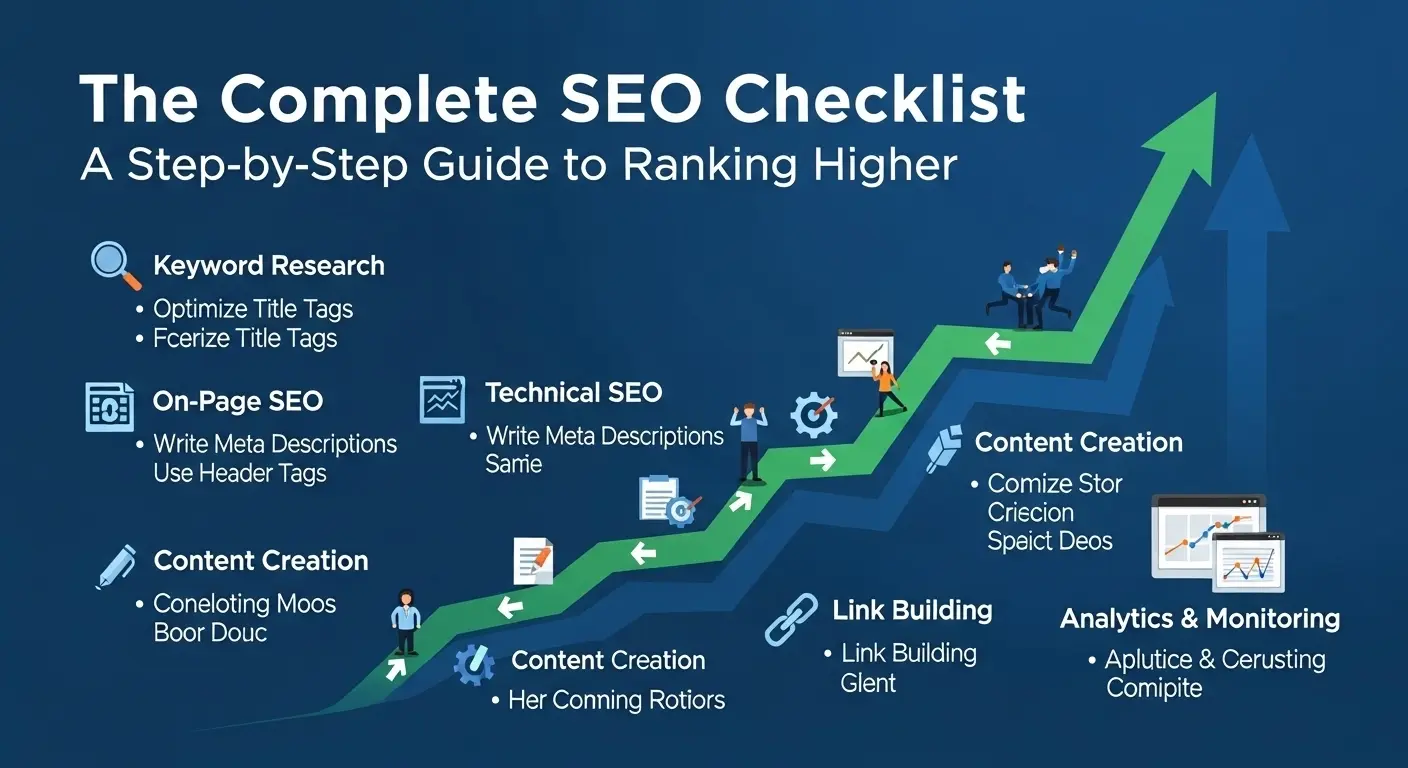
If you want your website to attract consistent traffic, generate leads, and grow over time, you need a clear and actionable plan. That’s exactly what an SEO checklist provides.
Instead of guessing what to do next, a well-structured checklist helps you cover every important area—from technical setup to content creation and performance tracking. Whether you’re launching a new website or improving an existing one, this guide will walk you through everything you need to get right.
This article is designed to be your complete, go-to reference. It’s practical, detailed, and built for real-world use—not just theory.
Quick Answer: What Is an SEO Checklist?
An SEO checklist is a structured list of tasks and best practices that ensure your website is optimized for search engines and users. It covers key areas such as technical setup, on-page improvements, content quality, backlinks, and ongoing monitoring.
Following a checklist ensures nothing important is missed and helps improve rankings, visibility, and overall site performance.
Why an SEO Checklist Matters
Without a checklist, it’s easy to overlook critical details. Many websites fail not because they lack effort, but because they miss foundational steps.
A proper checklist helps you:
- Stay organized and focused
- Avoid costly mistakes
- Improve website visibility
- Deliver a better user experience
- Build long-term growth instead of short-term spikes
It transforms a complex process into a manageable system.
Technical SEO Checklist
Technical SEO forms the foundation of your website. If this part is weak, everything else becomes less effective.
Ensure Your Website Is Crawlable
Search engines need to access and understand your website.
Make sure:
- Your robots.txt file is correctly configured
- Important pages are not blocked
- Your site structure is logical and easy to navigate
Create and Submit an XML Sitemap
A sitemap helps search engines discover your pages faster.
- Include all important pages
- Keep it updated automatically
- Submit it through search engine tools
Use HTTPS
Security is a ranking factor and a trust signal.
- Install an SSL certificate
- Ensure all pages load over HTTPS
- Redirect HTTP to HTTPS
Improve Site Speed
Fast-loading websites perform better.
Focus on:
- Image optimization
- Minimizing code (CSS, JavaScript)
- Using caching
- Choosing reliable hosting
Mobile-Friendliness
Most users browse on mobile devices.
- Use responsive design
- Ensure readable text and clickable buttons
- Avoid intrusive pop-ups
Fix Broken Links and Errors
Errors hurt both users and rankings.
- Fix 404 pages
- Update or remove broken links
- Monitor regularly
On-Page SEO Checklist
On-page SEO focuses on optimizing individual pages for better relevance and readability.
Optimize Title Tags
Your title is the first thing users see.
- Keep it clear and compelling
- Include your main keyword naturally
- Keep it within optimal length
Write Strong Meta Descriptions
Though not a direct ranking factor, they influence clicks.
- Make them engaging
- Summarize the page clearly
- Include a call to action
Use Proper Heading Structure
Organize your content with headings.
- Use one main heading per page
- Break content into sections
- Maintain logical hierarchy
Optimize URLs
Clean URLs improve both usability and ranking.
- Keep them short and descriptive
- Avoid unnecessary parameters
- Include keywords where relevant
Internal Linking
Help users and search engines navigate your site.
- Link to relevant pages
- Use natural anchor text
- Avoid overlinking
Image Optimization
Images enhance content but must be optimized.
- Use descriptive file names
- Add alt text
- Compress images to reduce size
Content SEO Checklist
Content is the core of your strategy. High-quality content drives traffic and engagement.
Focus on Search Intent
Understand what users are looking for.
- Informational queries need detailed answers
- Transactional queries need clear offers
- Match your content to user needs
Create High-Quality Content
Good content is:
- Original
- Useful
- Easy to read
- Well-structured
Avoid thin or duplicate content.
Use Keywords Naturally
Keywords should fit naturally into your content.
- Avoid keyword stuffing
- Use variations and related terms
- Focus on readability first
Improve Readability
Keep your content user-friendly.
- Use short paragraphs
- Write in simple language
- Break up text with headings
Update Old Content
Fresh content performs better.
- Add new information
- Improve outdated sections
- Refresh examples
Off-Page SEO Checklist
Off-page SEO focuses on building authority and trust.
Build High-Quality Backlinks
Backlinks signal credibility.
- Focus on quality over quantity
- Get links from relevant websites
- Avoid spammy tactics
Guest Posting
Write for other websites in your niche.
- Share valuable insights
- Include natural links
- Build relationships
Social Signals
While indirect, they help visibility.
- Share content on social platforms
- Encourage engagement
- Build brand awareness
Brand Mentions
Even unlinked mentions can build trust.
- Monitor mentions
- Engage with audiences
- Turn mentions into links where possible
Local SEO Checklist (If Applicable)
If you serve a local audience, this is essential.
Optimize Business Listings
- Keep name, address, and phone consistent
- Add accurate business details
- Use relevant categories
Collect Reviews
Reviews build trust and visibility.
- Encourage satisfied customers
- Respond to feedback
- Maintain authenticity
Local Keywords
Target location-based queries.
- Include city or region names
- Create location-specific pages
Analytics and Tracking Checklist
Without tracking, you’re working blindly.
Set Up Analytics Tools
Track performance and behavior.
- Monitor traffic
- Identify top pages
- Understand user behavior
Track Rankings
Know where you stand.
- Monitor keyword positions
- Identify opportunities
- Adjust strategies
Analyze Conversions
Traffic alone isn’t enough.
- Track leads or sales
- Improve conversion paths
- Optimize landing pages
Important Points People Often Overlook
Many people focus only on content and links, but miss critical details.
User experience is one of the most overlooked aspects. A website that is slow, cluttered, or difficult to navigate will struggle regardless of optimization efforts.
Consistency is another key factor. Success doesn’t come from one-time actions but from continuous improvement.
Also, many ignore internal linking, even though it significantly improves site structure and page authority.
Common Mistakes and Misconceptions
One common mistake is focusing only on keywords instead of user intent. Content should answer questions, not just include terms.
Another mistake is neglecting technical issues. Even great content won’t perform well if search engines can’t properly access it.
Some believe that more backlinks always mean better results. In reality, low-quality links can harm your site.
Finally, many expect instant results. SEO is a long-term process that requires patience and consistency.
Practical Tips and Best Practices
Start with a solid foundation. Fix technical issues before investing heavily in content or backlinks.
Focus on creating genuinely helpful content. Ask yourself whether your content truly solves a problem.
Keep your website simple and user-friendly. A clean design improves engagement and performance.
Regularly audit your website. Identify weak areas and improve them over time.
Stay updated with changes, but don’t chase every trend. Focus on fundamentals that consistently work.
Frequently Asked Questions
How often should I use an SEO checklist?
You should review your checklist regularly, especially when publishing new content or updating your website. Monthly audits are a good practice.
Can I skip technical SEO if my content is good?
No. Technical issues can prevent your content from being properly indexed or ranked, regardless of quality.
How long does it take to see results?
It depends on competition and effort, but most websites start seeing noticeable improvements within a few months.
Is keyword research still important?
Yes, but it should be combined with understanding user intent rather than focusing only on keywords.
Do I need backlinks to rank?
In most cases, yes. Backlinks help build authority, but quality matters far more than quantity.
Conclusion
An SEO checklist is not just a list of tasks—it’s a roadmap to building a strong, visible, and successful website. By following a structured approach, you ensure that every critical element is covered, from technical setup to content quality and authority building.
The key is consistency. Small improvements made regularly can lead to significant long-term results. Focus on delivering value, maintaining quality, and continuously optimizing your website.
When done right, SEO becomes less of a mystery and more of a reliable growth system.

Shel Silverstein was a multi-talented poet, songwriter, and children’s author from the USA. His playful poems often felt like riddles in disguise, blending humor with deep meaning, making him a timeless favorite for puzzle and word lovers.